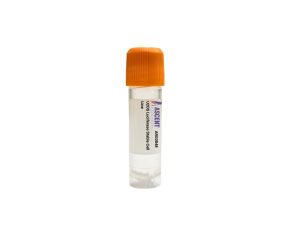
In Stock Cell Lines
Homo sapiens (Human)
Eye (retina)
Adherent
The TYR Knockout ARPE-19 Cell Line is a CRISPR/Cas9-edited human retinal pigment epithelial cell model featuring targeted disruption of the tyrosinase (TYR) gene. This knockout line eliminates the key enzyme responsible for melanin biosynthesis, providing a defined system to study pigmentation defects, melanogenesis signaling, and related retinal pathologies. TYR activity is regulated by MITF and the MC1R/cAMP/PKA cascade, and its loss mimics oculocutaneous albinism type 1. The ARPE-19 background supports investigations into RPE barrier function, photoprotection, and drug testing, with applications including melanin assays, signaling analysis, and disease modeling.
 MIER3 Knockout K562 Polyclonal Cells
Cat. No. ARG19334
ENPP2 Knockout UMUC-3 Polyclonal Cells
Cat. No. ARG11235
ARHGAP18 Knockout MES-OV Polyclonal Cells
Cat. No. ARG24206
KDM6A Knockout A2780 Polyclonal Cells
Cat. No. ARG29297
IFT88 Knockout 769-P Polyclonal Cells
Cat. No. ARG35140
DTNA Knockout K562 Polyclonal Cells
Cat. No. ARG39886
MIER3 Knockout K562 Polyclonal Cells
Cat. No. ARG19334
ENPP2 Knockout UMUC-3 Polyclonal Cells
Cat. No. ARG11235
ARHGAP18 Knockout MES-OV Polyclonal Cells
Cat. No. ARG24206
KDM6A Knockout A2780 Polyclonal Cells
Cat. No. ARG29297
IFT88 Knockout 769-P Polyclonal Cells
Cat. No. ARG35140
DTNA Knockout K562 Polyclonal Cells
Cat. No. ARG39886
The TYR Knockout ARPE-19 Cell Line is a CRISPR/Cas9-edited knockout cell line engineered for loss-of-function studies of the tyrosinase (TYR) gene in a human retinal pigment epithelial background. This product provides a stable, immortalized cellular model in which TYR expression is disrupted via CRISPR/Cas9-mediated gene editing, enabling investigation of melanin biosynthesis and its regulation in RPE cells. The cell line is suited for in vitro experiments ranging from signaling pathway analysis to disease modeling assays. Researchers can use this knockout model to dissect the role of tyrosinase without the confounding effects of residual enzyme activity, offering a clean genetic background for downstream applications.
The host cell line, ARPE-19, is a spontaneously immortalized human retinal pigment epithelial line derived from a healthy donor. ARPE-19 cells retain many native RPE functions, including the formation of tight junctions that contribute to the outer blood-retinal barrier, phagocytosis of photoreceptor outer segments, regeneration of visual pigments, and nutrient transport. They are widely adopted as an in vitro model for studying RPE biology, retinal homeostasis, and the pathobiology of retinal degenerative diseases. The ARPE-19 background provides a physiologically relevant context for examining how TYR knockout affects pigmentation and broader RPE physiology.
TYR encodes tyrosinase, a copper-containing enzyme that catalyzes the initial and rate-limiting steps of melanin biosynthesis: the hydroxylation of tyrosine to L-DOPA and the oxidation of L-DOPA to dopaquinone. This activity occurs within melanosomes and is critical for producing both eumelanin and pheomelanin. TYR expression is transcriptionally regulated by microphthalmia-associated transcription factor (MITF), which is itself activated by upstream pathways including ??-MSH/MC1R/G??s/adenylyl cyclase/cAMP/PKA/CREB signaling and MAPK/ERK cascades. MITF acts as a master regulator, integrating signals from SOX10, PAX3, LEF-1, and other factors. Tyrosinase interacts with tyrosinase-related proteins TYRP1 and TYRP2/DCT, as well as the copper chaperone ATOX1 and chaperones calnexin and calreticulin, to form functional melanogenic complexes. Downstream, tyrosinase activity generates melanin pigments and dopaquinone, which are further processed into eumelanin and pheomelanin. Disruption of TYR therefore halts melanogenesis, leading to depigmentation and providing a powerful tool to study pigmentation signaling and metabolism.
In the ARPE-19 RPE cell context, TYR knockout has particular significance because RPE pigmentation is essential for normal retinal function. Melanin in RPE cells absorbs scattered light, protects against oxidative stress, and participates in antioxidant defense. Loss of tyrosinase activity in this cell line mimics hypopigmentation states observed in oculocutaneous albinism type 1 (OCA1), a condition caused by TYR mutations that leads to severe vision impairment. This model enables dissection of how melanin deficiency affects RPE-specific processes, including the maintenance of tight barrier integrity, phagocytosis of shed photoreceptor outer segments, and visual cycle support. Consequently, the TYR Knockout ARPE-19 Cell Line serves as an in vitro platform to explore the molecular pathology of albinism and to evaluate potential therapeutic interventions aimed at restoring pigmentation or compensating for its loss.
This knockout cell line is ideal for a broad spectrum of research applications, including melanogenesis signal transduction studies, retinal disease modeling, photoprotection mechanism analysis, and drug screening for pigmentation disorders and melanoma. Representative assays that can be performed with this model include DOPA oxidase activity measurements to confirm tyrosinase inactivation, melanin content quantification, western blotting for TYR and MITF, RT-qPCR for melanogenic gene expression, and immunofluorescence to visualize melanosomal protein distribution. Additional readouts such as cell pellet pigmentation imaging and flow cytometry-based melanin detection further support functional studies. For further details or to order this product, please contact Ascent Research.