Genome-edited Cells
Bone (bone marrow)
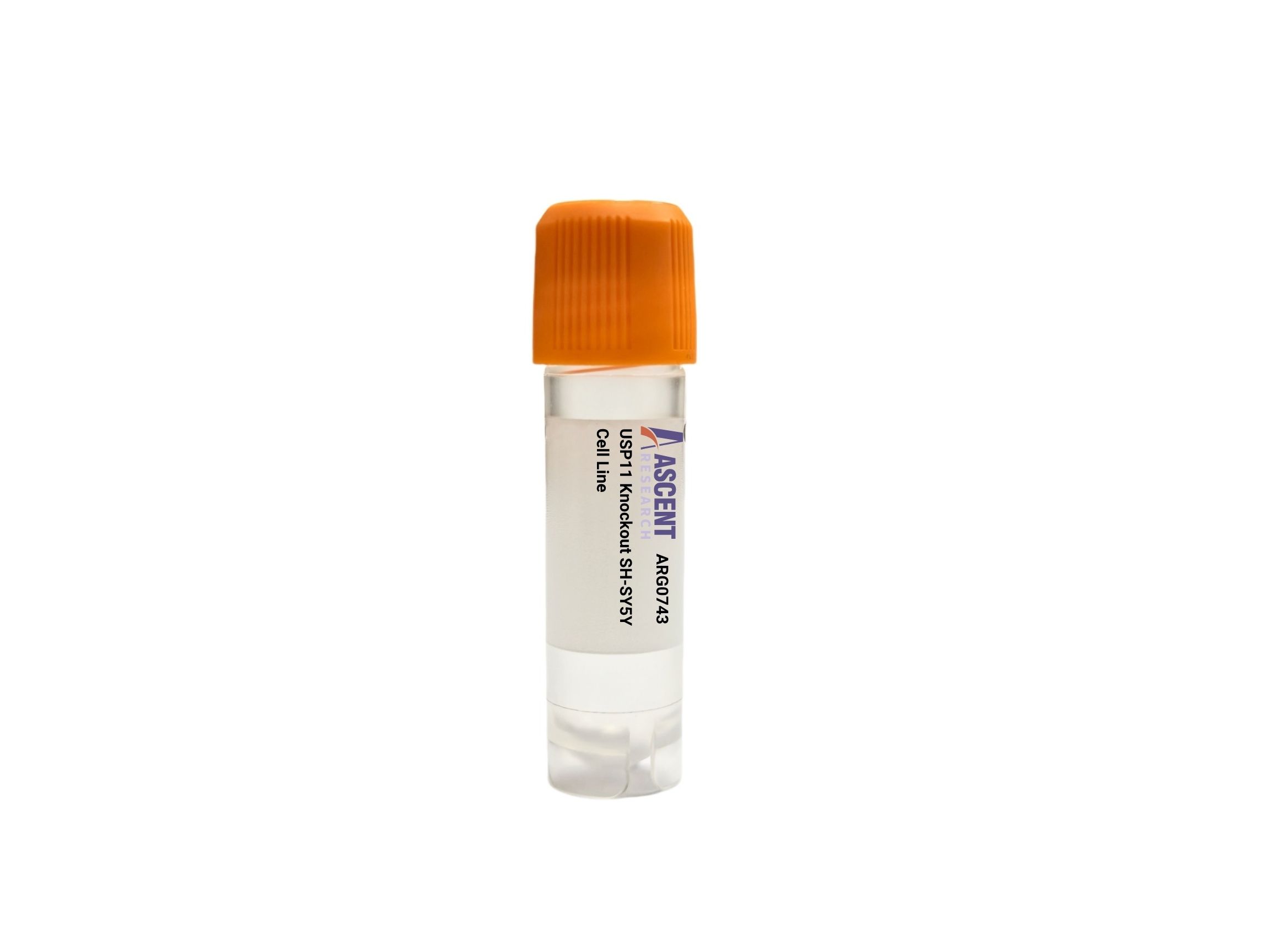
The USP11 Knockout SH-SY5Y Cell Line offers a genetically disrupted neuronal model for studying deubiquitinase function. This CRISPR/Cas9-edited cell line lacks USP11, a deubiquitinase that stabilizes substrates such as PTEN, BRCA2, and I??B??, and is derived from SH-SY5Y neuroblastoma cells with dopaminergic neuron features. Knockout of USP11 impairs DNA repair and alters cell survival signaling, making this line valuable for neurodegeneration, cancer, and inflammation research. Applications include analysis of DNA damage response, NF-??B and TGF-?? pathways, and screening for deubiquitinase inhibitors.
 P4HA1 Knockout A2780 Polyclonal Cells
Cat. No. ARG19044
COA1 Knockout NCI-H1975 Polyclonal Cells
Cat. No. ARG17127
HMGN5 Knockout Raji Polyclonal Cells
Cat. No. ARG23717
C1orf21 Knockout NCI-H1299 Polyclonal Cells
Cat. No. ARG41295
FN1 Knockout CaSki Polyclonal Cells
Cat. No. ARG9870
P4HA1 Knockout A2780 Polyclonal Cells
Cat. No. ARG19044
COA1 Knockout NCI-H1975 Polyclonal Cells
Cat. No. ARG17127
HMGN5 Knockout Raji Polyclonal Cells
Cat. No. ARG23717
C1orf21 Knockout NCI-H1299 Polyclonal Cells
Cat. No. ARG41295
FN1 Knockout CaSki Polyclonal Cells
Cat. No. ARG9870
 Rabbit Prostate Basal Cells
Cat. No. ARP0750
Rabbit Prostate Basal Cells
Cat. No. ARP0750
The USP11 Knockout SH-SY5Y Cell Line is a CRISPR/Cas9-mediated gene disruption model in a human neuroblastoma background. This product provides a stable knockout cell line derived from SH-SY5Y, a widely used neuronal model. The targeted disruption of USP11 eliminates functional USP11 deubiquitinase, enabling researchers to study loss-of-function phenotypes in a dopaminergic neuron-like context. The cell line is supplied as a ready-to-use, edited population for applications in neurodegeneration, cancer biology, and signaling research.
The SH-SY5Y host line originates from a human female metastatic neuroblastoma and retains capacity for differentiation into neuron-like cells with dopaminergic characteristics. These cells express neuronal markers and exhibit electrophysiological activity, making them a standard in vitro platform for Parkinson’s disease modeling, neurotoxicity testing, and neuronal differentiation studies. Their neoplastic origin also supports cancer-focused investigations, particularly in pediatric neuroblastoma biology.
USP11 functions as a deubiquitinase that selectively removes polyubiquitin chains from target proteins, opposing proteasomal degradation. In this context, USP11 acts downstream of ATM kinase, p53, and general DNA damage signals to stabilize substrates including PTEN, BRCA2, PML, I??B??, and TGF-?? receptor components. USP11 forms complexes with BRCA2 and PTEN, modulates NF-??B signaling through I??B??, and intersects with p53-dependent responses. Its activity influences DNA repair via homologous recombination, cell cycle checkpoints, and apoptosis regulation. Upon knockout, loss of USP11 leads to enhanced degradation of these substrates, impairing DNA damage response and altering cell survival networks.
In SH-SY5Y cells, USP11 knockout has particular significance given the neuronal context and the relevance of genome maintenance to neurodegeneration. USP11’s regulation of PTEN and BRCA2 directly affects PI3K/AKT pathway output and DNA double-strand break repair, processes implicated in neuronal survival and programmed cell death. Moreover, USP11 influences NF-??B and TGF-?? signaling, pathways that govern inflammation, differentiation, and synaptic plasticity. This knockout model therefore provides a tool to dissect deubiquitinase-dependent mechanisms in neuronal stress responses, with potential links to Parkinson’s disease and neuroblastoma pathogenesis.
Typical research applications for this CRISPR/Cas9-edited knockout cell line include investigating USP11-mediated regulation of DNA damage repair pathways, studying deubiquitinase-dependent control of PTEN stability and downstream AKT signaling, and modeling neurodegeneration-related protein turnover. The cell line is well-suited for assays such as western blotting for USP11, PTEN, and phospho-H2AX, immunofluorescence detection of ??H2AX foci, RT-qPCR analysis of downstream targets, MTT or Annexin V-based viability/apoptosis assays, comet assays to measure DNA strand breaks, and co-immunoprecipitation of USP11 substrate interactions. It also serves as a platform for screening small-molecule inhibitors of deubiquitinases. For additional technical information or to request custom applications, please contact Ascent Research.