Genome-edited Cells
Liver
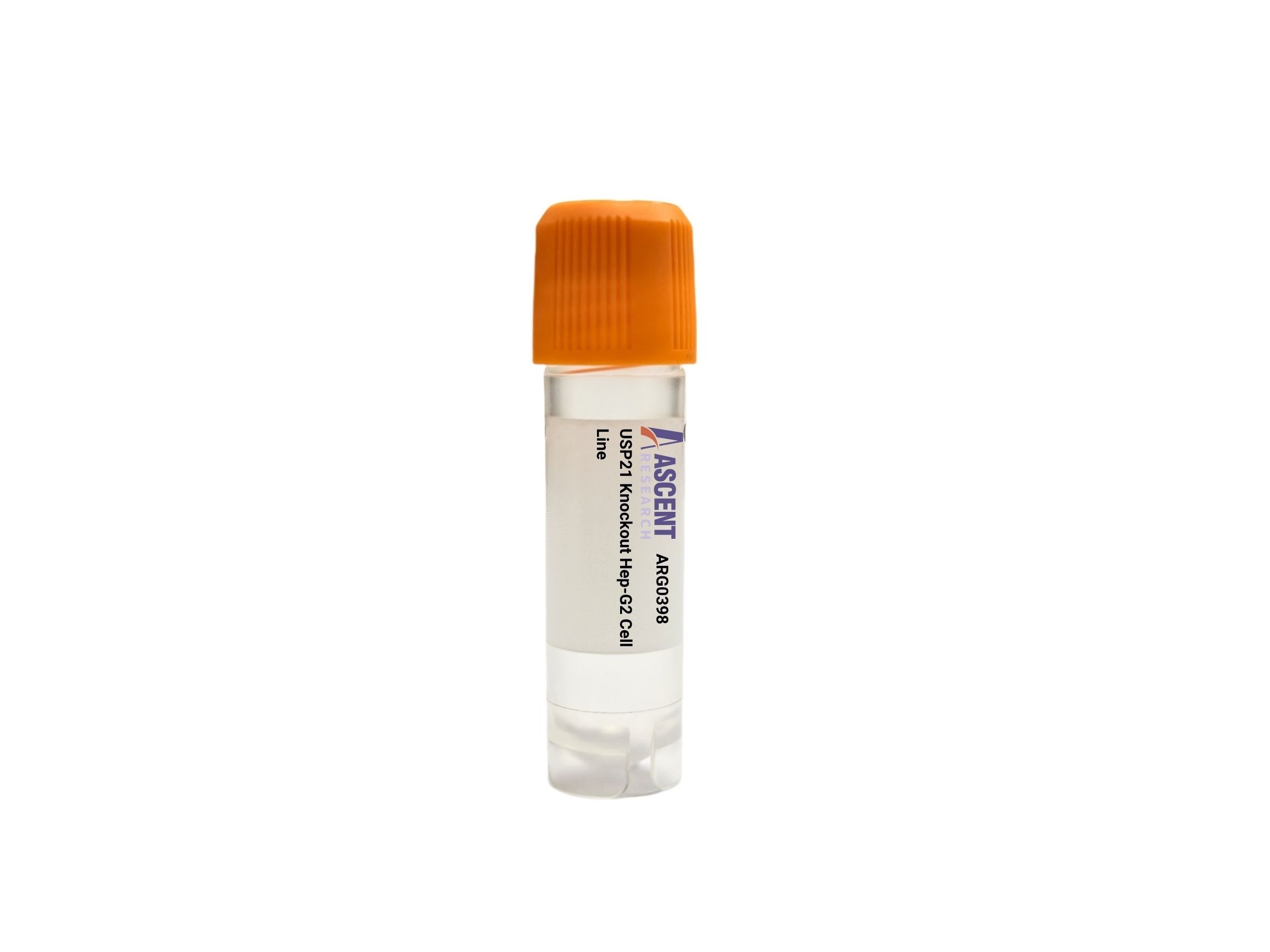
The USP21 Knockout Hep-G2 Cell Line is a CRISPR/Cas9-edited human hepatocellular carcinoma cell line lacking functional USP21, a deubiquitinase that stabilizes key signaling regulators such as Gli1 and RIPK1. Disruption of USP21 impairs Hedgehog and NF-??B pathway activity, alters DNA damage repair, and perturbs circadian rhythms through accelerated degradation of substrates including BMAL1. This knockout model enables investigation of deubiquitination in liver cancer biology, screening of USP21 inhibitors, and dissection of signaling crosstalk. It is compatible with western blotting, RT-qPCR, luciferase reporter assays, immunofluorescence, proliferation and apoptosis assays, and DNA damage analysis.
 EPB41 Knockout A2780 Polyclonal Cells
Cat. No. ARG18373
CSNK1G3 Knockout Hela Polyclonal Cells
Cat. No. ARG8284
APPL2 Knockout jurkat Polyclonal Cells
Cat. No. ARG33884
DPP8 Knockout HT29 Polyclonal Cells
Cat. No. ARG39691
DHFR Knockout HCT116 Polyclonal Cells
Cat. No. ARG6909
EPB41 Knockout A2780 Polyclonal Cells
Cat. No. ARG18373
CSNK1G3 Knockout Hela Polyclonal Cells
Cat. No. ARG8284
APPL2 Knockout jurkat Polyclonal Cells
Cat. No. ARG33884
DPP8 Knockout HT29 Polyclonal Cells
Cat. No. ARG39691
DHFR Knockout HCT116 Polyclonal Cells
Cat. No. ARG6909
 Human Colonic Smooth Muscle Cells
Cat. No. ARP0052
Human Colonic Smooth Muscle Cells
Cat. No. ARP0052
The USP21 Knockout Hep-G2 Cell Line is a CRISPR/Cas9-edited knockout cell line derived from the Hep-G2 human hepatocellular carcinoma cell line. This product provides a genetically defined loss-of-function model for the USP21 gene, which encodes a deubiquitinating enzyme that removes ubiquitin chains from target proteins. Disruption of USP21 by CRISPR/Cas9-mediated gene editing abrogates its enzymatic activity, offering researchers a stable platform to dissect USP21-dependent signaling mechanisms and protein stability control.
The host cell line, Hep-G2, is a widely characterized hepatocellular carcinoma-derived cell line that retains many differentiated hepatocyte functions. It serves as an established in vitro model for liver metabolism, hepatocyte physiology, and hepatocellular carcinoma biology. Hep-G2 cells are extensively used to investigate hepatic gene expression, drug metabolism, and oncogenic processes, providing a relevant cellular context for studying the role of deubiquitination enzymes in liver cancer.
USP21 functions as a deubiquitinase that selectively cleaves ubiquitin chains from substrates including Gli1, RIPK1, histone H2A, BMAL1, and RIG-I, thereby controlling their stability and biological activity. USP21 is activated by upstream signals such as DNA damage, NF-??B pathway stimulation, inflammatory cytokines, and circadian clock components. It acts as a positive regulator of Hedgehog signaling by stabilizing the transcription factor Gli1, and modulates NF-??B signaling through deubiquitination of RIPK1. Additionally, USP21 participates in DNA damage repair via histone H2A deubiquitination and contributes to circadian rhythm regulation by targeting BMAL1. Knockout of USP21 leads to enhanced proteasomal degradation of these substrates, resulting in attenuation of Hedgehog and NF-??B transcriptional output, impaired DNA double-strand break resolution, and altered circadian gene expression.
In the Hep-G2 hepatocellular carcinoma background, USP21 knockout disrupts critical oncogenic and homeostatic pathways. Loss of USP21-mediated Gli1 stabilization suppresses Hedgehog-driven proliferation and migration. Diminished RIPK1 deubiquitination sensitizes cells to TNF??-induced apoptosis and attenuates NF-??B pro-survival signaling. Impaired BMAL1 deubiquitination alters circadian-controlled metabolic and proliferative rhythms, while defective histone H2A deubiquitination compromises DNA damage repair efficiency. These perturbations make the USP21 Knockout Hep-G2 Cell Line a powerful tool for investigating the interplay between deubiquitination, liver tumorigenesis, and therapeutic vulnerabilities.
Researchers can employ this cell line to study deubiquitination-dependent regulation in hepatocellular carcinoma, interrogate crosstalk between Hedgehog and NF-??B pathways, and screen small-molecule USP21 inhibitors for cancer therapy. It is also suited for exploring DNA damage response mechanisms and circadian rhythm influences in liver cells. Representative assays include western blot analysis of USP21 and ubiquitinated substrates, RT-qPCR for downstream target genes, NF-??B luciferase reporter assays, immunofluorescence for Gli1 subcellular localization, MTT proliferation and caspase-3 apoptosis assays, comet assays for DNA damage assessment, and Transwell migration/invasion experiments. For additional product details and technical support, please contact Ascent Research.