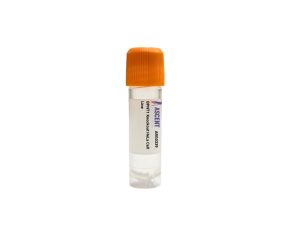
In Stock Cell Lines
Homo sapiens (Human)
Large intestine (colon)
Adherent
The VIRMA Knockout HCT 15 Cell Line is a CRISPR/Cas9-edited human colorectal adenocarcinoma cell line with targeted disruption of the VIRMA gene. VIRMA encodes a scaffold protein that recruits METTL3/METTL14 to catalyze m6A methylation on mRNAs, regulating RNA metabolism and influencing pathways such as Wnt/??-catenin signaling. This model is suited for epitranscriptomic studies, cancer stem cell research, and drug discovery in colorectal cancer. VIRMA interacts with WTAP and RBM15, and modulates targets like MYC and SOX2, offering a tool to dissect m6A-dependent oncogenic mechanisms.
 LSS Knockout A2780 Polyclonal Cells
Cat. No. ARG18362
ALAD Knockout huh-7 Polyclonal Cells
Cat. No. ARG27863
ACADVL Knockout NCI-H1299 Polyclonal Cells
Cat. No. ARG30202
GPAA1 Knockout SK-HEP-1 Polyclonal Cells
Cat. No. ARG32487
ACAT1 Knockout jurkat Polyclonal Cells
Cat. No. ARG33714
LSS Knockout A2780 Polyclonal Cells
Cat. No. ARG18362
ALAD Knockout huh-7 Polyclonal Cells
Cat. No. ARG27863
ACADVL Knockout NCI-H1299 Polyclonal Cells
Cat. No. ARG30202
GPAA1 Knockout SK-HEP-1 Polyclonal Cells
Cat. No. ARG32487
ACAT1 Knockout jurkat Polyclonal Cells
Cat. No. ARG33714
 Ishikawa
Cat. No. ARC0358
Ishikawa
Cat. No. ARC0358
The VIRMA Knockout HCT 15 Cell Line is a CRISPR/Cas9-edited human cell model featuring targeted disruption of the VIRMA gene in the HCT 15 colorectal adenocarcinoma background. This engineered knockout cell line provides a stable loss-of-function system for investigating VIRMA-dependent pathways without transient suppression artifacts. Ablating VIRMA expression enables dissection of its role in the m6A methylation machinery and its impact on RNA metabolism and oncogenic signaling.
The HCT 15 cell line is an epithelial cell line derived from a human colorectal adenocarcinoma, classified as Dukes’ type C and characterized by microsatellite instability-high (MSI-H) and a BRAF V600E mutation. These genetic features make HCT 15 a widely employed model for colorectal cancer research, particularly for studies on mismatch repair deficiency and BRAF-driven tumorigenesis. The parental cells exhibit adherent growth and retain key signaling pathways relevant to colorectal carcinoma, offering a clinically pertinent context for gene perturbation studies.
VIRMA functions as a scaffold protein within the m6A methyltransferase writer complex, recruiting METTL3 and METTL14 to deposit N6-methyladenosine on target mRNAs. It interacts with WTAP, RBM15, RBM15B, ZC3H13, and HAKAI. VIRMA is regulated by c-MYC, STAT3, and ZNF217, and modulates downstream targets including SOX2, CDK1, MYC, E2F3, and FOXM1. Through these interactions, VIRMA influences RNA splicing, stability, and translation, and connects to Wnt/??-catenin signaling. m6A is read by YTHDF1/2/3 and IGF2BP1/2/3 and erased by FTO/ALKBH5, placing VIRMA at a central node in epitranscriptomic regulation.
In colorectal cancer, VIRMA-mediated m6A methylation is dysregulated, promoting tumor progression and cancer stem cell properties. The HCT 15 background, with MSI-H and BRAF mutation, enables examination of VIRMA ablation effects on oncogenic mRNA methylation, transcript stability, and signaling. This model allows study of VIRMA’s role in promoting stemness factors like SOX2 and MYC, and cell cycle regulators. The parental mutations permit investigation of genotype-specific m6A dependencies, potentially revealing synthetic vulnerabilities in colorectal cancers.
This cell line supports epitranscriptomic and cancer biology applications: m6A RIP and MeRIP-seq for methylation site mapping, RT-qPCR and Western blotting for pathway validation, and functional assays such as CCK-8 proliferation, colony formation, and migration/invasion for phenotypic assessment. Flow cytometry and immunofluorescence can monitor stem cell markers or apoptosis. The model fits into drug screening for compounds targeting the m6A machinery. For technical inquiries or ordering, contact Ascent Research.