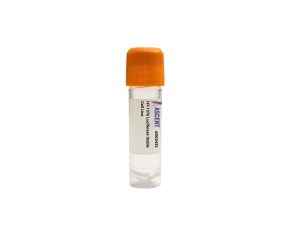
In Stock Cell Lines
Mus musculus (Mouse)
Lung
Adherent and suspension
The Vsig4 Knockout MH-S Cell Line is a CRISPR/Cas9-edited murine alveolar macrophage cell line (MH-S) lacking functional Vsig4, a receptor for complement fragments C3b and iC3b. Vsig4 also delivers coinhibitory signals by recruiting SHP-1 and SHP-2 phosphatases, suppressing T cell activation. Its absence disrupts complement-mediated phagocytosis and T cell regulation in a lung macrophage context. This knockout model supports studies of complement immunity and immune checkpoint function. Key applications include phagocytosis assays, T cell suppression co-cultures, and cytokine profiling, serving autoimmune, infection, and cancer immunotherapy research.
 CEACAM7 Knockout UMUC-3 Polyclonal Cells
Cat. No. ARG11272
GAPVD1 Knockout NCI-H1299 Polyclonal Cells
Cat. No. ARG17708
FGFR2 Knockout HEK293 Polyclonal Cells
Cat. No. ARG12770
HSD17B2 Knockout HAP1 Polyclonal Cells
Cat. No. ARG22635
CCDC71L Knockout AGS Polyclonal Cells
Cat. No. ARG43051
BAZ1A Knockout AGS Polyclonal Cells
Cat. No. ARG26730
CEACAM7 Knockout UMUC-3 Polyclonal Cells
Cat. No. ARG11272
GAPVD1 Knockout NCI-H1299 Polyclonal Cells
Cat. No. ARG17708
FGFR2 Knockout HEK293 Polyclonal Cells
Cat. No. ARG12770
HSD17B2 Knockout HAP1 Polyclonal Cells
Cat. No. ARG22635
CCDC71L Knockout AGS Polyclonal Cells
Cat. No. ARG43051
BAZ1A Knockout AGS Polyclonal Cells
Cat. No. ARG26730
The Vsig4 Knockout MH-S Cell Line is a CRISPR/Cas9-engineered murine alveolar macrophage line in which the Vsig4 gene has been disrupted to generate a loss-of-function model. Derived from the MH-S cell line, an SV40-immortalized BALB/c mouse alveolar macrophage, this product provides a defined genetic background for investigating Vsig4-dependent processes. It is supplied as a stable cell line suitable for routine culture and functional assays without requiring single-cell clonal isolation.
MH-S cells exhibit key features of alveolar macrophages, including phagocytic capacity and cytokine production, and are widely used to study pulmonary innate immunity. Their immortalized nature ensures reproducible growth while retaining responsiveness to inflammatory cues. In the lung, alveolar macrophages mediate early pathogen clearance and immune surveillance, making this line an appropriate host for dissecting receptor-specific contributions to host defense.
Vsig4 functions as a specific receptor for the complement opsonins C3b and iC3b, mediating phagocytosis of complement-tagged targets. It also acts as a coinhibitory receptor, recruiting the tyrosine phosphatases SHP-1 and SHP-2 through its ITIM motif to dampen T cell receptor signaling. Upstream, Vsig4 is regulated by complement component C3 and its cleavage fragments, as well as by the cytokines IL-10 and TGF-??. It interacts with complement regulatory proteins factor I and factor H and signals downstream of TCR-associated kinases Lck and ZAP70, integrating complement cascade components (C3, C3b, iC3b, C5, factor B, MAC) with adaptive immune checkpoints.
Within the alveolar macrophage context, Vsig4 contributes to the balance between pathogen elimination and T cell tolerance, influencing outcomes in lung infection and inflammation. Disruption of Vsig4 in MH-S cells offers a clean system to examine how complement-dependent phagocytosis and T cell coinhibition intersect in pulmonary immunity, with direct relevance to models of respiratory infections, autoimmune pneumonitis, and tumor immune evasion. This knockout model can reveal how complement crosstalk shapes macrophage effector functions and local adaptive immune responses, and may aid in identifying therapeutic targets.
The knockout line is designed for diverse experimental workflows, including phagocytosis assays using complement-opsonized particles or pathogens, T cell proliferation and suppression co-cultures, cytokine profiling by ELISA, and high-resolution detection by flow cytometry, immunofluorescence, and Western blotting. Transcriptomic analysis via RNA-seq can further uncover global expression changes. It is well-suited for drug screens targeting complement receptors or T cell checkpoint pathways. For additional product information and technical assistance, please contact Ascent Research.