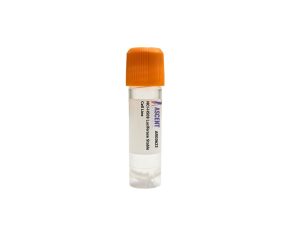
In Stock Cell Lines
Homo sapiens (Human)
Skin
Adherent
The WASL Knockout HaCaT Cell Line is a CRISPR/Cas9-edited human keratinocyte line with targeted disruption of the WASL gene, encoding the actin nucleation-promoting factor N-WASP. Derived from the HaCaT spontaneously immortalized line, it provides a robust model for investigating epidermal biology, wound healing, and cancer cell migration. WASL integrates signals from CDC42, PIP2, and SRC family kinases to activate the Arp2/3 complex, driving branched actin polymerization critical for lamellipodia formation and endocytosis. Typical applications include scratch wound healing, transwell invasion assays, and actin cytoskeletal analysis. For further information, please contact Ascent Research.
 GALT Knockout HT29 Polyclonal Cells
Cat. No. ARG13865
MLF2 Knockout jurkat Polyclonal Cells
Cat. No. ARG13671
BUB1B Knockout Jurkat Polyclonal Cells
Cat. No. ARG23357
BLK Knockout Jurkat Polyclonal Cells
Cat. No. ARG23347
EIF4EBP1 Knockout CaSki Polyclonal Cells
Cat. No. ARG41050
FASTKD2 Knockout MES-OV Polyclonal Cells
Cat. No. ARG6515
GALT Knockout HT29 Polyclonal Cells
Cat. No. ARG13865
MLF2 Knockout jurkat Polyclonal Cells
Cat. No. ARG13671
BUB1B Knockout Jurkat Polyclonal Cells
Cat. No. ARG23357
BLK Knockout Jurkat Polyclonal Cells
Cat. No. ARG23347
EIF4EBP1 Knockout CaSki Polyclonal Cells
Cat. No. ARG41050
FASTKD2 Knockout MES-OV Polyclonal Cells
Cat. No. ARG6515
The WASL Knockout HaCaT Cell Line is a genetically engineered human keratinocyte model generated through CRISPR/Cas9-mediated disruption of the WASL gene, which encodes the neuronal Wiskott-Aldrich syndrome protein (N-WASP). This knockout cell line serves as a targeted loss-of-function tool to dissect the molecular functions of WASL in actin cytoskeleton remodeling, cell motility, and related signaling networks. By eliminating WASL expression, researchers can interrogate pathways that depend on branched actin nucleation and assess cellular consequences in a well-characterized epithelial background.
HaCaT cells are a spontaneously immortalized, non-tumorigenic human keratinocyte line established from adult skin. They retain key features of normal keratinocytes, including the ability to differentiate and form stratified epithelia, making them an established in vitro platform for studies of epidermal biology, wound healing, and adhesion. The line is widely employed to model keratinocyte behavior under physiological and pathological conditions, offering a consistent genetic and phenotypic background for knockout comparisons.
WASL functions as a pivotal actin nucleation-promoting factor that transduces upstream signals from CDC42, PIP2, and SRC family kinases into activation of the Arp2/3 complex, thereby triggering the formation of branched actin networks. Through direct interactions with adaptor proteins such as NCK, WIP, and GRB2, WASL spatially and temporally regulates actin polymerization at the plasma membrane. In the CDC42-WASL-ARP2/3 cascade, binding of active CDC42 relieves WASL autoinhibition, enabling Arp2/3 to nucleate new actin filaments from existing ones. This mechanism is essential for generating lamellipodia, supporting endocytosis, and facilitating focal adhesion dynamics. WASL also cooperates with Ena/VASP proteins to modulate actin bundling and filopodia extension, integrating multiple cytoskeletal outputs.
Disruption of WASL in HaCaT keratinocytes abolishes a central node in actin remodeling, leading to impaired lamellipodia formation, reduced cell migration, and altered adhesion??phenotypes directly relevant to epidermal wound healing and cancer invasion. Because HaCaT cells exhibit robust migratory responses and adhesion structures, this knockout model allows precise dissection of WASL-dependent versus WASL-independent pathways. It also permits investigation of how loss of WASL affects endocytic trafficking and the turnover of focal adhesions in an epithelial context, providing insight into the molecular basis of keratinocyte motility disorders.
The WASL Knockout HaCaT Cell Line is well-suited for a range of functional studies, including scratch wound healing assays, transwell migration and invasion experiments, phalloidin-based actin staining, western blotting, and co-immunoprecipitation to probe protein?Cprotein interactions. Researchers can apply this model to explore mechanisms underlying cancer metastasis, Wiskott-Aldrich syndrome-related pathologies, and neurodevelopmental disorders linked to actin dysregulation. By comparing with parental HaCaT cells, users can delineate WASL-specific contributions to signaling networks. For more information or to discuss custom applications, please contact Ascent Research.