Genome-edited Cells
Uterus (cervix)
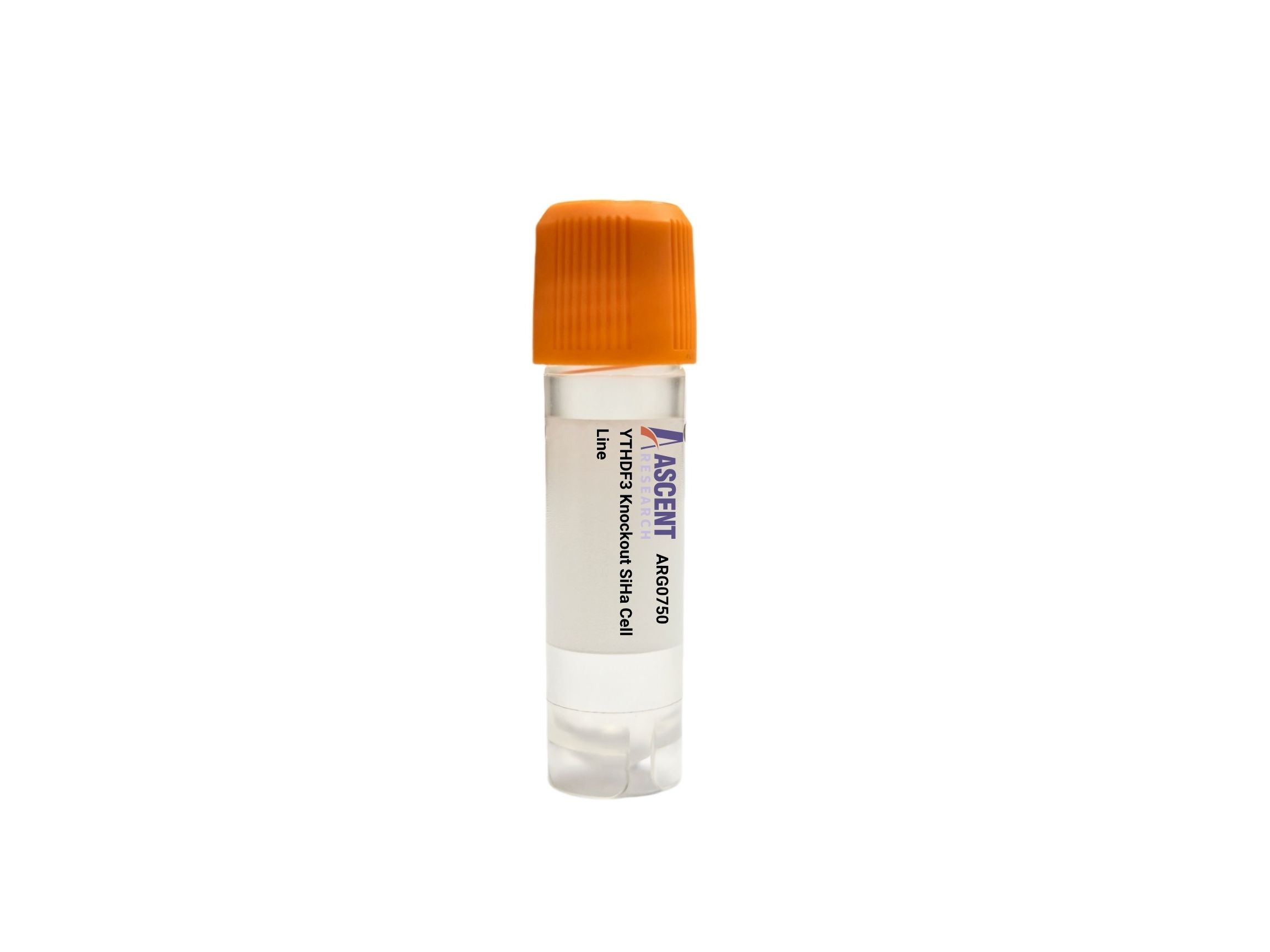
The YTHDF3 Knockout SiHa Cell Line is a CRISPR/Cas9-edited human cell line lacking YTHDF3, an m6A reader protein that promotes translation of target mRNAs such as FOXM1 and MYC by interacting with eIF3 and YTHDF1. Derived from HPV16-positive cervical squamous carcinoma cells, this model is designed for studying m6A-mediated translational control in HPV-related tumorigenesis. Loss of YTHDF3 disrupts m6A-dependent translation and may alter oncogene expression, providing a powerful tool for epitranscriptomics, cancer cell biology, and functional screening. Applications include western blotting, RT-qPCR, MeRIP-seq, polysome profiling, and cell-based functional assays.
 FKBP1A Knockout A549 Polyclonal Cells
Cat. No. ARG11007
LAMB1 Knockout DLD-1 Polyclonal Cells
Cat. No. ARG12119
ANKRD12 Knockout NCI-H1299 Polyclonal Cells
Cat. No. ARG30327
GSG2 Knockout HCT116 Polyclonal Cells
Cat. No. ARG34776
ECI1 Knockout HGC-27 Polyclonal Cells
Cat. No. ARG40391
CEBPA Knockout CaSki Polyclonal Cells
Cat. No. ARG9746
FKBP1A Knockout A549 Polyclonal Cells
Cat. No. ARG11007
LAMB1 Knockout DLD-1 Polyclonal Cells
Cat. No. ARG12119
ANKRD12 Knockout NCI-H1299 Polyclonal Cells
Cat. No. ARG30327
GSG2 Knockout HCT116 Polyclonal Cells
Cat. No. ARG34776
ECI1 Knockout HGC-27 Polyclonal Cells
Cat. No. ARG40391
CEBPA Knockout CaSki Polyclonal Cells
Cat. No. ARG9746
The YTHDF3 Knockout SiHa Cell Line is a CRISPR/Cas9-edited human cell line in which the YTHDF3 gene has been disrupted to establish a loss-of-function model. This product is tailored for investigations into m6A RNA modification biology within a cervical cancer framework, enabling precise dissection of YTHDF3-mediated translational control.
The SiHa host cell line is derived from a human cervical squamous cell carcinoma and is positive for HPV16, exhibiting an adherent epithelial morphology. It serves as a classic model for studying HPV-related tumorigenesis and the interplay between viral oncoproteins and host gene regulation. The oncogenic background of SiHa cells makes them particularly valuable for exploring how m6A modifications influence cancer progression.
YTHDF3 functions as a cytoplasmic m6A reader that specifically binds N6-methyladenosine on mRNAs and stimulates their translation by recruiting the eIF3 and eIF4E initiation factors, PABP, and ribosomal subunits. It cooperates with YTHDF1 and YTHDF2 to coordinate mRNA fate decisions. Upstream regulators include HIF1A, cellular stress, and miRNA networks, while downstream targets comprise FOXM1, MYC, SNAI1, and ZEB1 mRNAs. Representative components of the m6A machinery that interact functionally with YTHDF3 are the methyltransferase complex (METTL3, METTL14, WTAP) and demethylases (ALKBH5, FTO).
In the SiHa cervical carcinoma model, YTHDF3 knockout likely impairs translation of m6A-modified oncogenic mRNAs such as MYC and FOXM1, potentially reducing cell proliferation and migration. The loss may also perturb stress granule dynamics and alter the translational landscape under stress conditions. This cell line therefore provides a unique tool to study how m6A-dependent translational regulation contributes to HPV-driven cervical cancer pathogenesis.
Applications include CRISPR-based knockout functional studies, epitranscriptomic mapping, and translational regulation profiling. Assays such as western blotting, RT-qPCR, RNA-seq, MeRIP-seq, polysome fractionation, and cell-based functional assays (proliferation, migration/invasion, drug sensitivity) are directly compatible. This model facilitates the discovery of YTHDF3-dependent regulatory nodes in cancer. For more information or to order, please contact Ascent Research.