Genome-edited Cells
Lung
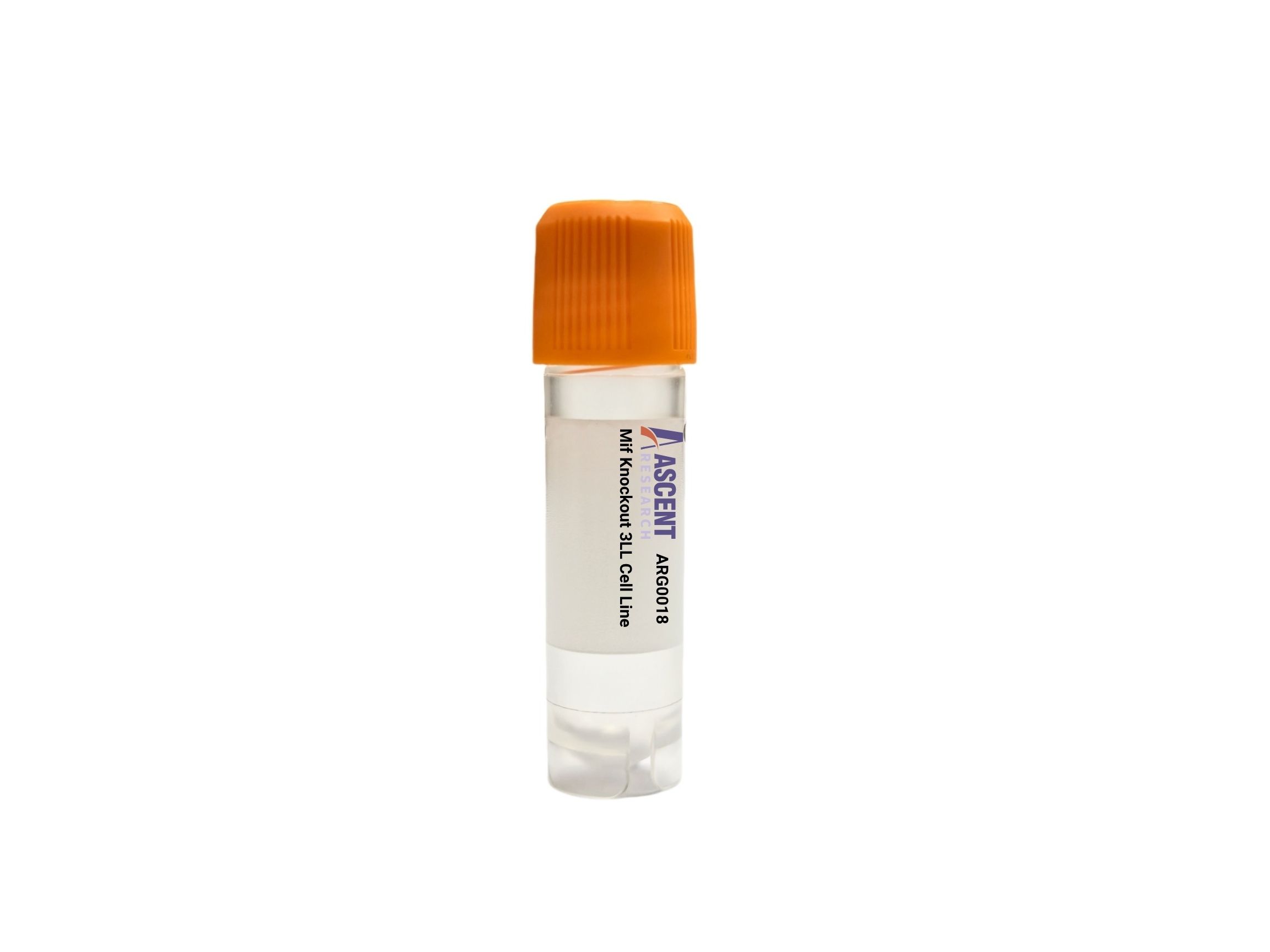
Mif Knockout 3LL is a CRISPR/Cas9-edited mouse Lewis lung carcinoma cell line with disruption of the Mif gene in a syngeneic 3LL background. 3LL is widely used to study lung tumor growth, metastasis, and tumor-immune interactions. MIF normally signals through factors including CD74, CD44, CXCR2, and CXCR4 and acts upstream of ERK1/2, PI3K-AKT, and NF-kB-linked inflammatory and survival programs. This knockout model is useful for analyzing cytokine regulation, migration, angiogenesis, drug response, and tumor biology using western blotting, RT-qPCR, RNA-seq, ELISA, migration assays, and syngeneic tumor studies.
 HK2 Knockout Raji Polyclonal Cells
Cat. No. ARG23428
HERPUD2 Knockout HAP1 Polyclonal Cells
Cat. No. ARG27549
CANX Knockout NCI-H1299 Polyclonal Cells
Cat. No. ARG42128
LIMD1 Knockout AGS Polyclonal Cells
Cat. No. ARG2572
CYLD Knockout Raji Polyclonal Cells
Cat. No. ARG1918
HK2 Knockout Raji Polyclonal Cells
Cat. No. ARG23428
HERPUD2 Knockout HAP1 Polyclonal Cells
Cat. No. ARG27549
CANX Knockout NCI-H1299 Polyclonal Cells
Cat. No. ARG42128
LIMD1 Knockout AGS Polyclonal Cells
Cat. No. ARG2572
CYLD Knockout Raji Polyclonal Cells
Cat. No. ARG1918
 PI4KA Knockout THP-1 Cell Line
Cat. No. ARG0817
PI4KA Knockout THP-1 Cell Line
Cat. No. ARG0817
The Mif Knockout 3LL Cell Line is a CRISPR/Cas9-engineered mouse cancer cell model in which the Mif gene has been disrupted to eliminate functional macrophage migration inhibitory factor expression. This edited derivative of the 3LL host line provides a stable in vitro system for studying MIF-dependent signaling in a lung carcinoma context. As an epithelial-like Lewis lung carcinoma model, the line is suited for mechanistic analysis of tumor cell-intrinsic signaling as well as tumor-associated inflammatory programs that influence growth, survival, and dissemination.
3LL, also referred to as Lewis lung carcinoma, is a murine lung carcinoma cell line syngeneic to C57BL/6 mice and is widely used in transplantation, metastasis, and tumor progression studies. Its experimental utility derives from its reproducible growth characteristics and relevance to tumor-immune interactions in immunocompetent mouse settings. Accordingly, 3LL cells are frequently used to investigate malignant proliferation, migratory and invasive behavior, angiogenesis-related signaling, and reciprocal communication between tumor cells and inflammatory components of the microenvironment.
MIF is a pleiotropic cytokine-like factor with intracellular and secreted functions, including tautomerase activity and regulation of inflammatory and pro-survival networks. In tumor and immune signaling contexts, MIF interacts with CD74 and can signal through the CD74-CD44 axis or engage chemokine receptor-associated mechanisms involving CXCR2 and CXCR4. Mif expression is regulated by hypoxia, HIF1A, TNF, IFNG, Toll-like receptor signaling, glucocorticoids, and broader cellular stress inputs. Downstream, MIF acts upstream of ERK1/2 phosphorylation, PI3K-AKT activation, and NF-kB-dependent transcriptional outputs, thereby promoting expression or induction of IL6, TNF, CXCL8/IL8-related chemokine programs, VEGFA, MMP9, and BCL2 family survival pathways. Additional functional links to DDT, JAB1/COPS5, HTRA1, AMPK signaling, and HIF-1-associated responses place MIF at the intersection of inflammatory signaling, metabolic stress adaptation, migration, and angiogenesis.
Within the 3LL background, Mif loss provides a focused system for examining how tumor-cell MIF contributes to carcinoma-associated signaling and inflammatory crosstalk. This is particularly relevant for studies of lung cancer progression and metastasis, where MIF-dependent regulation of MAPK, AKT, and NF-kB outputs may influence proliferation, apoptosis resistance, migration, invasion, and secreted factor production. In syngeneic research settings, the model can also support investigation of how tumor-cell MIF shapes immune-relevant cytokine and chemokine programs.
This knockout cell line can be applied in western blot and phospho-ERK/phospho-AKT analyses to quantify signaling changes downstream of CD74- and CXCR-associated pathways, and in RT-qPCR, RNA-seq, ELISA, or NF-kB reporter assays to define transcriptional and secretory consequences of Mif disruption. Functional studies may include proliferation, apoptosis, colony formation, migration, invasion, and metabolic assays to assess pathway dependency and stress adaptation. Immunofluorescence and flow cytometry can be used to examine receptor-associated phenotypes and cell-state changes, while syngeneic tumor growth studies provide an in vivo framework for evaluating tumor progression, angiogenesis-related programs, and tumor-immune interactions. Researchers may contact Ascent Research for additional technical information, product details, or related gene-edited cell models.