Genome-edited Cells
Unknown
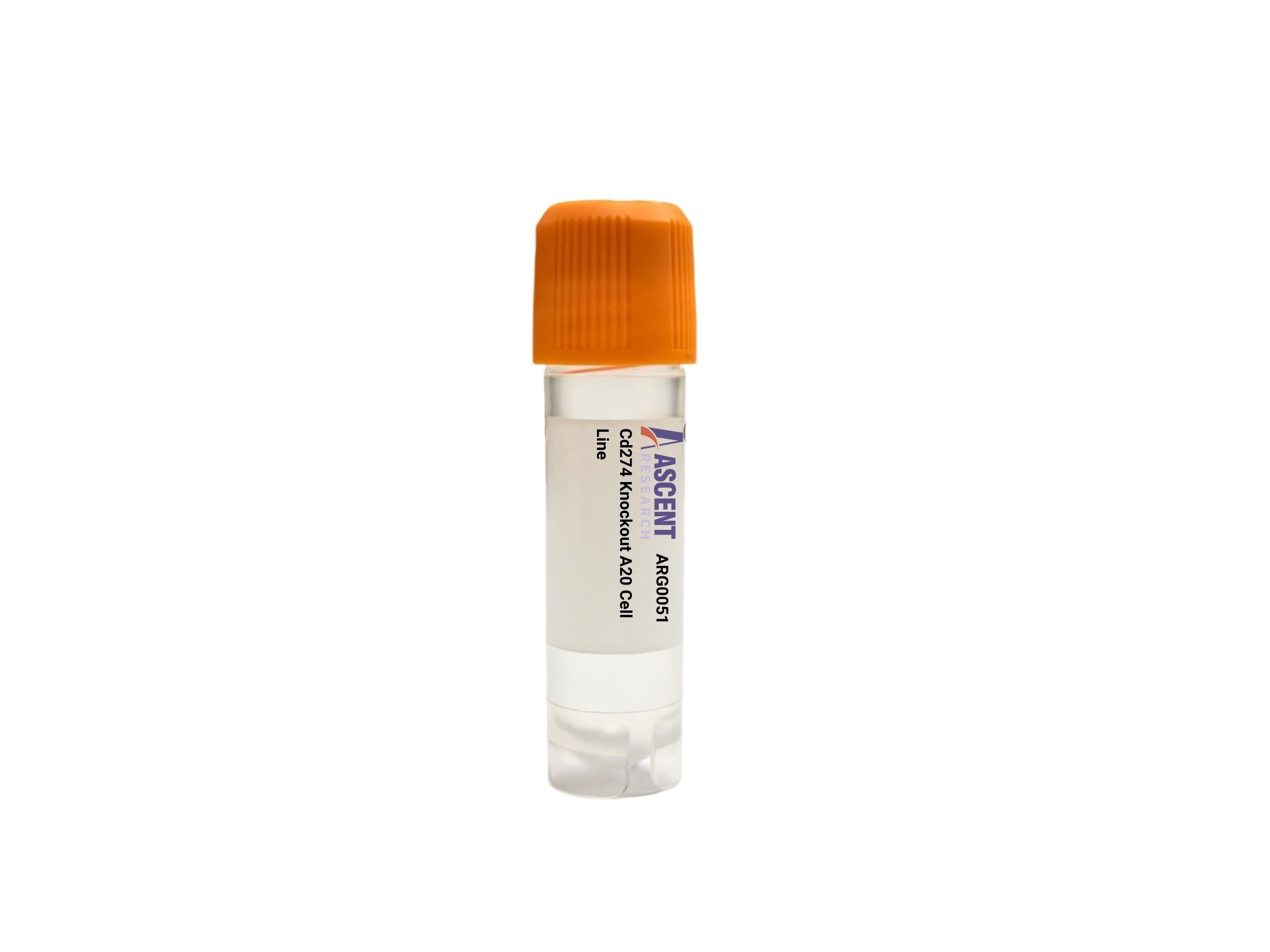
Cd274 Knockout A20 is a CRISPR/Cas9-edited mouse B cell lymphoma line with disruption of Cd274, which encodes the immune checkpoint ligand PD-L1. In the A20 background, a model of activated mature B lymphocytes and antigen-presenting tumor cells, this knockout supports analysis of PD-1/PD-L1 biology, IFNG-JAK1/JAK2-STAT1-IRF1 regulation, and NF-kappaB-associated checkpoint induction. The model is useful for tumor-immune co-culture, T-cell suppression and activation assays, antigen presentation studies, cytokine response profiling, flow cytometry, phospho-STAT1 analysis, RNA-seq, and immuno-oncology target validation in lymphoma and immune evasion research.
 BIRC3 Knockout A549 Polyclonal Cells
Cat. No. ARG23103
GTSE1 Knockout Hela Polyclonal Cells
Cat. No. ARG25511
APOO Knockout HT29 Polyclonal Cells
Cat. No. ARG32996
IL1RAP Knockout SK-HEP-1 Polyclonal Cells
Cat. No. ARG32661
ATAD3B Knockout jurkat Polyclonal Cells
Cat. No. ARG33942
BIRC3 Knockout A549 Polyclonal Cells
Cat. No. ARG23103
GTSE1 Knockout Hela Polyclonal Cells
Cat. No. ARG25511
APOO Knockout HT29 Polyclonal Cells
Cat. No. ARG32996
IL1RAP Knockout SK-HEP-1 Polyclonal Cells
Cat. No. ARG32661
ATAD3B Knockout jurkat Polyclonal Cells
Cat. No. ARG33942
 DU145 Luciferase Stable Cell Line
Cat. No. ARG0224
DU145 Luciferase Stable Cell Line
Cat. No. ARG0224
The Cd274 Knockout A20 Cell Line is a CRISPR/Cas9-engineered mouse cell model in which the Cd274 gene has been disrupted to eliminate functional PD-L1 expression. This stable edited line is generated in A20 cells, a murine B cell lymphoma background, and provides an in vitro system for studying checkpoint ligand biology in malignant B lymphocytes. Because A20 cells retain features of activated mature B cells and antigen-presenting tumor cells, this model is well suited for investigating immune regulatory mechanisms that depend on tumor-cell surface inhibitory ligands.
A20 is a BALB/c-derived murine B cell lymphoma line broadly used in immunology, cancer biology, and signal transduction research. The line serves as a tractable model for B-cell signaling, antigen presentation, cytokine responsiveness, and immune regulation in hematologic malignancy. Its utility derives from the capacity to respond to inflammatory stimuli and to model interactions between tumor cells and lymphocytes. In this context, A20 cells are particularly relevant for studies of adaptive immune regulation, chronic inflammatory signaling, and tumor-associated immune evasion mechanisms.
CD274 encodes PD-L1, a cell-surface immune checkpoint ligand that interacts with PDCD1 (PD-1) on activated T cells to suppress T-cell receptor signaling, IL2 production, IFNG production, proliferation, and cytotoxic effector function. Cd274 expression is transcriptionally induced by inflammatory and oncogenic pathways, prominently IFNG signaling through IFNGR1/IFNGR2, JAK1, JAK2, STAT1, and IRF1, and is also regulated by TNF- and TLR-linked NF-kappaB components including NFKB1 and RELA. Additional pathway inputs may arise from PI3K-AKT and MAPK signaling, with representative components such as PIK3CA, AKT1, and MAPK1. PD-L1 function and surface stability are further influenced by interacting factors including CD80, CMTM6, and CMTM4. Through these networks, CD274 acts downstream of cytokine and stress-response pathways while functioning upstream of PD-1-mediated suppression of antitumor immunity.
Loss of Cd274 in the A20 background enables direct evaluation of how tumor-cell intrinsic PD-L1 contributes to immune suppression in a B-cell lymphoma model. This is especially relevant for dissecting how IFN-gamma, NF-kappaB, or PI3K-AKT-mTOR pathway activity modulates checkpoint-dependent phenotypes in antigen-presenting tumor cells. The model can also support studies of pathway dependency, compensatory transcriptional responses, and changes in cytokine-induced cell-state transitions associated with lymphoma biology, chronic inflammation, and immuno-oncology.
This knockout cell line is applicable to immune checkpoint and tumor-immune interaction studies using flow cytometry to assess PD-L1 loss, western blotting or RT-qPCR to examine Cd274-associated signaling outputs, and RNA-seq to profile transcriptomic responses to IFNG, TNF, or other pathway agonists. In co-culture systems with T cells, researchers can measure T-cell activation, proliferation, cytokine release, and suppression phenotypes by ELISA and functional activation assays. The model is also suitable for reporter assays of IFN-gamma or NF-kappaB signaling, phospho-STAT1 analysis following cytokine stimulation, immunofluorescence-based localization studies, and drug sensitivity experiments evaluating checkpoint-related combination strategies. Researchers may contact Ascent Research for additional technical information, product details, or related gene-edited cell models.