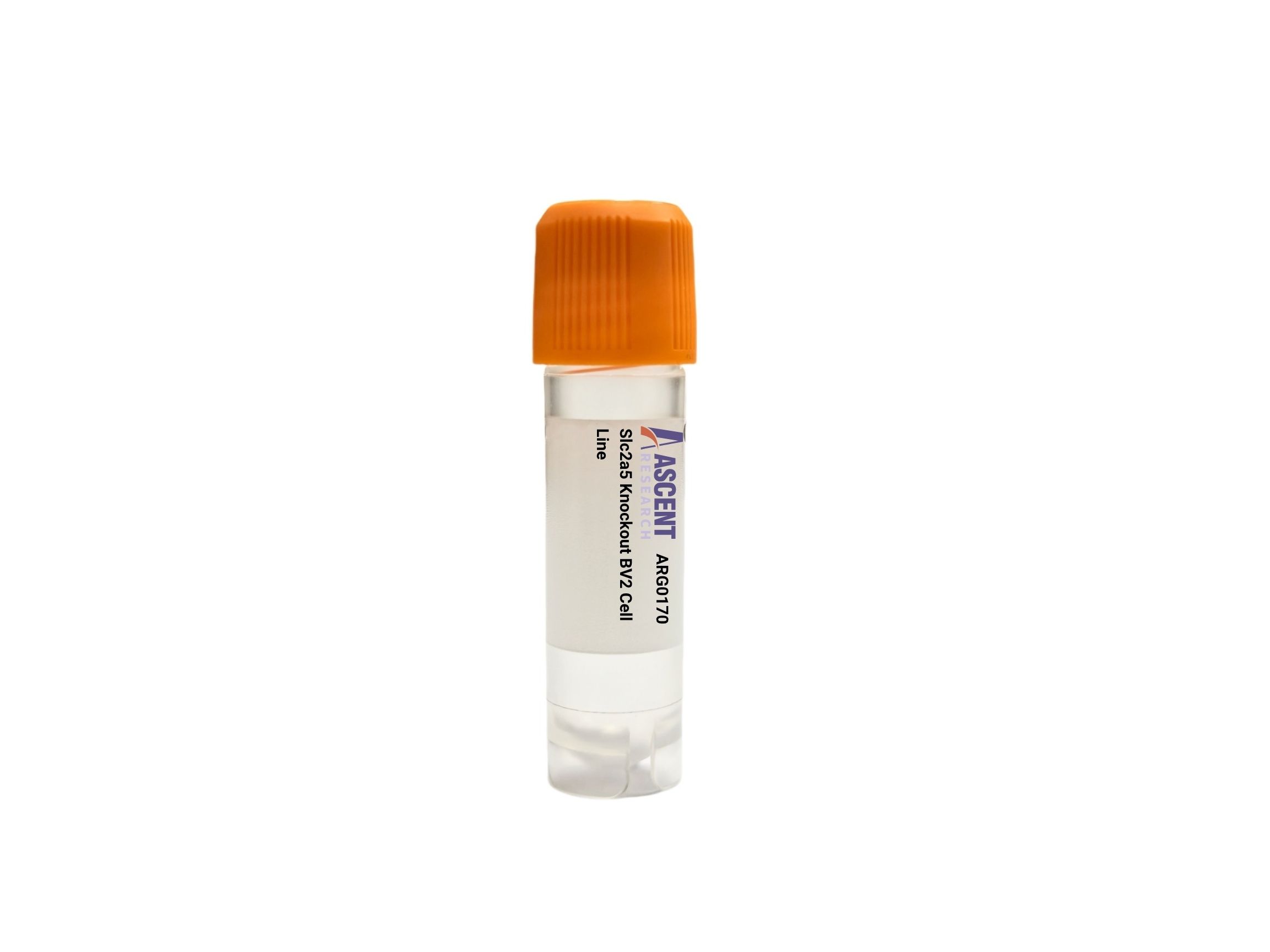
Genome-edited Cells
Slc2a5 Knockout BV2 is a CRISPR/Cas9-engineered mouse microglial cell line with disruption of SLC2A5/GLUT5, a key fructose transporter. In the BV2 neuroinflammatory model, loss of Slc2a5 enables investigation of fructose uptake, fructolytic coupling to KHK, and downstream effects on AMPK, NF-kB, ROS, TNF, IL6, and nitric oxide output. This knockout cell line is useful for microglial immunometabolism, neuroinflammation, oxidative stress, and metabolic-inflammation crosstalk studies using fructose uptake assays, Seahorse analysis, ATP and ROS measurements, ELISA, RNA-seq, and phagocytosis or flow cytometry-based phenotyping.
 Immortalized Mouse Embryo Pericytes
Cat. No. ARI0381
Immortalized Mouse Embryo Pericytes
Cat. No. ARI0381
 CAPN1 Knockout Raji Polyclonal Cells
Cat. No. ARG21475
GOLGA7 Knockout K562 Polyclonal Cells
Cat. No. ARG20472
ORM1 Knockout Hela Polyclonal Cells
Cat. No. ARG7482
ACOT8 Knockout A549 Polyclonal Cells
Cat. No. ARG31185
CAPN1 Knockout Raji Polyclonal Cells
Cat. No. ARG21475
GOLGA7 Knockout K562 Polyclonal Cells
Cat. No. ARG20472
ORM1 Knockout Hela Polyclonal Cells
Cat. No. ARG7482
ACOT8 Knockout A549 Polyclonal Cells
Cat. No. ARG31185
 Human Umbilical Vein Endothelial Cell Medium
Cat. No. ARM0172
Human Umbilical Vein Endothelial Cell Medium
Cat. No. ARM0172
The Slc2a5 Knockout BV2 Cell Line is a CRISPR/Cas9-engineered murine microglial model in which the Slc2a5 gene has been disrupted to eliminate functional SLC2A5/GLUT5 expression. This stable in vitro cell line enables direct investigation of fructose transport deficiency in a myeloid-like central nervous system cell background. As BV2 cells retain key features of activated microglia, this model is well suited for studies examining how altered monosaccharide transport influences inflammatory signaling, cellular metabolism, and stress responses.
BV2 is an immortalized mouse microglial cell line widely used as an experimental surrogate for resident CNS innate immune cells. Microglia mediate immune surveillance, phagocytosis, cytokine production, and neuroinflammatory signaling in response to environmental and pathological stimuli. Because BV2 cells are readily cultured and experimentally tractable, they are commonly used to study inflammatory activation, immunometabolic reprogramming, oxidative stress, and phagocytic function. In this context, BV2 provides a relevant host system for analyzing how nutrient transport pathways intersect with canonical microglial effector programs.
SLC2A5 encodes GLUT5, a facilitative fructose transporter that mediates plasma membrane fructose uptake and acts upstream of intracellular fructose availability, fructolytic flux, and energy balance. SLC2A5 is regulated by dietary fructose and carbohydrate availability, and its expression can be influenced by TXNIP, ChREBP/MLXIPL, glucocorticoids, and inflammatory stimuli such as LPS. Following transport, fructose enters pathways involving KHK, ALDOB, and TKFC, thereby affecting ATP utilization, ROS generation, and metabolic adaptation. In microglial-like cells, altered SLC2A5 function may modulate signaling relationships with GLUT1/SLC2A1, GLUT3/SLC2A3, AMPK, NF-kB, and NLRP3, with downstream effects on cytokine output including TNF and IL6, nitric oxide production, and oxidative stress-associated phenotypes. These pathways are relevant to neuroinflammation, neurodegenerative disease, metabolic syndrome, obesity, diabetes, and other disorders linked to carbohydrate dysregulation.
Loss of Slc2a5 in BV2 cells provides a useful system for resolving how fructose transport contributes to microglial immunometabolism under basal, fructose-enriched, or inflammatory conditions. This model supports assessment of whether GLUT5-dependent substrate availability influences inflammatory amplitude, redox balance, metabolic reprogramming, or compensatory transporter usage. It is particularly applicable to experiments examining LPS-responsive phenotypes, AMPK-associated metabolic stress, NF-kB-linked cytokine regulation, and crosstalk between carbohydrate metabolism and innate immune activation.
Researchers can apply this knockout cell line in fructose uptake assays, RT-qPCR, western blotting, and RNA-seq to characterize transporter expression and downstream transcriptional responses. Seahorse extracellular flux analysis, ATP assays, and glucose/fructose metabolic assays can be used to define bioenergetic consequences of Slc2a5 loss, while ROS assays, nitric oxide assays, and ELISA for TNF and IL6 enable evaluation of inflammatory and oxidative stress outputs. The model is also suitable for flow cytometry, immunofluorescence, and phagocytosis assays to examine microglial activation state and functional changes during metabolic perturbation or pharmacologic intervention targeting fructolysis and related pathways. Researchers may contact Ascent Research for additional technical information, product details, or related gene-edited cell models.