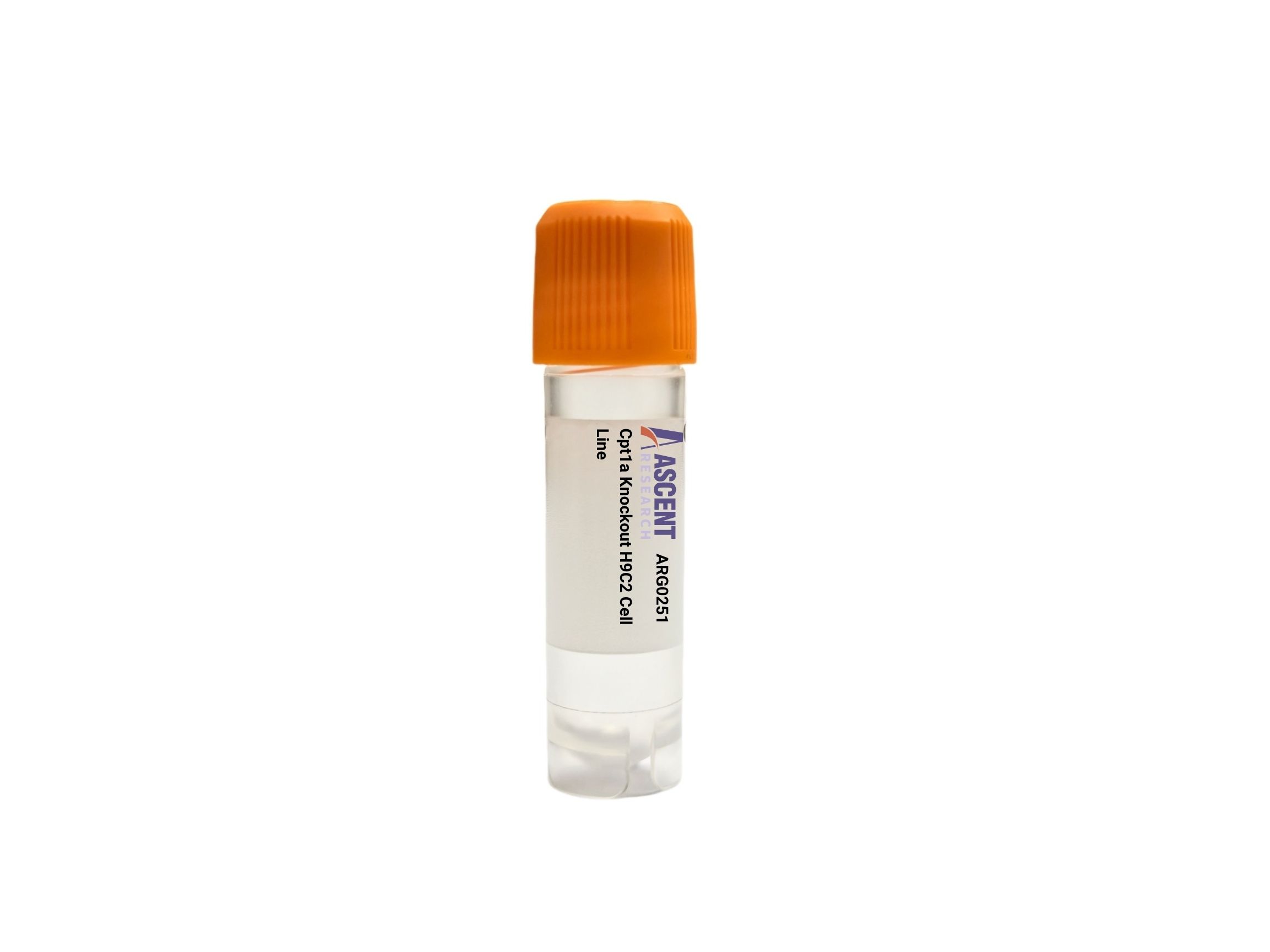
Genome-edited Cells
The Cpt1a Knockout H9C2 Cell Line is a CRISPR/Cas9-edited rat cardiomyoblast cell line with targeted disruption of the Cpt1a gene, encoding the rate-limiting enzyme of mitochondrial fatty acid oxidation. This loss-of-function model permits dissection of CPT1A-dependent metabolic pathways in a cardiac cell context, where CPT1A is inhibited by malonyl-CoA and activated by AMPK phosphorylation, linking energy status to lipid catabolism. Suitable for studying metabolic cardiomyopathy, insulin resistance, and mitochondrial dysfunction, the knockout enables analysis using fatty acid oxidation assays, Seahorse metabolic flux analysis, and acylcarnitine profiling. It provides a defined platform for evaluating therapeutic modulators of cardiac energy metabolism.
 CKAP4 Knockout A549 Polyclonal Cells
Cat. No. ARG10578
INIP Knockout NCI-H1975 Polyclonal Cells
Cat. No. ARG31740
PFKL Knockout HCT116 Polyclonal Cells
Cat. No. ARG7081
CKAP4 Knockout A549 Polyclonal Cells
Cat. No. ARG10578
INIP Knockout NCI-H1975 Polyclonal Cells
Cat. No. ARG31740
PFKL Knockout HCT116 Polyclonal Cells
Cat. No. ARG7081
 Mouse Trigeminal Astrocytes Medium
Cat. No. ARM0621
Mouse Trigeminal Astrocytes Medium
Cat. No. ARM0621
 T24 Luciferase Stable Cell Line
Cat. No. ARG0782
T24 Luciferase Stable Cell Line
Cat. No. ARG0782
 Rabbit Abdominal Aortic Endothelial Cells
Cat. No. ARP0687
Rabbit Abdominal Aortic Endothelial Cells
Cat. No. ARP0687
The Cpt1a Knockout H9C2 Cell Line is a CRISPR/Cas9-edited knockout cell line derived from the H9C2 rat cardiomyoblast line, designed for investigating the functional roles of the Cpt1a gene in cardiac metabolism. This cell line features a targeted disruption of the Cpt1a locus, resulting in a loss-of-function model that eliminates expression of the CPT1A protein, the rate-limiting enzyme of mitochondrial long-chain fatty acid oxidation. The knockout enables researchers to dissect CPT1A-dependent metabolic pathways and their impact on cardiomyocyte biology without confounding off-target effects typical of pharmacological inhibitors. This is a stable cell line suitable for both acute metabolic studies and long-term phenotypic analyses.
The H9C2 cell line was originally isolated from embryonic rat ventricular tissue and exhibits many features of immature cardiomyoblasts, including the capacity to differentiate into a more mature cardiac muscle phenotype under defined conditions. These cells are widely employed as an in vitro model for cardiac physiology and pathology, owing to their ability to recapitulate key aspects of cardiomyocyte metabolism, electrophysiology, and hypertrophic responses. Their robust growth characteristics and ease of genetic manipulation make them a preferred platform for generating stable gene-edited lines. The H9C2 background is particularly suited for studies of metabolic cardiomyopathy, as these cells retain functional pathways for fatty acid and glucose oxidation, as well as insulin-sensitive signaling cascades.
CPT1A catalyzes the conversion of long-chain acyl-CoA to acylcarnitine for mitochondrial import, serving as the rate-limiting step in fatty acid oxidation. Its activity is inhibited by malonyl-CoA, produced by ACC, and activated by AMPK-driven phosphorylation. Expression is regulated by PPAR?? and PGC-1??, while insulin signaling suppresses fatty acid oxidation via ACC. Downstream, acylcarnitine is converted back to acyl-CoA by CPT2 for ??-oxidation, yielding acetyl-CoA, NADH, and FADH2. Interacting factors include SLC25A20, VDAC, and UCP2. Thus, Cpt1a disruption blocks fatty acid-derived energy production and alters AMPK and PPAR?? signaling networks.
In H9C2 cardiomyoblasts, CPT1A is crucial for metabolic flexibility; its loss shifts substrate utilization to glycolysis, mimicking metabolic derangements in heart failure and diabetic cardiomyopathy. The knockout enables study of lipid accumulation, oxidative stress, and insulin resistance resulting from impaired fatty acid oxidation. Given H9C2 responsiveness to hypertrophic and apoptotic signals, CPT1A deficiency provides insight into how lipid metabolism influences cardiac remodeling and survival. This model is valuable for testing AMPK activators or PPAR?? agonists that target energy homeostasis.
The Cpt1a Knockout H9C2 Cell Line supports applications such as CPT1 activity assays, Seahorse metabolic flux analysis, and acylcarnitine profiling by LC-MS. It is suitable for investigating metabolic cardiomyopathy, insulin resistance, and mitochondrial dysfunction, as well as for cardiotoxicity screening and drug metabolism studies. Assays include RT-qPCR and western blotting for pathway analysis, ATP measurement, JC-1 mitochondrial membrane potential, Oil Red O staining, and apoptosis evaluation. Researchers can probe interactions between fatty acid oxidation and signaling via AMPK and PPAR??. For further information or to request a quote, please contact Ascent Research.