Genome-edited Cells
Liver
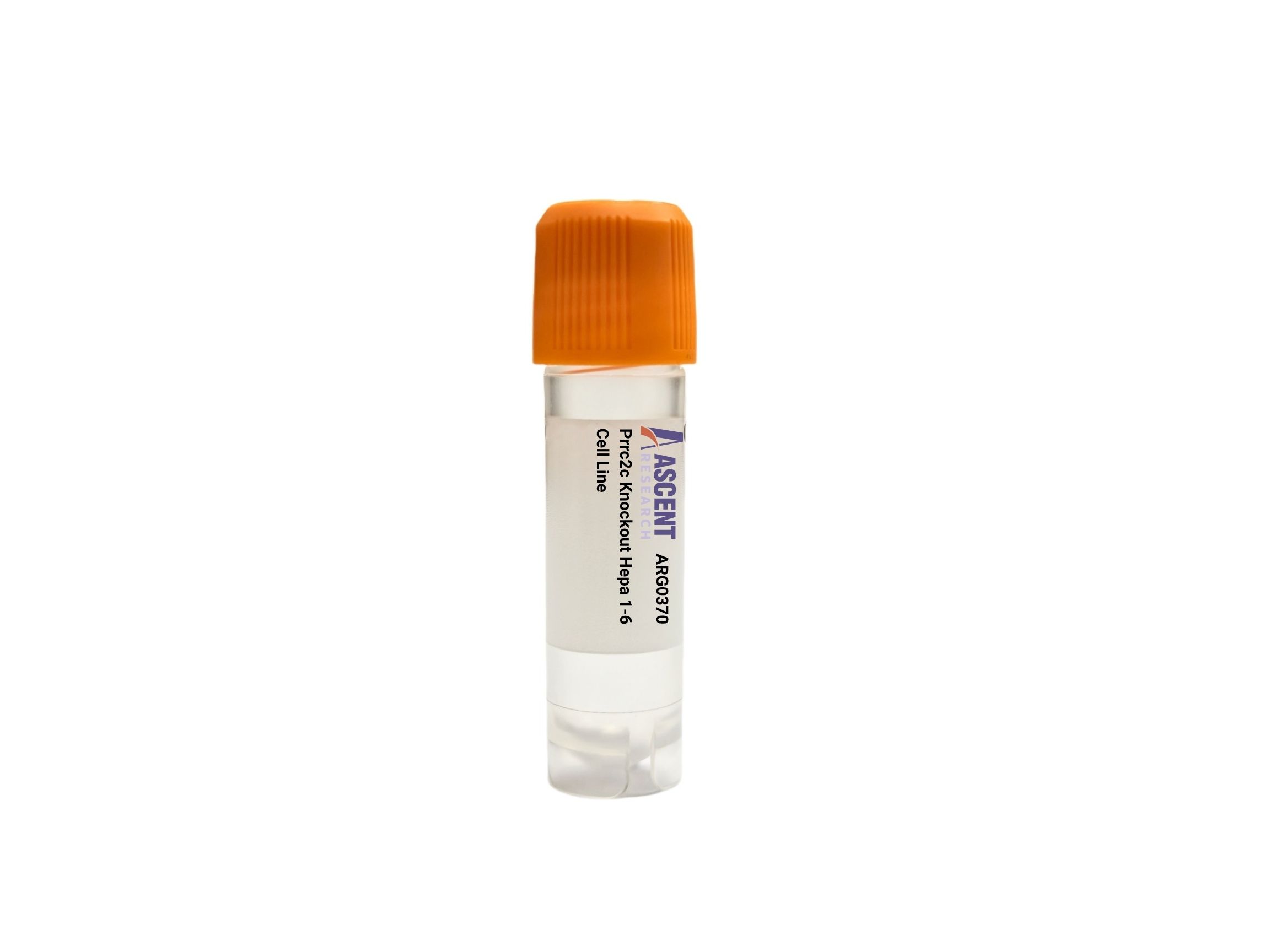
The Prrc2c Knockout Hepa 1-6 Cell Line is a CRISPR/Cas9-edited knockout cell line targeting Prrc2c in the Hepa 1-6 mouse hepatocellular carcinoma model. PRRC2C is a component of the mRNA cap-binding complex that interacts with eIF4G and operates downstream of mTORC1, regulating translation of mRNAs involved in cell proliferation and survival. This knockout model enables investigation of Prrc2c function in translation regulation, hepatocellular carcinoma progression, and oncogenic signaling. It is suitable for applications such as western blotting, RNA-seq, polysome profiling, and cell proliferation assays, providing a relevant hepatic context for cancer research.
 ACE2 Knockout HuH-7 Cell Line
Cat. No. ARG43695
ACE2 Knockout HuH-7 Cell Line
Cat. No. ARG43695
 EPB41L2 Knockout HT29 Polyclonal Cells
Cat. No. ARG14942
Gna11 Knockout Hela Polyclonal Cells
Cat. No. ARG37620
GNPTG Knockout huh-7 Polyclonal Cells
Cat. No. ARG28198
FAM131C Knockout Hela Polyclonal Cells
Cat. No. ARG7659
NOTCH1 Knockout AGS Polyclonal Cells
Cat. No. ARG2537
EPB41L2 Knockout HT29 Polyclonal Cells
Cat. No. ARG14942
Gna11 Knockout Hela Polyclonal Cells
Cat. No. ARG37620
GNPTG Knockout huh-7 Polyclonal Cells
Cat. No. ARG28198
FAM131C Knockout Hela Polyclonal Cells
Cat. No. ARG7659
NOTCH1 Knockout AGS Polyclonal Cells
Cat. No. ARG2537
The Prrc2c Knockout Hepa 1-6 Cell Line is a CRISPR/Cas9-edited knockout cell line derived from the Hepa 1-6 mouse hepatocellular carcinoma cell line, featuring targeted disruption of the Prrc2c gene. This loss-of-function model enables the investigation of Prrc2c-dependent mechanisms in a hepatic cancer context, providing a powerful tool for dissecting its role in mRNA processing and translation regulation. The edited cell line retains the core characteristics of the parental Hepa 1-6 line while lacking functional Prrc2c expression, facilitating comparative studies between wild-type and knockout states.
Hepa 1-6 is a well-established hepatocellular carcinoma cell line originating from a C57L mouse tumor. It serves as a relevant in vitro system for studies of liver metabolism, detoxification, and protein synthesis, closely mimicking the hepatic environment. The cell line??s tumorigenic properties and epithelial morphology make it particularly suitable for examining oncogenic processes and hepatocellular carcinoma progression in a genetically defined background.
PRRC2C functions as a component of the mRNA cap-binding complex, where it interacts with eIF4G and other eukaryotic translation initiation factors to modulate cap-dependent translation. It operates downstream of mTORC1 signaling, which is known to phosphorylate and regulate translation initiation components, and may also be transcriptionally activated by MYC. Through these interactions, PRRC2C influences the translation of select mRNAs encoding cell cycle regulators and translation initiation factors, thereby contributing to translational control of proliferation and survival pathways. The knockout thus disrupts a node linking growth signals to the protein synthesis machinery.
In the Hepa 1-6 background, Prrc2c disruption provides a physiologically relevant model to study how translation regulation impacts hepatocellular carcinoma cell behavior. Since liver cells rely heavily on protein synthesis for metabolic and proliferative functions, loss of PRRC2C likely alters the translation landscape of mRNAs critical for cell growth and stress responses. This model enables dissection of Prrc2c-mediated contributions to hepatocarcinogenesis and may reveal vulnerabilities associated with dysregulated translation in liver cancer.
The Prrc2c Knockout Hepa 1-6 Cell Line is suited for a broad range of research applications, including studies of translation initiation, mRNA processing, and oncogenic signaling. Typical assays include western blotting and RT-qPCR for expression analysis, RNA-seq for transcriptome profiling, polysome profiling to assess translational efficiency, and functional assays such as cell proliferation, migration, and flow cytometry-based analyses. Researchers can employ this model to explore the interplay between mTORC1/MYC signaling and translational control in hepatocellular carcinoma. For further information or custom inquiries, please contact Ascent Research.