Genome-edited Cells
Liver
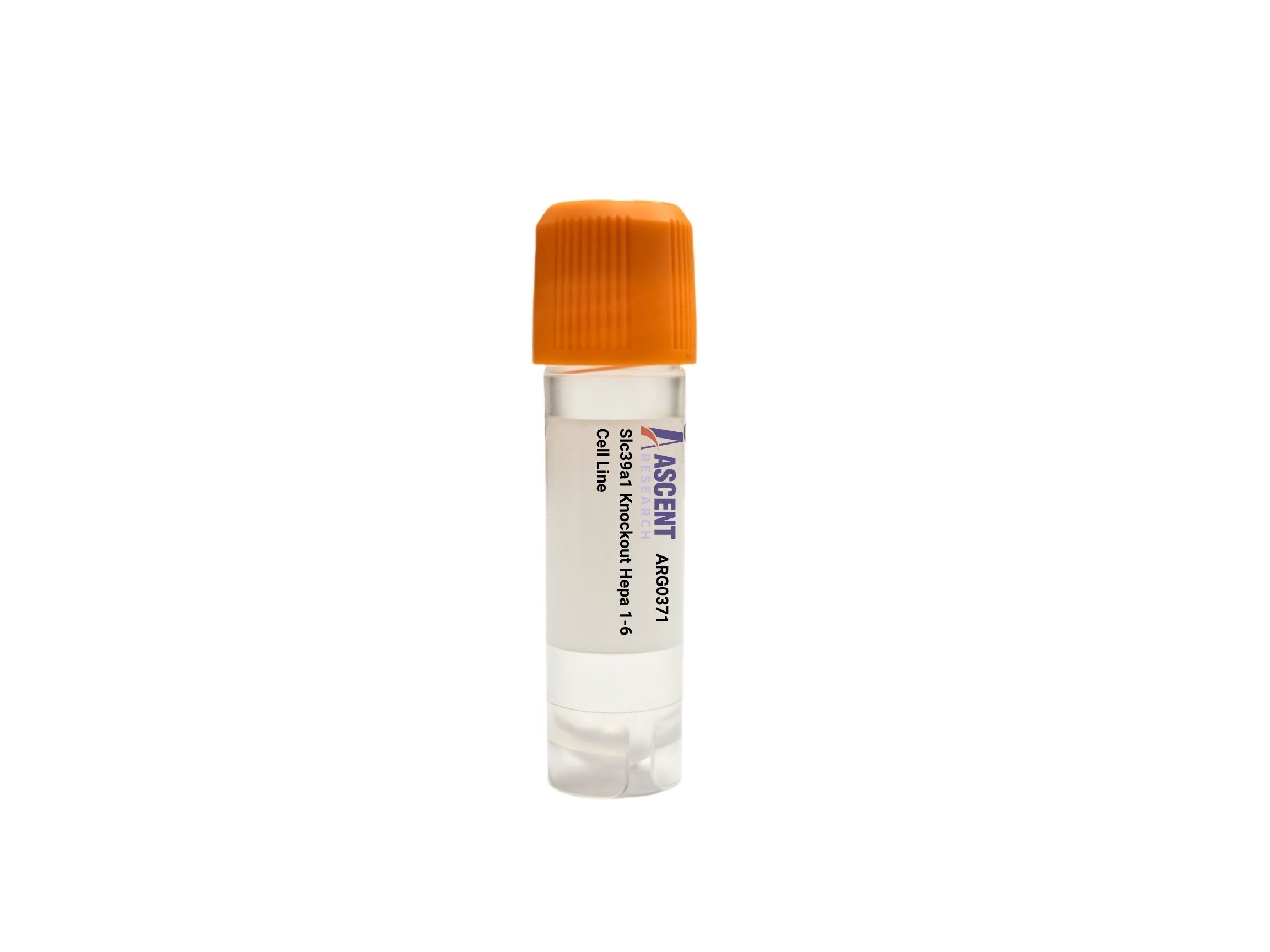
The Slc39a1 Knockout Hepa 1-6 Cell Line is a CRISPR/Cas9-edited murine hepatoma cell model lacking the ZIP1 zinc transporter. Disruption of Slc39a1 allows investigation of zinc influx dysregulation in liver cancer cells, where ZIP1 is regulated by MTF1 and STAT3 and controls downstream zinc-dependent transcription factors such as p53 and NF-??B. Derived from C57L/J mouse Hepa 1-6 hepatocytes, this knockout line retains hepatic metabolic and detoxification functions. Applications include studying zinc homeostasis, hepatocarcinogenesis, and therapeutic targeting of zinc transporters using assays like ICP-MS, cell viability tests, and flow cytometry with FluoZin-3.
 GPR157 Knockout HAP1 Polyclonal Cells
Cat. No. ARG22323
OTUD6B Knockout A2780 Polyclonal Cells
Cat. No. ARG18409
GRIN2B Knockout HAP1 Polyclonal Cells
Cat. No. ARG22393
HDAC1 Knockout KYSE30 Polyclonal Cells
Cat. No. ARG36303
HS3ST1 Knockout PATU8988T Polyclonal Cells
Cat. No. ARG36620
NPC2 Knockout 786-O Polyclonal Cells
Cat. No. ARG5374
GPR157 Knockout HAP1 Polyclonal Cells
Cat. No. ARG22323
OTUD6B Knockout A2780 Polyclonal Cells
Cat. No. ARG18409
GRIN2B Knockout HAP1 Polyclonal Cells
Cat. No. ARG22393
HDAC1 Knockout KYSE30 Polyclonal Cells
Cat. No. ARG36303
HS3ST1 Knockout PATU8988T Polyclonal Cells
Cat. No. ARG36620
NPC2 Knockout 786-O Polyclonal Cells
Cat. No. ARG5374
The Slc39a1 Knockout Hepa 1-6 Cell Line is a CRISPR/Cas9-edited knockout cell line derived from the parental Hepa 1-6 mouse hepatoma line, engineered to disrupt the Slc39a1 gene encoding the ZIP1 zinc transporter. This model provides a permanent loss-of-function system for studying zinc influx and homeostasis in a hepatic background. The cell line has been verified to ablate ZIP1 expression through CRISPR/Cas9-mediated gene disruption, enabling researchers to dissect ZIP1-dependent mechanisms without transient silencing artifacts. As a stable knockout cell line, it is suited for long-term functional assays, drug response studies, and pathway analysis, offering a consistent genetic background for reproducible investigations into zinc-regulated processes.
Hepa 1-6 cells originate from a C57L/J mouse hepatoma and retain key characteristics of hepatocytes, including parenchymal morphology, metabolic competence, and detoxification capabilities. This cell line is widely employed as a model for hepatocyte biology, hepatocellular carcinoma, and hepatic drug metabolism. Its well-differentiated state and expression of liver-specific enzymes make it an appropriate host for studying gene function in the context of hepatic physiology and pathology. The knockout of Slc39a1 in this background allows for the exploration of ZIP1 contributions to liver cell growth, survival, and stress responses, while maintaining the cell line??s established utility in cancer research and toxicology studies.
SLC39A1 (ZIP1) is a transmembrane protein that facilitates the uptake of zinc ions from the extracellular space and intracellular compartments into the cytosol, elevating free zinc pools. ZIP1 expression is regulated by metal-responsive transcription factor 1 (MTF1) in response to zinc availability, and by STAT3 under cytokine signaling, while it interacts directly with zinc ions and possibly metallochaperones. Downstream, increased intracellular zinc modulates the activity of zinc-dependent transcription factors such as p53 and NF-??B, induces expression of metallothioneins for zinc buffering, and influences the function of ZnT efflux transporters like ZnT1 that export zinc. This network forms a feedback loop where SLC39A1, intracellular free zinc, metallothioneins, and ZnT1 coordinate cellular zinc homeostasis, impacting transcription, enzyme activity, and signaling cascades.
In hepatocytes, zinc is essential for numerous metalloenzymes involved in metabolism, antioxidant defense, and detoxification, and its dysregulation is implicated in hepatocarcinogenesis. The Slc39a1 knockout in Hepa 1-6 cells provides a dedicated model to dissect how ZIP1-mediated zinc influx contributes to liver cancer cell proliferation, apoptosis resistance, and differentiation. By eliminating the major zinc importer, researchers can assess shifts in zinc compartmentalization and the resulting alterations in zinc-sensitive pathways, such as p53-mediated apoptosis and NF-??B-driven survival signals. This model is particularly valuable for investigating the interplay between zinc status and hepatoma malignancy, offering insights into whether ZIP1 serves as a vulnerability in liver cancer cells that can be targeted therapeutically.
This knockout cell line supports a range of experimental applications in zinc biology and liver cancer research. Researchers can quantify intracellular zinc accumulation using inductively coupled plasma mass spectrometry (ICP-MS) or flow cytometry with zinc-sensitive dyes like FluoZin-3, and confirm ZIP1 ablation via western blotting or immunofluorescence. Functional assays include monitoring cell viability under zinc depletion or supplementation, and profiling zinc-responsive gene expression by RT-qPCR for targets such as metallothioneins. The model is ideal for mechanistic studies on ZIP1??s role in hepatocarcinogenesis, screening compounds that modulate zinc transporter activity, and evaluating the impact of zinc flux on drug sensitivity. For further information or custom services, please contact Ascent Research.