Genome-edited Cells
Liver
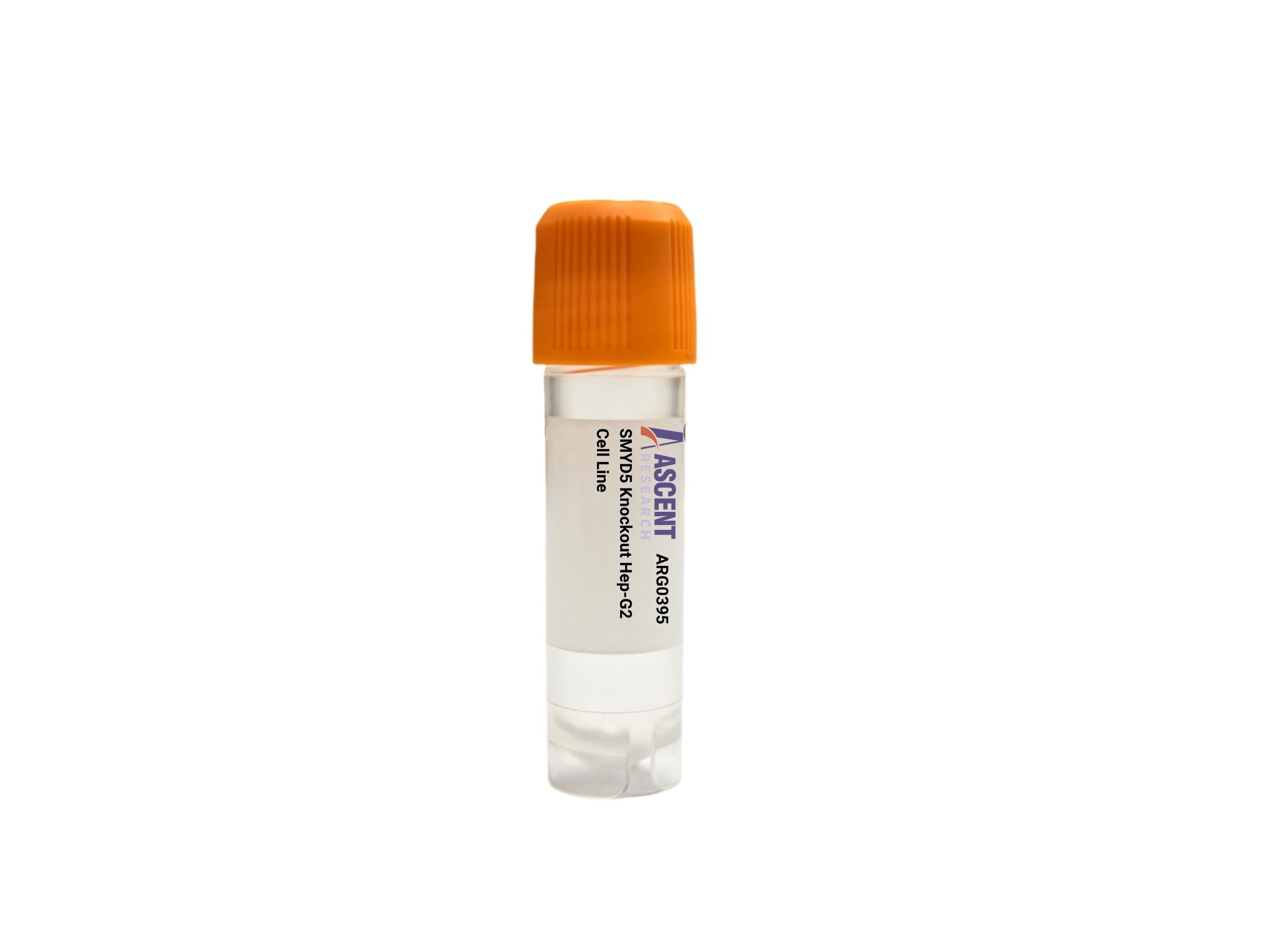
The SMYD5 Knockout Hep-G2 Cell Line is a CRISPR/Cas9-edited human hepatocellular carcinoma model engineered to eliminate SMYD5 function. SMYD5 encodes a lysine methyltransferase that trimethylates histone H4 at lysine 20 (H4K20me3), a repressive mark associated with chromatin organization and nuclear lamina interactions. Through association with Lamin A/C, SMYD5 regulates downstream targets such as CDKN1A and E-cadherin, impacting cell cycle progression and epithelial-mesenchymal transition. This knockout cell line facilitates research into epigenetic gene silencing, chromatin dynamics, and hepatocellular carcinoma growth. Key applications include RT-qPCR analysis of EMT markers, ChIP-qPCR for H4K20me3 profiling, and functional assays assessing proliferation and migration.
 HGD Knockout HAP1 Polyclonal Cells
Cat. No. ARG22506
APOB Knockout HEK293T Polyclonal Cells
Cat. No. ARG25707
AFF1 Knockout HGC-27 Polyclonal Cells
Cat. No. ARG29444
C5orf22 Knockout A2780 Polyclonal Cells
Cat. No. ARG41490
METTL22 Knockout HEK293T Polyclonal Cells
Cat. No. ARG4525
HGD Knockout HAP1 Polyclonal Cells
Cat. No. ARG22506
APOB Knockout HEK293T Polyclonal Cells
Cat. No. ARG25707
AFF1 Knockout HGC-27 Polyclonal Cells
Cat. No. ARG29444
C5orf22 Knockout A2780 Polyclonal Cells
Cat. No. ARG41490
METTL22 Knockout HEK293T Polyclonal Cells
Cat. No. ARG4525
 CD33 Knockout THP-1 Cell Line
Cat. No. ARG0795
CD33 Knockout THP-1 Cell Line
Cat. No. ARG0795
The SMYD5 Knockout Hep-G2 Cell Line is a CRISPR/Cas9-edited hepatocellular carcinoma model with targeted disruption of the SMYD5 gene. This knockout cell line provides a stable loss-of-function system for studying SMYD5-dependent mechanisms in a hepatic context, enabling reliable investigations into epigenetic regulation and chromatin architecture without the limitations of transient gene silencing.
The parent Hep-G2 cell line, derived from human hepatoblastoma, exhibits adherent epithelial morphology and retains key hepatocyte functions, including liver-specific enzyme expression. It is widely used in hepatology for examining hepatocyte biology, drug metabolism, and liver cancer pathogenesis, providing a physiologically relevant platform for interrogating epigenetic modifiers such as SMYD5.
SMYD5 is a SET-domain lysine methyltransferase that trimethylates histone H4 at lysine 20 (H4K20me3), a repressive chromatin mark. It functions at the nuclear periphery by interacting with Lamin A/C (LMNA), BANF1, and Emerin, where it organizes chromatin and represses transcription. SMYD5 is activated by nuclear envelope stress and transcription factors SP1 and E2F. Key downstream targets include the cell cycle inhibitor CDKN1A (p21) and epithelial-mesenchymal transition regulators Twist1, Vimentin, and E-cadherin, linking nuclear lamina organization to proliferative and invasive cellular behaviors.
In hepatocellular carcinoma, SMYD5-driven H4K20me3 deposition contributes to gene silencing that promotes tumor growth and EMT-mediated metastasis. This knockout model enables dissection of the nuclear lamina-associated epigenetic programs that control liver cancer cell proliferation, apoptosis, and motility. It offers a tractable system for mapping the transcriptional effects of SMYD5 loss and for assessing the functional role of this methyltransferase in hepatoma biology.
Researchers can employ this cell line in ChIP-qPCR to map H4K20me3 occupancy, Western blotting to confirm knockout, and RT-qPCR to measure CDKN1A and EMT marker expression. Immunofluorescence visualizes nuclear architecture and Lamin A/C localization. Functional assays such as MTT proliferation, Transwell migration/invasion, and apoptosis profiling reveal phenotypic consequences of SMYD5 ablation. This model supports drug discovery efforts targeting epigenetic drivers of liver cancer. For technical inquiries, please contact Ascent Research.