Genome-edited Cells
Large intestine (colon)
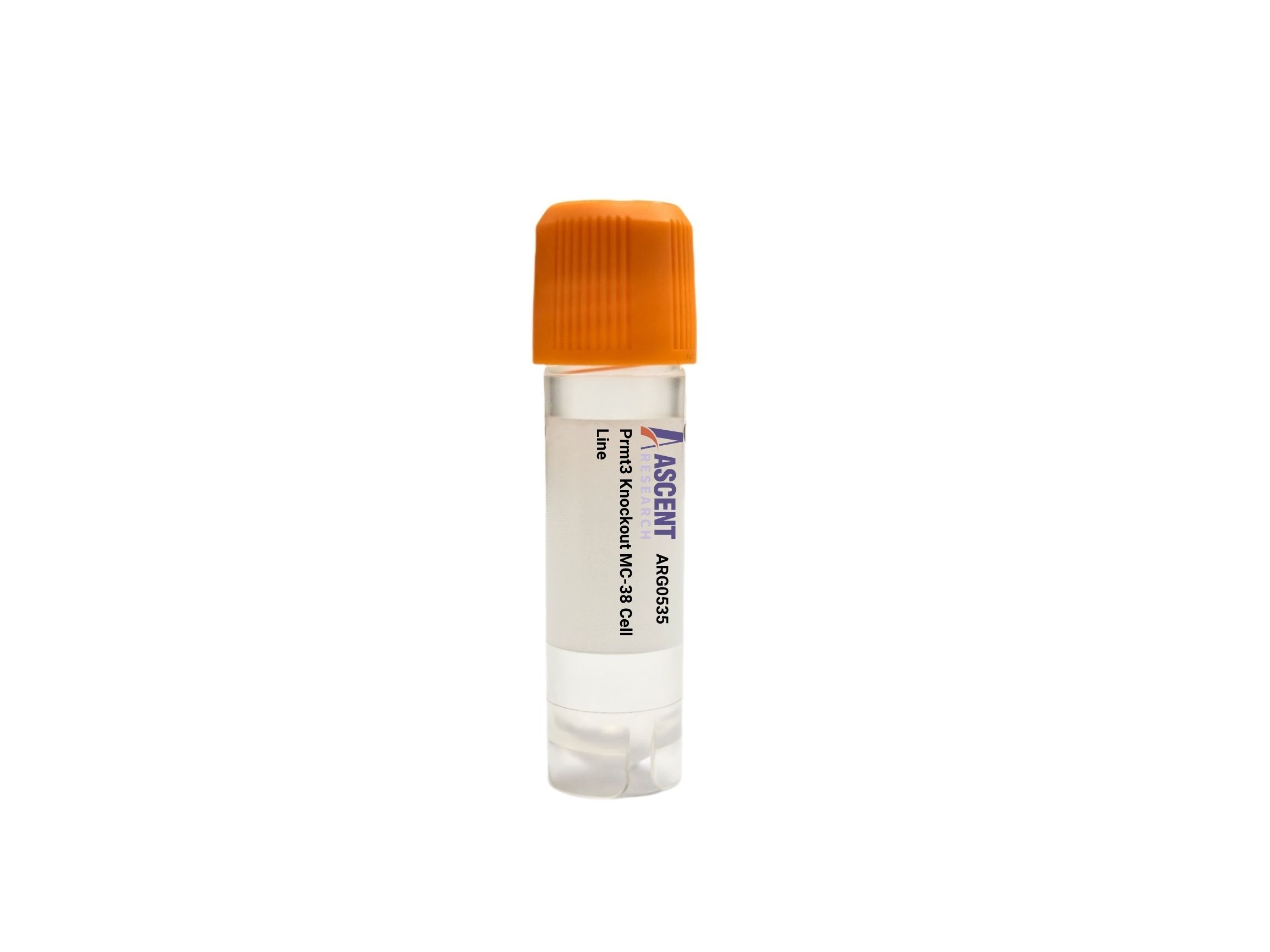
The Prmt3 Knockout MC-38 Cell Line is a CRISPR/Cas9-edited murine colon carcinoma cell line with disruption of the Prmt3 gene, encoding protein arginine methyltransferase 3 (PRMT3). PRMT3 catalyzes asymmetric dimethylation of ribosomal protein S2 (RPS2) and is regulated by growth factor signaling and the mTOR pathway, playing a critical role in ribosome biogenesis and translational control. This knockout model impairs protein synthesis and cell proliferation, making it valuable for colorectal cancer research and arginine methylation studies. It is suitable for polysome profiling, cell proliferation assays, and exploring mTOR-related translational pathways in a syngeneic C57BL/6 background, both in vitro and in vivo.
 LSS Knockout Hela Polyclonal Cells
Cat. No. ARG8153
HDAC3 Knockout THP-1 Polyclonal Cells
Cat. No. ARG23481
APEX1 Knockout jurkat Polyclonal Cells
Cat. No. ARG33862
CASP1 Knockout A2780 Polyclonal Cells
Cat. No. ARG42391
FER Knockout NCI-H1299 Polyclonal Cells
Cat. No. ARG17837
LSS Knockout Hela Polyclonal Cells
Cat. No. ARG8153
HDAC3 Knockout THP-1 Polyclonal Cells
Cat. No. ARG23481
APEX1 Knockout jurkat Polyclonal Cells
Cat. No. ARG33862
CASP1 Knockout A2780 Polyclonal Cells
Cat. No. ARG42391
FER Knockout NCI-H1299 Polyclonal Cells
Cat. No. ARG17837
 Rabbit Mammary Fibroblasts
Cat. No. ARP0782
Rabbit Mammary Fibroblasts
Cat. No. ARP0782
The Prmt3 Knockout MC-38 Cell Line is a CRISPR/Cas9-edited murine colon carcinoma cell line designed to disrupt the Prmt3 gene, generating a loss-of-function model for studying protein arginine methyltransferase 3 (PRMT3). This knockout cell line allows researchers to investigate PRMT3’s role in ribosomal protein methylation and translation regulation without interference from endogenous PRMT3 activity. Supplied as a stable population, it is a valuable tool for functional assays and comparative studies with isogenic parental controls.
MC-38 cells are derived from a C57BL/6 murine colon adenocarcinoma and serve as a widely adopted syngeneic model for colorectal cancer. These cells exhibit active growth factor signaling and mTOR pathway activity, making them relevant for dissecting translational control in a cancer setting. They are amenable to genetic modification and permit in vivo tumor studies in immunocompetent hosts, offering a platform to assess the impact of Prmt3 knockout on tumor growth and the microenvironment.
PRMT3 is a type I arginine methyltransferase that catalyzes asymmetric dimethylation of arginine residues on ribosomal protein S2 (RPS2), a key component of the 40S subunit. This modification is critical for ribosome biogenesis and translational fidelity. PRMT3 activity is regulated by growth factor signaling and the mTOR pathway, which coordinate cellular growth. Downstream, PRMT3-mediated RPS2 methylation influences global translation and cell proliferation, with PRMT3 interacting with ribosomal proteins and other substrates. Disruption of Prmt3 ablates this regulatory axis, enabling interrogation of how defective ribosome methylation impacts protein synthesis.
In MC-38 colon carcinoma cells, Prmt3 knockout likely impairs translational capacity and reduces proliferative fitness, reflecting the reliance of cancer cells on efficient ribosome function. Since mTOR hyperactivation is common in colorectal cancer, loss of PRMT3 may reveal synthetic vulnerabilities or alter sensitivity to mTOR-targeted therapies. This model facilitates the study of PRMT3-dependent arginine methylation and its consequences on tumor cell biology, providing insights into potential therapeutic avenues.
The Prmt3 Knockout MC-38 Cell Line is well-suited for diverse experimental applications. Western blotting and methyltransferase assays confirm loss of PRMT3 protein and activity, while polysome profiling assesses ribosomal assembly and translation efficiency. Cell proliferation and colony formation assays measure growth phenotypes in vitro. Combining with mTOR inhibitors can dissect pathway interactions. For in vivo work, syngeneic implantation allows evaluation of tumorigenicity. For further details or technical assistance, please contact Ascent Research.