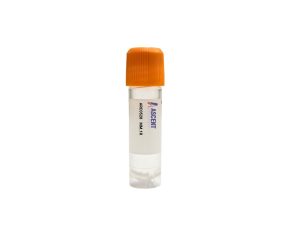
In Stock Cell Lines
Homo sapiens (Human)
Brain
Adherent
The NDC1 Knockout LN-229 Cell Line is a CRISPR/Cas9-edited knockout cell line generated from the human glioblastoma LN-229 cell line, targeting the NDC1 gene encoding a transmembrane nucleoporin essential for nuclear pore complex (NPC) assembly. Loss of NDC1 disrupts NPC integrity, impairing nucleocytoplasmic transport and mitotic chromosome segregation. This model enables investigation of NDC1 interactions with nucleoporins like NUP107 and NUP133, and its role in cell cycle progression. It is ideal for glioblastoma research, NPC biology studies, and assays such as immunofluorescence, proliferation analysis, and co-immunoprecipitation.
 IFT43 Knockout K562 Polyclonal Cells
Cat. No. ARG20642
COQ7 Knockout NCI-H1299 Polyclonal Cells
Cat. No. ARG17675
ANKIB1 Knockout MES-OV Polyclonal Cells
Cat. No. ARG24133
KIFC3 Knockout Hela Polyclonal Cells
Cat. No. ARG26370
AIFM2 Knockout KYSE30 Polyclonal Cells
Cat. No. ARG36275
IFT43 Knockout K562 Polyclonal Cells
Cat. No. ARG20642
COQ7 Knockout NCI-H1299 Polyclonal Cells
Cat. No. ARG17675
ANKIB1 Knockout MES-OV Polyclonal Cells
Cat. No. ARG24133
KIFC3 Knockout Hela Polyclonal Cells
Cat. No. ARG26370
AIFM2 Knockout KYSE30 Polyclonal Cells
Cat. No. ARG36275
 PI3 Knockout HaCaT Cell Line
Cat. No. ARG0257
PI3 Knockout HaCaT Cell Line
Cat. No. ARG0257
The NDC1 Knockout LN-229 Cell Line is a CRISPR/Cas9-edited knockout cell line derived from the human LN-229 glioblastoma cell line, designed for targeted disruption of the NDC1 gene. This model eliminates the expression of the transmembrane nucleoporin NDC1, an integral component of the nuclear pore complex (NPC) essential for NPC assembly and integration into the nuclear envelope. By ablating NDC1 function, researchers can investigate the direct consequences of impaired NPC biogenesis in a glioblastoma background without the confounding effects of pharmacological inhibitors, providing a clean genetic tool for mechanistic studies of nuclear transport and mitotic fidelity.
The parental LN-229 cell line originates from a patient with glioblastoma multiforme, a highly aggressive and invasive brain tumor. LN-229 cells retain malignant glial characteristics, including robust proliferation, invasive capacity, and resistance to apoptosis, making them a well-established model for glioblastoma research. Their genetic profile and tumorigenic properties allow investigators to study oncogenic signaling, tumor microenvironment interactions, and therapeutic vulnerability in a clinically relevant context. The integration of this knockout into LN-229 thus places NDC1 deficiency within a system that faithfully recapitulates the molecular challenges of glioblastoma.
NDC1 functions as a critical structural and regulatory node in NPC assembly, interacting directly with key nucleoporins such as NUP107, NUP133, NUP160, and the assembly factor ELYS. Its activity is modulated by cell cycle-dependent kinases, which phosphorylate NDC1 during mitosis to coordinate NPC insertion into the reforming nuclear envelope. Downstream, NDC1 ensures proper chromosome alignment at the metaphase plate and nucleocytoplasmic trafficking of macromolecules. Loss of NDC1 disrupts these processes, leading to mislocalization of NPC scaffold components, defective spindle assembly checkpoint signaling, and aberrant segregation of chromosomes. The resulting impairment in nuclear transport and mitotic progression ultimately compromises cell proliferation and survival.
In the context of glioblastoma, NDC1 knockout offers a unique opportunity to dissect how nuclear pore dysfunction influences malignant cell behavior. Glioblastoma cells exhibit heightened nucleocytoplasmic transport demands to sustain rapid growth and adaptation to stress. Disruption of NPC integrity via NDC1 loss may perturb the nuclear import of transcription factors, oncogenic signaling molecules, or tumor suppressors, while mitotic errors can fuel genomic instability??a hallmark of cancer. This model therefore enables the investigation of NDC1??s roles in glioblastoma pathogenesis, linking nuclear architecture to disease progression and providing a platform to explore synthetic lethal interactions or vulnerabilities arising from NPC inhibition.
The NDC1 Knockout LN-229 Cell Line is suited for a wide array of research applications, including Western blotting to confirm protein loss and assess NPC composition, immunofluorescence microscopy to visualize NPC localization and mitotic spindle defects, and co-immunoprecipitation to map NDC1 interaction networks with NUP107, NUP133, and ELYS. Functional assays such as flow cytometry?Cbased cell cycle analysis, MTT proliferation assays, apoptosis detection, and migration/invasion experiments can quantify the phenotypic consequences of NDC1 ablation. Additionally, RNA-seq can reveal transcriptomic signatures of transport defects, while high-content imaging enables systematic evaluation of chromosome segregation fidelity. This knockout model is a powerful tool for studying nuclear pore biology, nucleocytoplasmic transport mechanisms, mitotic progression, and glioblastoma cell biology, as well as for validating NDC1 as a potential therapeutic target. For further technical information and support, please contact Ascent Research.