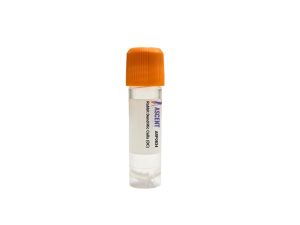
In Stock Cell Lines
Homo sapiens (Human)
Heart
Adherent
The NLRP3 Knockout AC16 Cell Line is a CRISPR/Cas9-edited knockout cell line derived from human ventricular cardiomyocytes, providing a stable loss-of-function model of the NLRP3 inflammasome sensor. NLRP3, in response to danger signals, interacts with ASC and NEK7 to activate caspase-1, driving maturation of IL-1?? and IL-18 and pyroptosis via gasdermin D. This knockout eliminates cytokine release and pyroptotic death, enabling dissection of cardiomyocyte-intrinsic NLRP3 contributions to ischemia-reperfusion injury, heart failure, and atherosclerosis. Applications include mechanistic studies, disease modeling, and inhibitor screening using IL-1?? ELISA, caspase-1 assays, and western blotting.
 Beagle CD14+ Monocytes
Cat. No. ARP1075
Beagle CD14+ Monocytes
Cat. No. ARP1075
 PDZD11 Knockout A549 Polyclonal Cells
Cat. No. ARG10736
DOCK2 Knockout AGS Polyclonal Cells
Cat. No. ARG39559
DDX60 Knockout 786-O Polyclonal Cells
Cat. No. ARG5214
MTUS1 Knockout HEK293T Polyclonal Cells
Cat. No. ARG4234
CHCHD7 Knockout HEK293T Polyclonal Cells
Cat. No. ARG3627
PDZD11 Knockout A549 Polyclonal Cells
Cat. No. ARG10736
DOCK2 Knockout AGS Polyclonal Cells
Cat. No. ARG39559
DDX60 Knockout 786-O Polyclonal Cells
Cat. No. ARG5214
MTUS1 Knockout HEK293T Polyclonal Cells
Cat. No. ARG4234
CHCHD7 Knockout HEK293T Polyclonal Cells
Cat. No. ARG3627
The NLRP3 Knockout AC16 Cell Line is a CRISPR/Cas9-edited knockout cell line derived from the AC16 human ventricular cardiomyocyte cell line. It features targeted disruption of the NLRP3 gene, yielding a stable loss-of-function model that abolishes NLRP3 protein expression. This engineered cell line provides a renewable and genetically defined system for investigating NLRP3 inflammasome biology in a cardiomyocyte context, eliminating the variability inherent to transient knockdown methods.
The AC16 host cell line is an immortalized human adult ventricular cardiomyocyte model that retains essential features of primary cardiac muscle cells, including contractile activity and expression of cardiac markers. Its human origin and ventricular phenotype make it suitable for translational cardiac research, disease modeling, and drug testing, providing a physiologically relevant surrogate for studies of human heart pathophysiology.
NLRP3 is a cytosolic sensor that assembles the NLRP3 inflammasome in response to Toll-like receptor ligands (e.g., LPS), TNF-??, ATP, reactive oxygen species, lysosomal cathepsins, and K+ efflux. It interacts with the adaptor ASC (PYCARD) and the kinase NEK7, recruiting pro-caspase-1 into a signaling complex that promotes its autocatalytic activation. Active caspase-1 cleaves pro-IL-1?? and pro-IL-18 into mature pro-inflammatory cytokines and processes gasdermin D (GSDMD) to form pyroptotic pores. TXNIP also associates with NLRP3 under oxidative stress. Knockout of NLRP3 therefore prevents inflammasome formation, caspase-1 activation, and downstream cytokine release and pyroptosis.
In cardiomyocytes, NLRP3 inflammasome activation contributes to myocardial ischemia-reperfusion injury, heart failure, and atherosclerosis by driving inflammation and pyroptosis. The NLRP3 Knockout AC16 Cell Line allows researchers to dissect cardiomyocyte-intrinsic NLRP3 signaling, separate from immune cell contributions, and to evaluate how loss of NLRP3 alters inflammatory cascades, cell death, and intercellular communication in cardiac disease models.
This knockout cell line is suited for mechanistic studies of inflammasome regulation, cardiac inflammation models, ischemia-reperfusion simulation, and NLRP3 inhibitor screening. Common assays include IL-1?? ELISA, caspase-1 activity measurement, western blotting (NLRP3, ASC, caspase-1, IL-1??, GSDMD), LDH release, ASC speck immunofluorescence, ROS detection, and NF-??B reporter assays. For additional information, please contact Ascent Research.