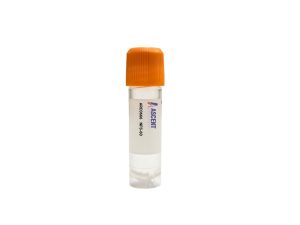
In Stock Cell Lines
Homo sapiens (Human)
Lung
Adherent
CRISPR/Cas9-edited PCIF1 knockout in the A549 human lung adenocarcinoma cell line. Disruption of this cap-specific m6Am methyltransferase removes N6-methylation on 2'-O-methyladenosine mRNA caps, allowing study of translation regulation and RNA stability. The model links epitranscriptomic control to cancer biology through interactions with RNA Polymerase II CTD and eIF4E. Ideal for m6Am-seq, cap-binding assays, and translational reporter experiments. Enables mechanistic studies in lung adenocarcinoma research, viral replication, and drug target exploration, with loss-of-function assessment of PCIF1-mediated gene regulation.
 MAP2K2 Knockout CAL27 Polyclonal Cells
Cat. No. ARG11585
BCL2L11 Knockout huh-7 Polyclonal Cells
Cat. No. ARG28062
MLH1 Knockout 786-O Polyclonal Cells
Cat. No. ARG5659
COQ9 Knockout HEK293T Polyclonal Cells
Cat. No. ARG4416
OPLAH Knockout HEK293T Polyclonal Cells
Cat. No. ARG3505
MAP2K2 Knockout CAL27 Polyclonal Cells
Cat. No. ARG11585
BCL2L11 Knockout huh-7 Polyclonal Cells
Cat. No. ARG28062
MLH1 Knockout 786-O Polyclonal Cells
Cat. No. ARG5659
COQ9 Knockout HEK293T Polyclonal Cells
Cat. No. ARG4416
OPLAH Knockout HEK293T Polyclonal Cells
Cat. No. ARG3505
 Rabbit Skeletal Muscle Fibroblasts
Cat. No. ARP0804
Rabbit Skeletal Muscle Fibroblasts
Cat. No. ARP0804
The PCIF1 Knockout A549 Cell Line is a CRISPR/Cas9-edited human lung adenocarcinoma cell line engineered to disrupt the PCIF1 gene, generating a stable loss-of-function model for investigating epitranscriptomic regulation. This knockout cell line enables precise interrogation of PCIF1-dependent mRNA cap methylation and its downstream effects on gene expression, without the confounding influence of wild-type protein activity. It serves as a versatile tool for functional studies in RNA biology, translation control, and cancer research.
The parental A549 cell line was originally isolated from the lung carcinoma tissue of a 58-year-old male and exhibits epithelial morphology. This widely used model retains key characteristics of lung adenocarcinoma, including oncogenic signaling alterations, and is extensively employed in respiratory disease and oncology research. The A549 background provides a clinically relevant context for exploring molecular mechanisms underlying non-small cell lung cancer and host?Cpathogen interactions, particularly in viral replication studies.
PCIF1 functions as a cap-specific mRNA (m6Am) methyltransferase that catalyzes the formation of N6,2′-O-dimethyladenosine at the first nucleotide of mRNA when it is 2′-O-methyladenosine. This modification modulates translation efficiency and mRNA stability by influencing cap recognition by translation initiation factors such as eIF4E. PCIF1 activity is coupled to the transcriptional machinery: it interacts with the phosphorylated C-terminal domain (CTD) of RNA Polymerase II and is regulated by CDK7 and CDK9 kinases, which promote CTD phosphorylation. Disruption of PCIF1 therefore decouples m6Am deposition from transcription, altering the cellular epitranscriptome.
In the A549 lung adenocarcinoma context, PCIF1 knockout provides a powerful model to dissect how m6Am modifications impact oncogenic translation programs, mRNA stability, and cellular phenotypes relevant to cancer progression. Loss of PCIF1 may alter the translation efficiency of key oncogenes or tumor suppressors, influence proliferation or invasiveness, and modulate responses to therapeutic agents. Additionally, this model is valuable for exploring the role of m6Am in viral mRNA utilization, given the A549 cell line’s susceptibility to respiratory viruses and the importance of cap modifications for viral replication.
Researchers can leverage this cell line for a wide range of epitranscriptomic investigations, including m6Am-sequencing, RNA immunoprecipitation to profile PCIF1 targets, and cap-binding assays to assess eIF4E affinity changes. Functional readouts such as translation reporter assays, RT-qPCR, and western blotting enable detailed characterization of gene expression and signaling consequences. The knockout model also facilitates drug target validation and high-throughput screening efforts. For further information, please contact Ascent Research.