In Stock Cell Lines
Homo sapiens (Human)
Kidney
Adherent
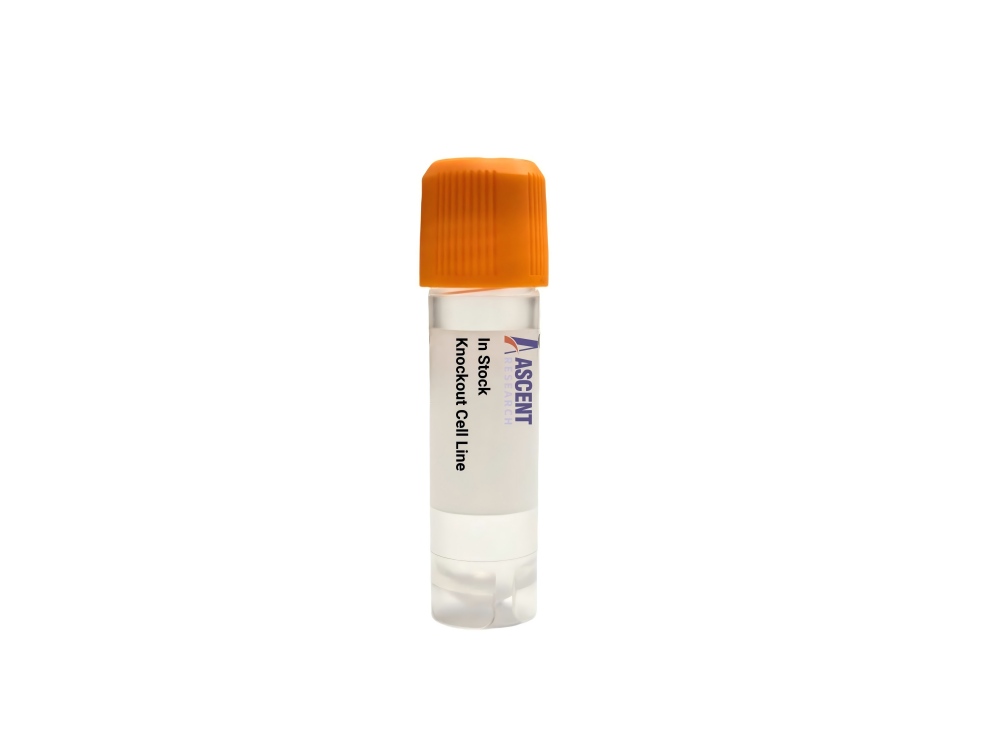
The PPP3CB Knockout HEK293 Cell Line is a CRISPR/Cas9-edited loss-of-function model targeting the calcineurin catalytic subunit beta gene. Derived from widely used HEK293 human embryonic kidney epithelial cells, this cell line enables dissection of PPP3CB-dependent calcium/calmodulin-regulated phosphatase signaling, including NFAT transcription factor dephosphorylation and target genes such as IL-2 and RCAN1. Applications encompass calcineurin/NFAT pathway analysis, immunosuppressant drug mechanism studies (FK506, cyclosporin A), cardiac hypertrophy and neuronal signaling research, and NFAT reporter assays. This knockout line provides a clean experimental system for calcium-dependent phosphatase pathway investigation.
 GCLC Knockout SK-HEP-1 Polyclonal Cells
Cat. No. ARG16313
ACSS2 Knockout SK-HEP-1 Polyclonal Cells
Cat. No. ARG32043
BBC3 Knockout 143B Polyclonal Cells
Cat. No. ARG35072
JAG2 Knockout KYSE150 Polyclonal Cells
Cat. No. ARG36257
KCNK3 Knockout PATU8988T Polyclonal Cells
Cat. No. ARG36642
DHCR7 Knockout Hela Polyclonal Cells
Cat. No. ARG7859
GCLC Knockout SK-HEP-1 Polyclonal Cells
Cat. No. ARG16313
ACSS2 Knockout SK-HEP-1 Polyclonal Cells
Cat. No. ARG32043
BBC3 Knockout 143B Polyclonal Cells
Cat. No. ARG35072
JAG2 Knockout KYSE150 Polyclonal Cells
Cat. No. ARG36257
KCNK3 Knockout PATU8988T Polyclonal Cells
Cat. No. ARG36642
DHCR7 Knockout Hela Polyclonal Cells
Cat. No. ARG7859
The PPP3CB Knockout HEK293 Cell Line is a CRISPR/Cas9-edited knockout cell line featuring targeted disruption of the human PPP3CB gene in HEK293 cells. This loss-of-function model provides a clean background for dissecting the roles of calcineurin catalytic subunit beta in calcium-dependent signaling without interference from endogenous protein.
HEK293 is an adherent human embryonic kidney epithelial cell line transformed with sheared adenovirus 5 DNA. Widely used for heterologous gene expression, viral production, and biochemical studies, these cells offer high transfectability and robust growth, making them a reliable platform for generating stable knockout derivatives that retain essential epithelial signaling machinery.
PPP3CB encodes the catalytic subunit ?? of calcineurin, a Ca2+/calmodulin-dependent serine/threonine phosphatase. Upon sustained cytosolic calcium elevation, calmodulin binds to calcineurin, displacing autoinhibitory domains and enabling dephosphorylation of NFAT transcription factors (NFATC1?C4). Dephosphorylated NFAT translocates to the nucleus to regulate target genes including IL-2 and RCAN1. Upstream regulators controlling calcium flux and calcineurin activation encompass L-type voltage-gated calcium channels, TRPC channels, GPCRs, RTKs, FKBP12, and cyclophilin. Endogenous inhibitors such as RCAN family proteins provide feedback control. Calcineurin forms complexes with its regulatory subunit (PPP3R1/2) and scaffold AKAP79, and also dephosphorylates non-NFAT substrates like BAD, DARPP-32, Tau, and CREB, linking it to apoptosis, synaptic function, and transcriptional reprogramming.
In HEK293 cells, PPP3CB couples calcium signals to transcriptional and cellular responses. This knockout cell line enables direct examination of calcineurin??s role in NFAT-driven gene expression and crosstalk with MAPK and Wnt pathways. It is particularly valuable for studying mechanisms of immunosuppressants like FK506 and cyclosporin A that target calcineurin. The simplified HEK293 background facilitates analysis of cardiac hypertrophy signaling, neuronal signaling components, and regulation of RCAN proteins without confounding from primary cell heterogeneity. Researchers can also investigate potential compensatory roles of other calcineurin isoforms.
Typical applications include Western blotting for NFAT phosphorylation, NFAT luciferase reporter assays, and qRT-PCR for NFAT targets such as RCAN1 and IL-2. Functional readouts can be obtained via calcium flux measurement (Fluo-4 AM), immunofluorescence tracking of NFAT localization, and calcineurin phosphatase activity assays. Co-immunoprecipitation reveals altered protein interactions in the absence of PPP3CB, while drug sensitivity assays test FK506 and cyclosporin A effects. This cell line is suited for research on cardiac hypertrophy, neurodegeneration, immune dysfunction, and cancer. For further details, please contact Ascent Research.