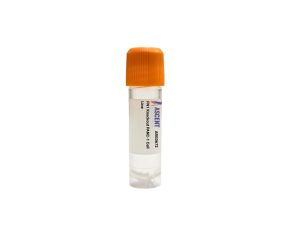
In Stock Cell Lines
Homo sapiens (Human)
Kidney
Adherent
The ACOT13 Knockout HEK293T Cell Line is a CRISPR/Cas9-edited knockout model that disrupts the ACOT13 gene encoding acyl-CoA thioesterase 13, an enzyme hydrolyzing fatty acyl-CoAs to modulate intracellular lipid homeostasis. Engineered in the HEK293T background, it leverages high transfection efficiency and viral production capacity for metabolic research. ACOT13 expression is regulated by PPARA, PPARG, SREBF1, and AMPK signaling, and its loss perturbs CPT1A-driven fatty acid oxidation and FASN-mediated lipogenesis, making the line relevant to obesity, type 2 diabetes, and NAFLD. This cell line supports fatty acid oxidation assays, lipid droplet imaging, and drug screening for metabolic targets.
 MTFR2 Knockout HT29 Polyclonal Cells
Cat. No. ARG14341
CDK6 Knockout Jurkat Polyclonal Cells
Cat. No. ARG13572
CLPB Knockout Hela Polyclonal Cells
Cat. No. ARG8130
ACSL1 Knockout NCI-H1299 Polyclonal Cells
Cat. No. ARG30222
BHLHE40 Knockout jurkat Polyclonal Cells
Cat. No. ARG34005
CTDSPL2 Knockout HEK293T Polyclonal Cells
Cat. No. ARG4109
MTFR2 Knockout HT29 Polyclonal Cells
Cat. No. ARG14341
CDK6 Knockout Jurkat Polyclonal Cells
Cat. No. ARG13572
CLPB Knockout Hela Polyclonal Cells
Cat. No. ARG8130
ACSL1 Knockout NCI-H1299 Polyclonal Cells
Cat. No. ARG30222
BHLHE40 Knockout jurkat Polyclonal Cells
Cat. No. ARG34005
CTDSPL2 Knockout HEK293T Polyclonal Cells
Cat. No. ARG4109
The ACOT13 Knockout HEK293T Cell Line is a CRISPR/Cas9-mediated gene-disrupted cell line lacking functional ACOT13 expression. This product provides a defined loss-of-function model to study the role of acyl-CoA thioesterase 13 in fatty acid metabolism and intracellular acyl-CoA homeostasis. Engineered in the HEK293T background, it enables precise dissection of ACOT13-dependent lipid regulatory mechanisms without interference from endogenous protein.
HEK293T cells, derived from human embryonic kidney epithelium, constitutively express the SV40 large T antigen, which supports episomal replication of plasmids containing the SV40 origin of replication. This property confers high transfection efficiency and robust recombinant protein and viral vector production. The cell line??s well-characterized metabolic activity and genetic tractability make it a standard host for interrogating pathways governing lipid metabolism, protein expression, and signal transduction.
ACOT13 hydrolyzes medium- and long-chain fatty acyl-CoA thioesters into free fatty acids and CoA, thereby dampening intracellular acyl-CoA levels. Its expression is regulated by transcription factors PPARA, PPARG, SREBF1, and NR1H3, and is influenced by AMPK signaling. Loss of ACOT13 leads to accumulation of fatty acyl-CoAs, which can redirect metabolic flux away from mitochondrial ??-oxidation??mediated by CPT1A??and toward lipid synthesis via FASN, promoting triglyceride storage. This disruption also potentially affects ACSL1-mediated acyl-CoA formation and ACOX1-dependent peroxisomal oxidation, highlighting the enzyme??s integrative role in lipid homeostasis.
In the HEK293T context, ACOT13 knockout creates a versatile tool to model aspects of metabolic dysregulation observed in obesity, type 2 diabetes, NAFLD, and metabolic syndrome. Despite their non-hepatic origin, HEK293T cells retain core lipid handling machinery, allowing researchers to examine how altered acyl-CoA homeostasis influences lipid droplet dynamics, energy substrate utilization, and insulin signaling pathways. The knockout line is thus well-suited for mechanistic studies that require a genetically clean, easily manipulated background.
This cell line supports diverse experimental approaches: seahorse-based respirometry to quantify fatty acid oxidation, Oil Red O staining to visualize lipid droplets, LC-MS for precise acyl-CoA profiling, and immunoblotting or RT-qPCR to monitor metabolic enzyme adaptation. Applications include investigating acyl-CoA disequilibrium, screening small molecules that modulate lipid metabolism, and validating therapeutic targets for metabolic disorders. For additional information or to discuss custom services, please contact Ascent Research.