Genome-edited Cells
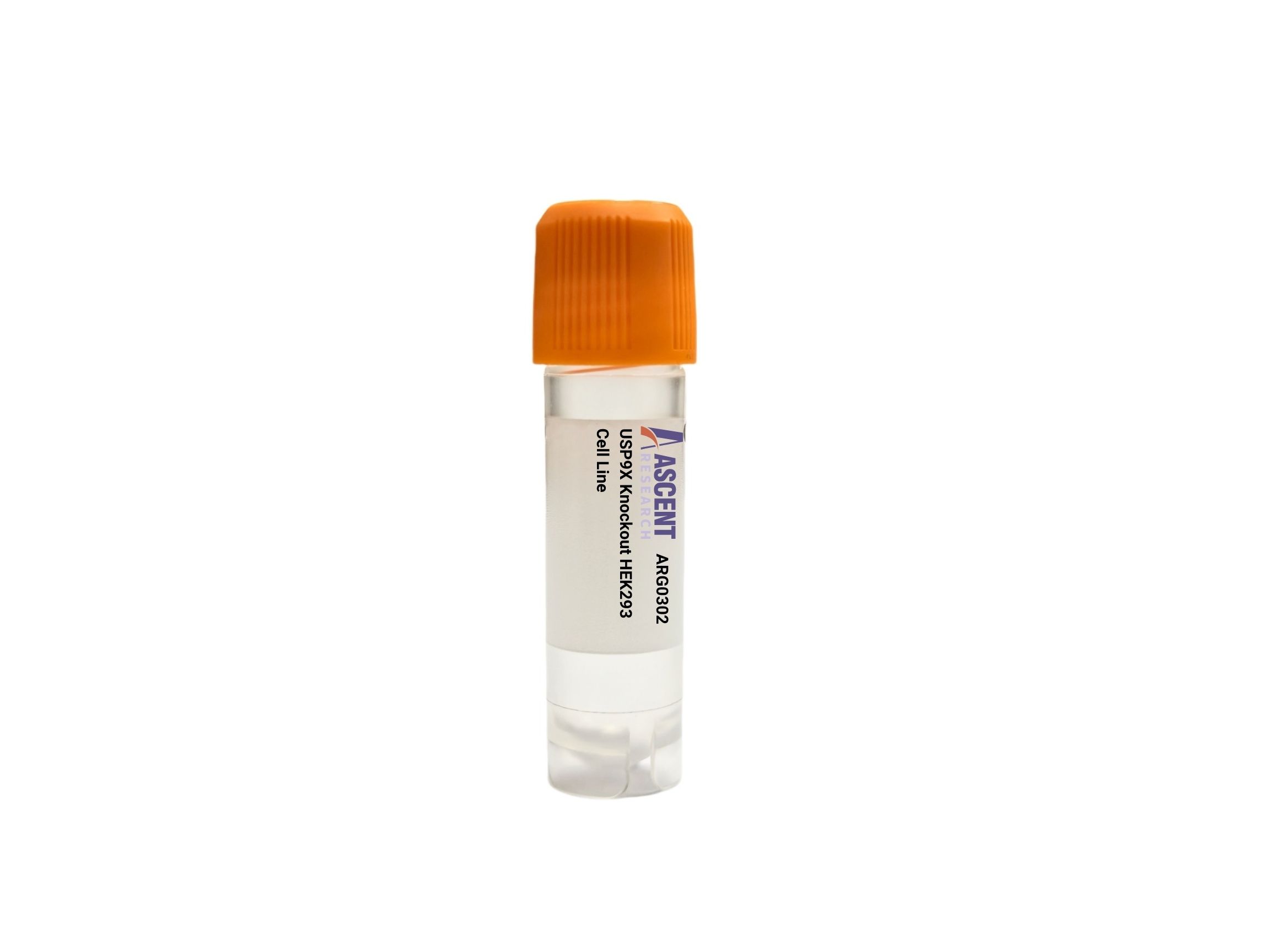
The USP9X Knockout HEK293 Cell Line is a CRISPR/Cas9-edited human cell model for investigating the deubiquitinase USP9X. Derived from the HEK293 epithelial line, this knockout disrupts USP9X, which normally stabilizes proteins such as MCL1, ??-catenin, and SMAD4 to regulate Wnt/??-catenin, TGF-??/SMAD, mTOR, and apoptosis pathways. Applications include Western blotting, flow cytometry, reporter assays, and ubiquitination studies to explore cancer biology, drug resistance, and neurodevelopmental disorders. It is a valuable tool for functional genomics, target validation, and signaling research.
 LANCL2 Knockout jurkat Polyclonal Cells
Cat. No. ARG13351
NME1 Knockout Hela Polyclonal Cells
Cat. No. ARG7477
GRK3 Knockout HAP1 Polyclonal Cells
Cat. No. ARG22399
CCL17 Knockout HAP1 Polyclonal Cells
Cat. No. ARG43163
PHF10 Knockout MES-OV Polyclonal Cells
Cat. No. ARG6419
CDKN1A Knockout Raji Polyclonal Cells
Cat. No. ARG1586
LANCL2 Knockout jurkat Polyclonal Cells
Cat. No. ARG13351
NME1 Knockout Hela Polyclonal Cells
Cat. No. ARG7477
GRK3 Knockout HAP1 Polyclonal Cells
Cat. No. ARG22399
CCL17 Knockout HAP1 Polyclonal Cells
Cat. No. ARG43163
PHF10 Knockout MES-OV Polyclonal Cells
Cat. No. ARG6419
CDKN1A Knockout Raji Polyclonal Cells
Cat. No. ARG1586
The USP9X Knockout HEK293 Cell Line is a CRISPR/Cas9-edited human cell line designed to eliminate the deubiquitinase activity of USP9X, a critical regulator of protein ubiquitination and stability. This knockout product is provided as a viable, ready-to-use adherent cell line derived from the HEK293 parental line, offering researchers a defined genetic background for dissecting USP9X-dependent cellular mechanisms. Through CRISPR-mediated disruption of the target gene, this model enables precise loss-of-function studies without off-target transgene integration, making it suitable for a wide range of functional genomics and signal transduction investigations.
The host cell line, HEK293, originates from human embryonic kidney tissue and has been extensively employed as a model system for protein expression, gene manipulation, and signaling research. These adherent epithelial cells harbor adenoviral E1A and E1B genes along with the SV40 large T-antigen, which endow them with robust proliferative capacity and efficient transfection properties. Their well-characterized genetic and biochemical features make HEK293 cells an ideal platform for generating knockout models and for subsequent mechanistic studies, particularly in areas such as cancer biology, apoptosis, and developmental signaling.
USP9X is a deubiquitinase of the ubiquitin-specific protease family that cleaves ubiquitin chains from substrate proteins, thereby preventing their proteasomal degradation and modulating diverse cellular processes. It directly stabilizes key signaling molecules, including MCL1, ??-catenin, and SMAD4, and regulates ??-synuclein and MARK4. USP9X interacts with E3 ligases FBW7 and NEDD4 and the deubiquitinase USP7, influencing pathways such as Wnt/??-catenin (through ??-catenin, TCF/LEF, GSK3??, Axin, APC), TGF-??/SMAD (via SMAD2/3 and SMAD4), mTOR (downstream of mTORC1, RAPTOR, RICTOR), and apoptosis (BCL-2 family, MCL1, caspases).
In the USP9X knockout HEK293 background, ablation of USP9X eliminates deubiquitination-dependent stabilization of substrates like MCL1, ??-catenin, and SMAD4, leading to their enhanced ubiquitin-proteasome-mediated turnover. This disruption consequently attenuates Wnt/??-catenin transcriptional activity, reduces TGF-?? signal transduction, and sensitizes cells to apoptotic stimuli. The HEK293 lineage provides a clean, transformed epithelial context in which to dissect these effects free from the complexity of primary cell variability. Researchers can thus interrogate how USP9X depletion reshapes signaling networks, cell cycle progression, and survival responses, thereby uncovering mechanisms relevant to cancer progression, drug resistance, and neurodevelopmental disorders.
This cell line is suited for functional genomics studies, including Western blotting for MCL1, ??-catenin, and SMAD4; RT-qPCR or RNA-seq; flow cytometry for apoptosis and cell cycle; co-immunoprecipitation and ubiquitination assays; and TCF/LEF luciferase reporter assays. Applications include drug target validation, apoptosis research, and resistance mechanisms in pancreatic, colorectal, and breast cancers, as well as X-linked intellectual disability and neurodegeneration. For further information or custom cell-line services, please contact Ascent Research.