Genome-edited Cells
Blood (peripheral blood)
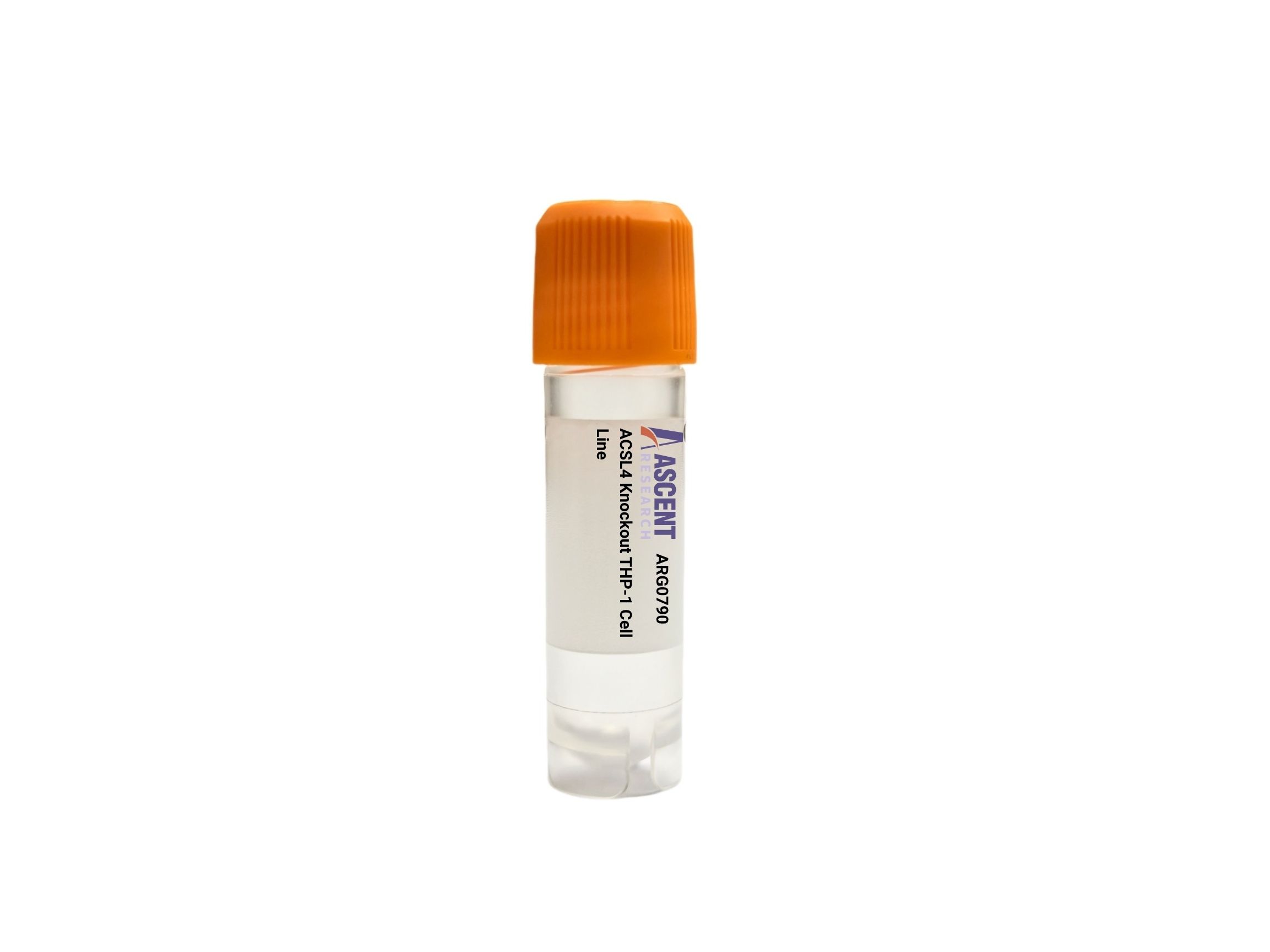
The ACSL4 Knockout THP-1 Cell Line provides a CRISPR/Cas9-edited loss-of-function model of ACSL4 in the human monocytic leukemia THP-1 cell background. ACSL4 catalyzes the activation of long-chain polyunsaturated fatty acids, a process essential for ferroptosis execution and phospholipid remodeling. Disruption of ACSL4 confers resistance to lipid peroxidation and ferroptosis, making this cell line valuable for studying these processes. Researchers can employ this knockout line to dissect ferroptosis and lipid metabolism pathways in immune cell contexts, screen ferroptosis modulators, and investigate metabolic targets in leukemia. The model supports assays such as lipid peroxidation measurement, cell viability analysis, and lipidomics.
 BRPF3 Knockout Raji Polyclonal Cells
Cat. No. ARG21411
GIPC1 Knockout SK-HEP-1 Polyclonal Cells
Cat. No. ARG15854
MSMO1 Knockout MES-OV Polyclonal Cells
Cat. No. ARG6851
PARP15 Knockout HEK293T Polyclonal Cells
Cat. No. ARG3573
CNPY3 Knockout AGS Polyclonal Cells
Cat. No. ARG2668
BRPF3 Knockout Raji Polyclonal Cells
Cat. No. ARG21411
GIPC1 Knockout SK-HEP-1 Polyclonal Cells
Cat. No. ARG15854
MSMO1 Knockout MES-OV Polyclonal Cells
Cat. No. ARG6851
PARP15 Knockout HEK293T Polyclonal Cells
Cat. No. ARG3573
CNPY3 Knockout AGS Polyclonal Cells
Cat. No. ARG2668
 Pig Endometrial Epithelial Cells
Cat. No. ARP0930
Pig Endometrial Epithelial Cells
Cat. No. ARP0930
The ACSL4 Knockout THP-1 Cell Line is a CRISPR/Cas9-edited knockout cell line developed from the human monocytic leukemia THP-1 host. This model provides stable disruption of the ACSL4 gene, enabling loss-of-function studies of the acyl-CoA synthetase long-chain family member 4 enzyme. It serves as a ready-to-use tool for investigating ferroptosis, phospholipid remodeling, and long-chain polyunsaturated fatty acid metabolism.
The THP-1 host cell line was derived from the peripheral blood of a 1-year-old male with acute monocytic leukemia. These non-adherent cells exhibit a monocytic phenotype and can be differentiated into macrophage-like cells using phorbol 12-myristate 13-acetate (PMA). Widely utilized for studies of monocyte/macrophage biology, THP-1 cells support research on immune response, phagocytosis, cytokine production, and inflammatory signaling, while also serving as a leukemia disease model.
ACSL4 esterifies long-chain polyunsaturated fatty acids, such as arachidonate, to their acyl-CoA derivatives, a prerequisite for incorporation into membrane phospholipids. This function sensitizes cells to ferroptosis, an iron-dependent, lipid peroxidation-driven cell death. Transcriptional regulators of ACSL4 include PPAR?? and SREBP1, and its activity is modulated by ROS and inflammatory stimuli like LPS and TNF??. ACSL4 functionally cooperates with LPCAT3 to remodel phospholipids, and its product lipids serve as substrates for peroxidation by ALOX enzymes. GPX4 opposes this process by reducing lipid hydroperoxides. Consequently, ACSL4 knockout diminishes PUFA-containing phospholipids, conferring resistance to ferroptosis inducers such as RSL3 and erastin.
In THP-1 cells, ACSL4 disruption alters lipid metabolism critical for monocyte and macrophage function. Macrophages require dynamic phospholipid remodeling for membrane fluidity, eicosanoid synthesis, and signaling. Knockout of ACSL4 reduces PUFA-phospholipid content, thereby impairing ferroptosis execution and potentially affecting prostaglandin and leukotriene production. This model is valuable for examining how lipid metabolic pathways influence innate immune responses, including macrophage polarization, cytokine secretion, and phagocytosis, and for identifying context-specific roles of ferroptosis in leukemia cell biology.
The ACSL4 Knockout THP-1 Cell Line supports diverse experimental workflows, including western blotting, C11-BODIPY lipid peroxidation assays, cell viability measurements (MTT, CCK-8) following ferroptosis induction, RT-qPCR, and LC-MS-based lipidomics. Key applications encompass mechanistic studies of ferroptosis regulation, drug screening for ferroptosis modulators, investigation of lipid metabolism in immune cell function, and metabolic research in leukemia. For additional technical details, please contact Ascent Research.