Genome-edited Cells
Breast (mammary gland)
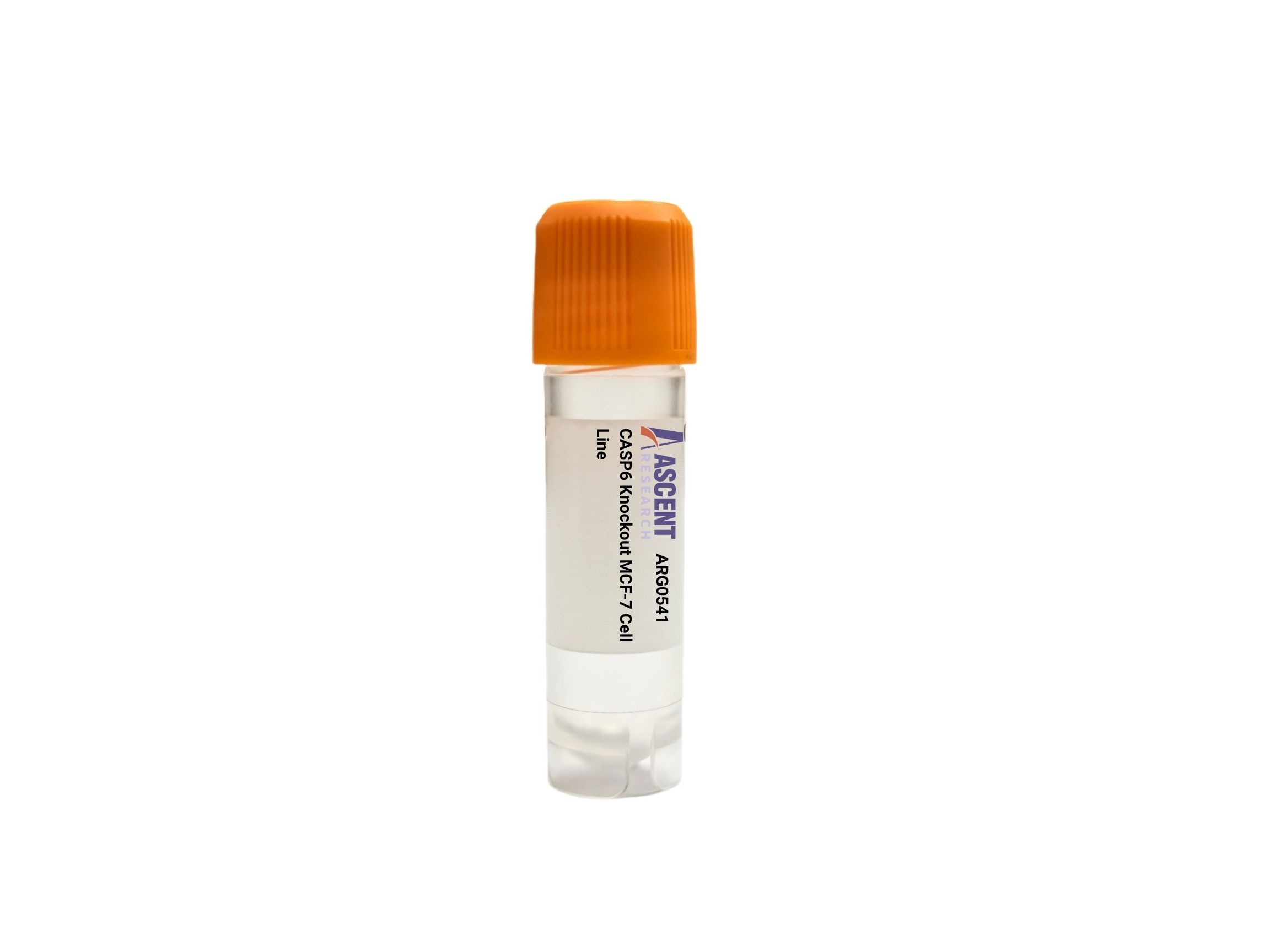
The CASP6 Knockout MCF-7 Cell Line is a CRISPR/Cas9-edited knockout cell line that disrupts the CASP6 gene, encoding the executioner caspase-6 involved in apoptosis and non-apoptotic functions. Derived from the MCF-7 human breast adenocarcinoma line (ER+, PR+), this model enables study of caspase-6 in hormone-responsive breast cancer. CASP6 is activated by CASP8 and CASP9 and cleaves substrates such as LMNA and PARP1. Knocking out CASP6 facilitates investigation of apoptotic signaling, drug resistance, and tumor progression. Ideal for apoptosis assays, inhibitor screening, and migration studies.
 LYPLA2 Knockout Hela Polyclonal Cells
Cat. No. ARG9108
HS3ST1 Knockout PATU8988T Polyclonal Cells
Cat. No. ARG36620
ECHS1 Knockout K562 Polyclonal Cells
Cat. No. ARG40378
LCLAT1 Knockout MES-OV Polyclonal Cells
Cat. No. ARG5966
CLINT1 Knockout Raji Polyclonal Cells
Cat. No. ARG1704
LYPLA2 Knockout Hela Polyclonal Cells
Cat. No. ARG9108
HS3ST1 Knockout PATU8988T Polyclonal Cells
Cat. No. ARG36620
ECHS1 Knockout K562 Polyclonal Cells
Cat. No. ARG40378
LCLAT1 Knockout MES-OV Polyclonal Cells
Cat. No. ARG5966
CLINT1 Knockout Raji Polyclonal Cells
Cat. No. ARG1704
 TALL-1
Cat. No. ARC1040
TALL-1
Cat. No. ARC1040
The CASP6 Knockout MCF-7 Cell Line is a CRISPR/Cas9-edited knockout cell line derived from the MCF-7 human breast adenocarcinoma cell line, engineered to disrupt the CASP6 gene. This loss-of-function model enables precise investigation of caspase-6 functions in a well-characterized epithelial breast cancer background. By eliminating CASP6 expression, researchers can dissect its roles in apoptosis and non-apoptotic processes within a hormone-responsive cellular context.
MCF-7 is an estrogen receptor-positive (ER+) and progesterone receptor-positive (PR+) cell line originally isolated from the pleural effusion of a patient with metastatic breast adenocarcinoma. It retains features of luminal epithelial differentiation and is widely used as a model for hormone-responsive breast cancer. The cell line??s well-documented sensitivity to hormonal stimuli and its established use in drug response studies provide a robust platform for studying the molecular mechanisms underlying breast tumor biology.
CASP6 encodes an executioner caspase that is proteolytically activated by initiator caspases CASP8 and CASP9 following intrinsic or extrinsic apoptotic stimuli. Upon activation, CASP6 cleaves downstream substrates including LMNA (lamin A/C), leading to nuclear lamina disassembly, and PARP1, contributing to DNA fragmentation. CASP6 activity is regulated by inhibitors such as XIAP and BIRC5 (Survivin), and it interacts with CFLAR (c-FLIP) to modulate apoptotic signaling. It also functions in non-apoptotic processes, including axon pruning and processing of inflammatory cytokines, and is implicated in pathways like p53 signaling and TNF signaling.
In breast cancer research, CASP6 knockout in MCF-7 cells is particularly valuable for exploring apoptosis regulation in ER+ tumors, where evasion of programmed cell death contributes to therapeutic resistance. The model permits dissection of caspase-6-dependent and -independent mechanisms in response to chemotherapeutic agents or hormonal therapies. Additionally, it allows study of caspase-6??s emerging non-apoptotic roles in tumor progression, such as cell migration and invasion, within a relevant breast cancer microenvironment.
This knockout cell line is ideally suited for a variety of applications including apoptosis assays (e.g., Annexin V/PI flow cytometry), caspase-6 activity assays, cell viability assessments (MTT), migration/invasion studies, and global transcriptomic analysis via RNA-seq. It facilitates screening of caspase-6 inhibitors and investigation of drug resistance mechanisms. Researchers can employ co-immunoprecipitation to probe protein interactions. For further details on integrating this model into your research programs, please contact Ascent Research for technical support.