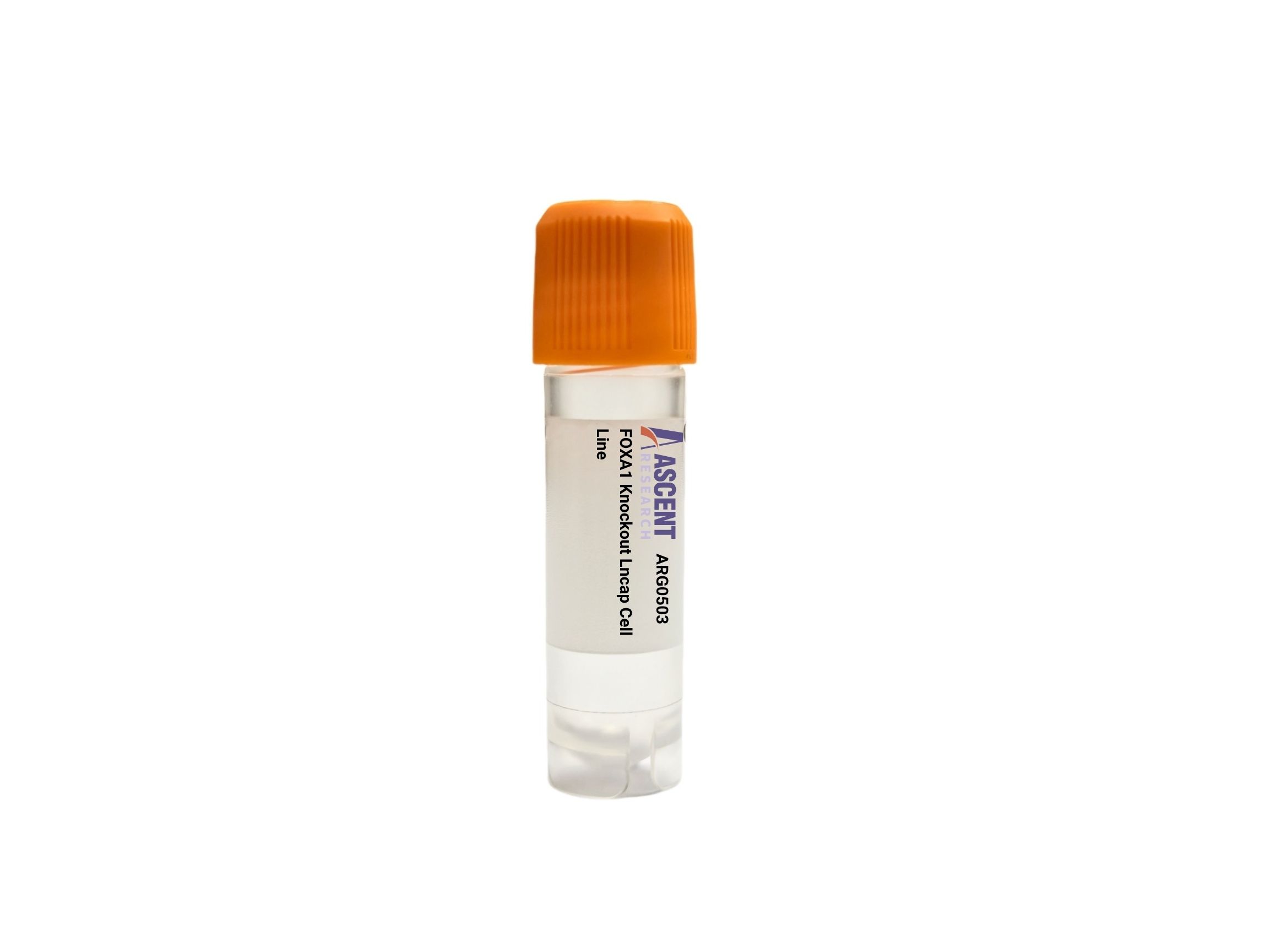
Genome-edited Cells
Prostate
FOXA1 Knockout Lncap Cell Line is a CRISPR/Cas9-edited knockout model that disrupts the FOXA1 pioneer transcription factor in the Lncap androgen-sensitive prostate cancer cell line. This loss-of-function system enables interrogation of FOXA1-dependent androgen receptor (AR) signaling, chromatin remodeling, and hormone-driven transcription, with implications for studying prostate tumor progression and therapeutic resistance. Key applications include profiling AR target gene expression (e.g., KLK3/PSA, TMPRSS2), proliferation, migration, and anti-androgen drug sensitivity. A versatile tool for dissecting pioneer factor biology in a clinically relevant epithelial context.
 KCNU1 Knockout HAP1 Polyclonal Cells
Cat. No. ARG22977
IRAK3 Knockout HT29 Polyclonal Cells
Cat. No. ARG23320
FAM229B Knockout Hela Polyclonal Cells
Cat. No. ARG7543
PCYOX1L Knockout 786-O Polyclonal Cells
Cat. No. ARG5110
KCNU1 Knockout HAP1 Polyclonal Cells
Cat. No. ARG22977
IRAK3 Knockout HT29 Polyclonal Cells
Cat. No. ARG23320
FAM229B Knockout Hela Polyclonal Cells
Cat. No. ARG7543
PCYOX1L Knockout 786-O Polyclonal Cells
Cat. No. ARG5110
 Rat Embryonic Fibroblast Medium
Cat. No. ARM0415
Rat Embryonic Fibroblast Medium
Cat. No. ARM0415
 LNCaP C4-2B Luciferase Stable Cell Line
Cat. No. ARG0506
LNCaP C4-2B Luciferase Stable Cell Line
Cat. No. ARG0506
The FOXA1 Knockout Lncap Cell Line is a CRISPR/Cas9-edited knockout cell line that disrupts the FOXA1 gene in the Lncap human prostate carcinoma epithelial cell line. This loss-of-function model enables detailed investigation of FOXA1-dependent regulatory mechanisms in an androgen-sensitive context, providing a robust platform for studying pioneer transcription factor activity in hormone-mediated transcription and prostate cancer progression.
The parental Lncap cell line was derived from a needle aspiration biopsy of a lymph node metastasis from a patient with prostate adenocarcinoma. These cells are androgen receptor (AR)-positive, secrete prostate-specific antigen (PSA), and exhibit androgen-dependent growth, making them a canonical model for AR signaling and hormone-responsive tumor biology. Lncap cells retain characteristic luminal epithelial features and are widely used in anti-androgen drug testing, including responses to enzalutamide and bicalutamide.
FOXA1 is a pioneer transcription factor that binds compacted chromatin to facilitate AR recruitment to regulatory regions of target genes, driving hormone-mediated transcriptional programs essential for prostate epithelial differentiation and tumor progression. It interacts with cofactors such as GATA2, the SWI/SNF complex, and MED1, and is regulated by upstream inputs including AR, estrogen receptor alpha, the ERK/MAPK pathway, and the PI3K/AKT pathway. FOXA1 transcriptionally regulates key downstream targets such as KLK3 (PSA), TMPRSS2, and NKX3-1, as well as cell cycle regulators, thereby controlling proliferation and differentiation.
In Lncap cells, FOXA1 is a critical mediator of androgen-dependent transcription. Disruption of FOXA1 abrogates AR-mediated gene induction, including PSA expression, and impairs hormone-driven growth and differentiation. This knockout model enables dissection of FOXA1-dependent versus FOXA1-independent AR functions and exploration of hormone sensitivity and resistance mechanisms. It provides a physiologically relevant system to study the dependency of oncogenic pathways on pioneer factor activity in a metastasis-derived epithelial background.
The cell line supports a wide range of applications: investigating AR signaling dependency on FOXA1, profiling transcriptomic changes via RNA-seq and RT-qPCR, mapping chromatin occupancy with ChIP-seq, and assessing cellular phenotypes through proliferation, migration, and invasion assays. It is also valuable for anti-androgen drug sensitivity testing (e.g., enzalutamide, bicalutamide) and cell cycle analysis. For further details or to inquire about this product, please contact Ascent Research.