Genome-edited Cells
Breast (mammary gland)
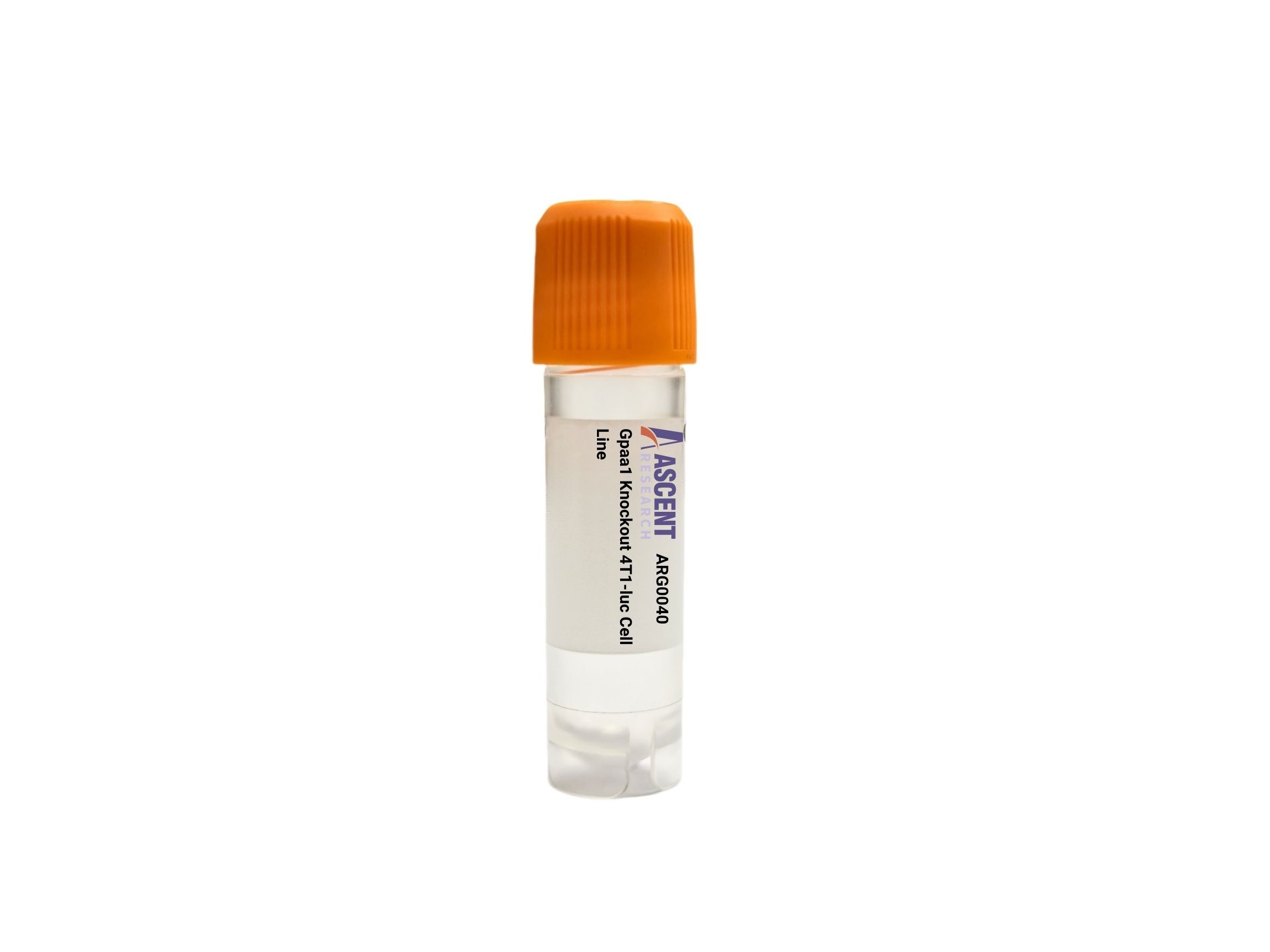
Gpaa1 Knockout 4T1-luc is a CRISPR/Cas9-edited mouse mammary carcinoma cell line with disruption of Gpaa1 in the luciferase-labeled, highly metastatic 4T1 breast cancer background. GPAA1 forms part of the ER GPI transamidase complex with PIGK, PIGS, and PIGT and acts downstream of PIGA-mediated precursor synthesis to enable surface display of GPI-anchored proteins such as CD55, CD59, Thy-1, and uPAR. This model is useful for studying GPI-anchor biosynthesis, cell-surface proteome remodeling, metastasis biology, complement sensitivity, membrane trafficking, and luciferase-based tumor burden or invasion assays.
 C9orf64 Knockout HGC-27 Polyclonal Cells
Cat. No. ARG29792
ASF1B Knockout HAP1 Polyclonal Cells
Cat. No. ARG21945
ATM Knockout Raji Polyclonal Cells
Cat. No. ARG21307
IL17RA Knockout HEK293T Polyclonal Cells
Cat. No. ARG26126
CDKN1C Knockout Raji Polyclonal Cells
Cat. No. ARG1552
C9orf64 Knockout HGC-27 Polyclonal Cells
Cat. No. ARG29792
ASF1B Knockout HAP1 Polyclonal Cells
Cat. No. ARG21945
ATM Knockout Raji Polyclonal Cells
Cat. No. ARG21307
IL17RA Knockout HEK293T Polyclonal Cells
Cat. No. ARG26126
CDKN1C Knockout Raji Polyclonal Cells
Cat. No. ARG1552
 HNRNPA2B1 Knockout THP-1 Cell Line
Cat. No. ARG0804
HNRNPA2B1 Knockout THP-1 Cell Line
Cat. No. ARG0804
The Gpaa1 Knockout 4T1-luc Cell Line is a CRISPR/Cas9-engineered murine breast cancer model in which the Gpaa1 gene has been disrupted to eliminate functional GPAA1 expression. This stable edited line is generated in 4T1-luc cells, a mammary carcinoma cell line expressing luciferase, and provides an in vitro system for investigating the consequences of impaired glycosylphosphatidylinositol (GPI)-anchor attachment in a tumor epithelial-like background. The model is particularly relevant for studies of cell-surface protein maturation, membrane organization, and cancer-associated phenotypes influenced by GPI-anchored proteins.
4T1-luc is a luciferase-labeled derivative of the murine 4T1 triple-negative mammary carcinoma line and is widely used as a syngeneic, highly metastatic breast cancer model in BALB/c mice. Its experimental utility derives from its aggressive growth characteristics, metastatic competence, and compatibility with luciferase-based monitoring of tumor burden in vitro and in vivo. As a tumor epithelial-like mammary carcinoma model, 4T1-luc is broadly used to study breast cancer progression, invasion, dissemination, and host-tumor interactions, making it a useful background for evaluating how perturbation of cell-surface protein anchoring alters metastatic and immune-related properties.
GPAA1 functions as a core subunit of the endoplasmic reticulum-resident GPI transamidase complex, which forms with PIGK, PIGS, and PIGT to recognize substrate proteins bearing a C-terminal GPI-attachment signal and mediate transfer of a preassembled GPI anchor following signal peptide cleavage. This process operates downstream of PIGA-mediated GPI precursor synthesis and involves additional pathway components including PIGC, PIGH, PIGP, PIGQ, PIGY, PIGB, PIGM, PIGV, and PIGO, followed by remodeling factors such as PGAP1, PGAP2, and PGAP3. Loss of GPAA1 is expected to impair the maturation and cell-surface display of multiple GPI-anchored proteins, including alkaline phosphatase, CD55/DAF, CD59, Thy-1/CD90, Ephrin-A family proteins, uPAR/PLAUR, and mesothelin, thereby altering cell-surface proteome composition and membrane-associated signaling.
In the 4T1-luc context, Gpaa1 disruption offers a mechanistically focused approach to examine how defective GPI-anchor attachment influences breast cancer cell behavior. Because GPI-anchored proteins contribute to adhesion, complement regulation, receptor organization, and extracellular interactions, this model can support studies on pathway dependency in metastatic cells, links between secretory pathway function and tumor phenotypes, and transcriptional or proteomic adaptations to endoplasmic reticulum processing defects. It is also relevant to research areas intersecting cancer biology, immune regulation, and inherited GPI-anchor deficiency disorders.
This knockout line is suitable for flow cytometric analysis of surface GPI-anchored proteins, FLAER binding assays, western blotting, RT-qPCR, RNA-seq, immunofluorescence, and cell-surface biotinylation to define changes in GPI-anchor biogenesis and surface protein expression. Co-immunoprecipitation and related biochemical approaches can be used to examine interactions within the transamidase pathway and endoplasmic reticulum processing machinery. In functional studies, the model supports migration and invasion assays, apoptosis assays, complement sensitivity assays, and luciferase-based tumor burden measurements to connect Gpaa1 loss with tumor growth, metastatic traits, and treatment response. Researchers may contact Ascent Research for additional technical information, product details, or related gene-edited cell models.