Genome-edited Cells
Liver
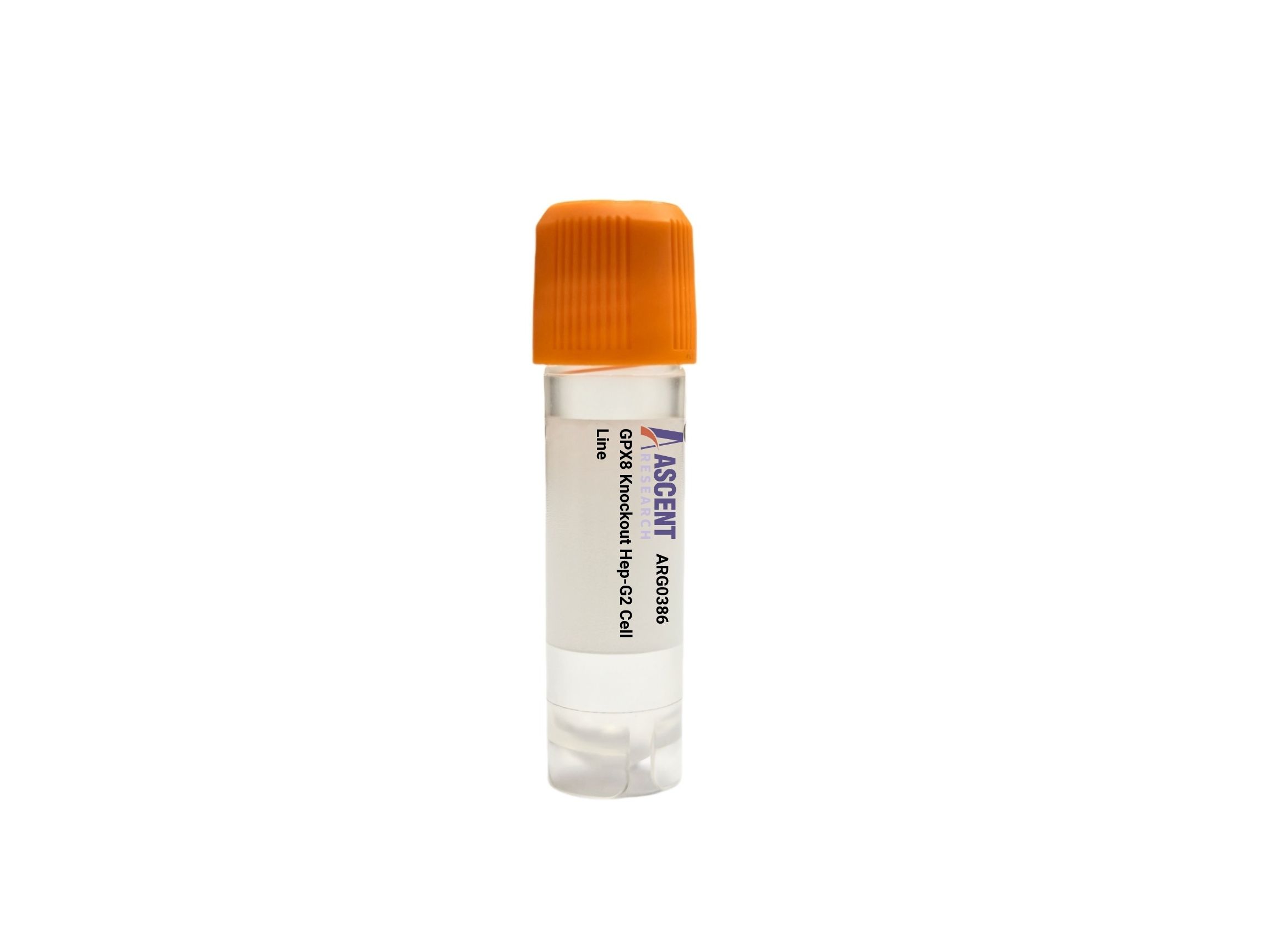
The GPX8 Knockout Hep-G2 Cell Line is a CRISPR/Cas9-edited human hepatocellular carcinoma model with targeted disruption of GPX8, an ER-resident glutathione peroxidase. This cell line eliminates GPX8-mediated peroxide detoxification, enabling dissection of ER redox balance and oxidative stress responses in a liver disease-relevant background. Under control of NRF2, ATF4, and HIF1A, GPX8 modulates downstream CHOP induction and BAX/BCL2-dependent apoptosis. The knockout line is ideal for investigating antioxidant defense mechanisms, drug-induced hepatotoxicity, and the unfolded protein response using assays such as western blotting of BiP and CHOP, ROS detection, and GSH/GSSG measurement.
 DAPK1 Knockout A2780 Polyclonal Cells
Cat. No. ARG18248
ETHE1 Knockout NCI-H1299 Polyclonal Cells
Cat. No. ARG18097
CRIPT Knockout NCI-H1975 Polyclonal Cells
Cat. No. ARG16999
C1GALT1C1 Knockout A2780 Polyclonal Cells
Cat. No. ARG28944
HRAS Knockout NCI-H1299 Polyclonal Cells
Cat. No. ARG30765
LCN2 Knockout KYSE30 Polyclonal Cells
Cat. No. ARG9693
DAPK1 Knockout A2780 Polyclonal Cells
Cat. No. ARG18248
ETHE1 Knockout NCI-H1299 Polyclonal Cells
Cat. No. ARG18097
CRIPT Knockout NCI-H1975 Polyclonal Cells
Cat. No. ARG16999
C1GALT1C1 Knockout A2780 Polyclonal Cells
Cat. No. ARG28944
HRAS Knockout NCI-H1299 Polyclonal Cells
Cat. No. ARG30765
LCN2 Knockout KYSE30 Polyclonal Cells
Cat. No. ARG9693
The GPX8 Knockout Hep-G2 Cell Line is a human hepatocellular carcinoma-derived, CRISPR/Cas9-edited knockout cell line designed for targeted disruption of the GPX8 gene. This loss-of-function model provides a stable and renewable tool for dissecting endoplasmic reticulum (ER) redox regulation and oxidative stress response pathways in a hepatic disease-relevant context. The product is supplied as an adherent epithelial cell line, enabling integration into established Hep-G2-based experimental workflows without the need for inducible systems or transient knockdown reagents.
The parental Hep-G2 cell line originates from the liver tissue of a male hepatocellular carcinoma patient and exhibits an adherent epithelial morphology. It is widely recognized for retaining key hepatic functions, including expression of drug-metabolizing enzymes, transporters, and acute-phase proteins, making it a standard host for drug metabolism, hepatotoxicity screening, and liver cancer research. The Hep-G2 background provides a well-characterized platform in which GPX8 deficiency can be studied under native expression of hepatic pathways, including glutathione metabolism and the unfolded protein response (UPR).
GPX8 encodes an ER-resident glutathione peroxidase that detoxifies hydrogen peroxide and lipid hydroperoxides by coupling their reduction to glutathione (GSH) oxidation, thereby preserving the oxidative protein-folding environment in the ER and preventing oxidative damage. The enzyme interacts with key ER chaperones and oxidoreductases such as HSPA5 (BiP), PDIA3, PDIA6, and ERO1A, positioning it at the interface of redox control and protein quality control. Upstream, GPX8 is transcriptionally regulated by stress-responsive factors including NRF2, ATF4, XBP1, and HIF1A. Disruption of GPX8 elevates cytosolic and mitochondrial reactive oxygen species (ROS) and activates downstream effectors such as phospho-JNK, phospho-p38 MAPK, CHOP (DDIT3), and cleaved caspase-3, ultimately shifting the BAX/BCL2 balance toward mitochondrial apoptosis. The axis comprising GPX8, GSH, NRF2, KEAP1, ATF4, and CHOP represents a critical signaling node linking ER stress to apoptotic execution.
In Hep-G2 cells, loss of GPX8 impairs peroxide clearance, chronically elevates ER stress, and sensitizes cells to oxidative damage-induced apoptosis. This phenotype mimics pathological features observed in oxidative stress-related liver injury, non-alcoholic fatty liver disease, and progressive liver fibrosis. Moreover, because Hep-G2 cells are frequently used to evaluate drug-induced hepatotoxicity, the GPX8 knockout line accentuates redox-dependent toxicity endpoints, enabling researchers to distinguish direct chemical injury from secondary stress amplification. The model thus serves as a physiologically relevant system for investigating how ER antioxidant defenses modulate hepatic susceptibility to toxicants, metabolic stress, and oncogenic transformation.
The GPX8 Knockout Hep-G2 Cell Line is suited for a broad range of experimental applications, including mechanistic studies of ER redox homeostasis, functional interrogation of the UPR, and screening of compounds that modify antioxidant defense. Representative assays include western blotting for UPR markers (CHOP, BiP), intracellular ROS detection by DCFDA fluorescence, cell viability measurements under oxidative challenge (e.g., MTT assay), caspase-3 activity quantification, RT-qPCR profiling of antioxidant genes, GSH/GSSG ratio analysis, immunofluorescence for ER-resident proteins, and flow cytometric apoptosis detection with Annexin V. Researchers can also leverage this tool in co-culture systems, stable isotope tracing of glutathione metabolism, and pharmacogenomic screening of liver-protective agents. For additional details or custom configurations, please contact Ascent Research.