Genome-edited Cells
Blood (peripheral blood)
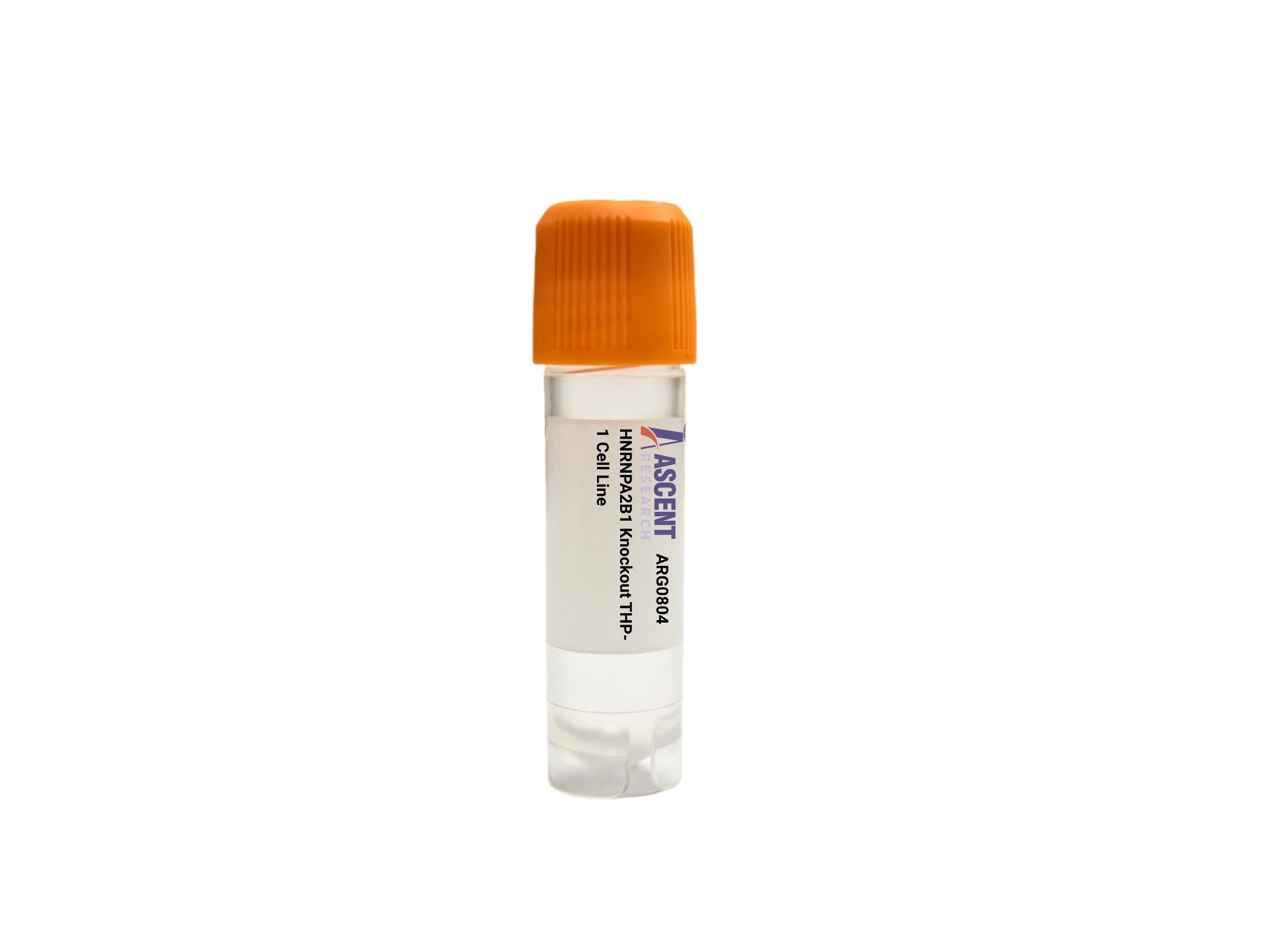
The HNRNPA2B1 Knockout THP-1 Cell Line is a CRISPR/Cas9-edited knockout model in the human THP-1 monocytic leukemia cell line, designed to study HNRNPA2B1, an RNA-binding protein that connects DNA damage to innate immunity by activating the cGAS-STING pathway. This line allows dissection of HNRNPA2B1-dependent alternative splicing, mRNA trafficking, and its role in type I interferon and NF-kB signaling. It is ideally suited for research in acute myeloid leukemia, innate immune signaling, and spliceosome biology, leveraging THP-1's capacity for macrophage differentiation. Common readouts include RNA-seq, ??-H2AX foci assays, co-immunoprecipitation, cytokine ELISA, and NF-kB reporter assays, enabling comprehensive functional analyses.
 PHF14 Knockout SK-HEP-1 Polyclonal Cells
Cat. No. ARG16025
FTO Knockout HEK293T Polyclonal Cells
Cat. No. ARG4058
CERS5 Knockout NCI-H1299 Polyclonal Cells
Cat. No. ARG17954
AGPS Knockout huh-7 Polyclonal Cells
Cat. No. ARG27837
BLOC1S4 Knockout SK-HEP-1 Polyclonal Cells
Cat. No. ARG32375
APOE Knockout AGS Polyclonal Cells
Cat. No. ARG26602
PHF14 Knockout SK-HEP-1 Polyclonal Cells
Cat. No. ARG16025
FTO Knockout HEK293T Polyclonal Cells
Cat. No. ARG4058
CERS5 Knockout NCI-H1299 Polyclonal Cells
Cat. No. ARG17954
AGPS Knockout huh-7 Polyclonal Cells
Cat. No. ARG27837
BLOC1S4 Knockout SK-HEP-1 Polyclonal Cells
Cat. No. ARG32375
APOE Knockout AGS Polyclonal Cells
Cat. No. ARG26602
The HNRNPA2B1 Knockout THP-1 Cell Line is a CRISPR/Cas9-edited loss-of-function model in which the HNRNPA2B1 gene has been disrupted in the human THP-1 monocytic cell line. This stable knockout provides a robust platform for investigating HNRNPA2B1 functions in RNA metabolism, innate immunity, and DNA damage responses without the variability of transient knockdown approaches.
THP-1 is a well-characterized monocytic cell line derived from the peripheral blood of a 1-year-old male with acute monocytic leukemia (FAB M5). It retains the capacity to differentiate into macrophage-like cells upon stimulation, recapitulating key phagocytic and inflammatory properties and serving as a widely used model for monocyte/macrophage biology and leukemogenesis.
HNRNPA2B1 is a nucleocytoplasmic shuttling RNA-binding protein that regulates alternative splicing and mRNA trafficking. It interacts with spliceosome factors U2AF1 and SRSF1 and controls transcript stability. Upon genotoxic stress, HNRNPA2B1 relocalizes to the cytoplasm, binds cytosolic DNA, and activates the cGAS-STING pathway, recruiting TBK1 and IRF3 to drive NF-kB and type I interferon responses. HNRNPA2B1 also forms complexes with DNA-PKcs, KU70, and KU80, and its activity is modulated by DNA damage, interferon-??, and Toll-like receptor ligands, linking DNA repair to innate immune signaling.
In the THP-1 context, ablation of HNRNPA2B1 allows dissection of its roles in leukemic cell proliferation, differentiation, and drug resistance, while simultaneously providing a clean background to study how this DNA sensor impinges on monocyte/macrophage immune effector functions, including phagocytosis and cytokine release governed by NF-kB and cGAS-STING axes.
This knockout cell line is suitable for RNA-seq and alternative splicing analyses to map HNRNPA2B1-dependent transcriptome changes. DNA damage responses can be probed by ??-H2AX foci formation, and co-immunoprecipitation/western blotting enable characterization of interactions with spliceosomal and DNA repair complexes. Functional readouts include NF-kB luciferase reporters, ELISA-based cytokine quantification, and flow cytometric assays for phagocytosis, apoptosis, and cell cycle. Pharmacological screens may identify modulators of HNRNPA2B1-associated pathways. For additional information, contact Ascent Research.