Genome-edited Cells
Large intestine (colon)
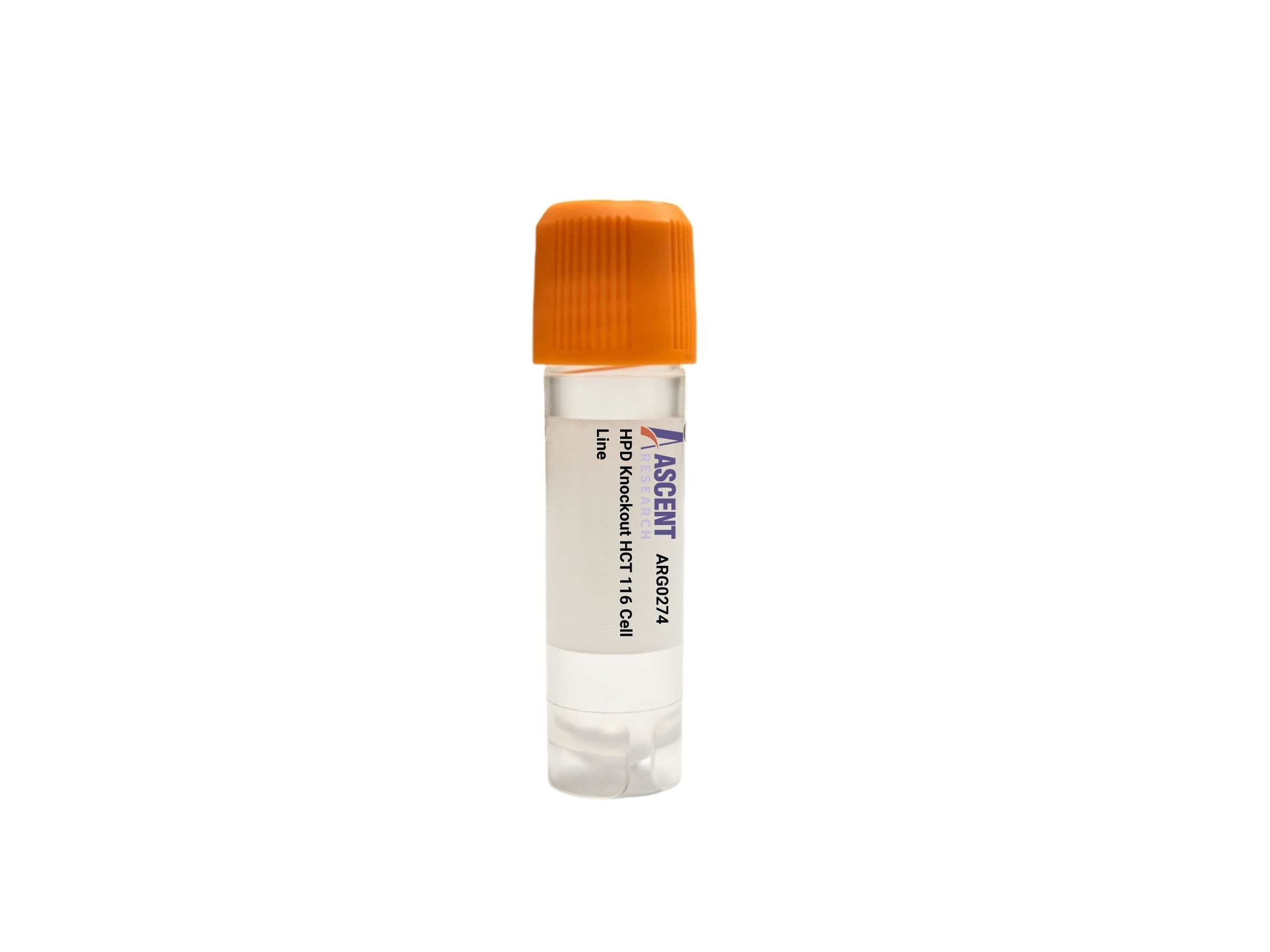
The HPD Knockout HCT 116 Cell Line is a CRISPR/Cas9-edited colorectal carcinoma model with targeted disruption of the HPD gene, which encodes 4-hydroxyphenylpyruvate dioxygenase. This enzyme converts 4-hydroxyphenylpyruvate to homogentisate in the tyrosine degradation pathway, regulated by HNF4A and FOXA, and converges on fumarate and acetoacetate. Loss of HPD leads to accumulation of 4-hydroxyphenylpyruvate, enabling investigation of metabolic stress and tyrosine catabolism in cancer. The cell line is suited for studying HPD as a metabolic vulnerability, modeling tyrosinemia type III, and performing metabolomic (LC-MS), functional (Seahorse), and enzymatic assays.
 CASP1 Knockout HT29 Polyclonal Cells
Cat. No. ARG33239
METTL6 Knockout Hela Polyclonal Cells
Cat. No. ARG7516
HAT1 Knockout Raji Polyclonal Cells
Cat. No. ARG23642
CASP6 Knockout CaSki Polyclonal Cells
Cat. No. ARG42476
OTUB2 Knockout PATU8988T Polyclonal Cells
Cat. No. ARG11363
NUDT14 Knockout Hela Polyclonal Cells
Cat. No. ARG7682
CASP1 Knockout HT29 Polyclonal Cells
Cat. No. ARG33239
METTL6 Knockout Hela Polyclonal Cells
Cat. No. ARG7516
HAT1 Knockout Raji Polyclonal Cells
Cat. No. ARG23642
CASP6 Knockout CaSki Polyclonal Cells
Cat. No. ARG42476
OTUB2 Knockout PATU8988T Polyclonal Cells
Cat. No. ARG11363
NUDT14 Knockout Hela Polyclonal Cells
Cat. No. ARG7682
The HPD Knockout HCT 116 Cell Line is a CRISPR/Cas9-edited knockout cell line with stable disruption of the HPD gene, encoding 4-hydroxyphenylpyruvate dioxygenase. This loss-of-function model enables precise investigation of tyrosine catabolism in the HCT 116 colorectal carcinoma background, ensuring complete and permanent ablation of HPD activity without the limitations of transient knockdown approaches.
HCT 116 is a human colorectal carcinoma cell line derived from a male patient with microsatellite instability, a hallmark of defective DNA mismatch repair. This genetic background renders HCT 116 cells particularly useful for studying tumorigenesis, drug response, and metabolic reprogramming. As an epithelial cancer cell line, HCT 116 retains key features of colorectal tumors, including aberrant Wnt/??-catenin signaling and metabolic flexibility, making it an ideal host for dissecting the role of metabolic enzymes like HPD.
HPD catalyzes the conversion of 4-hydroxyphenylpyruvate to homogentisate, the second step in tyrosine degradation, requiring ferrous iron and molecular oxygen. It functions downstream of tyrosine aminotransferase and upstream of homogentisate oxidase (HGD), ultimately generating fumarate and acetoacetate via fumarylacetoacetate hydrolase (FAH). Transcriptional regulation is mediated by HNF4A and FOXA proteins. Disruption of HPD blocks flux, causing accumulation of 4-hydroxyphenylpyruvate and altered TCA cycle intermediates, thereby impacting energy metabolism and redox balance.
In HCT 116 colorectal carcinoma, HPD knockout mimics aspects of tyrosinemia type III and highlights metabolic vulnerabilities. Accumulated 4-hydroxyphenylpyruvate induces metabolic stress, potentially forcing cancer cells to adapt via alternative pathways. This model enables study of how tyrosine degradation intersects with tumor anabolic pathways, mitochondrial respiration, and cell survival, particularly in the context of microsatellite-instable cancer.
Researchers can employ this cell line for LC-MS metabolomics of tyrosine pathway intermediates, Seahorse mitochondrial respiration assays, proliferation and viability studies, and enzymatic activity measurements. Additional applications include synthetic lethality screening and metabolic reprogramming analysis. This product supports academic and pharmaceutical research in cancer metabolism and drug target validation. For technical details, contact Ascent Research.