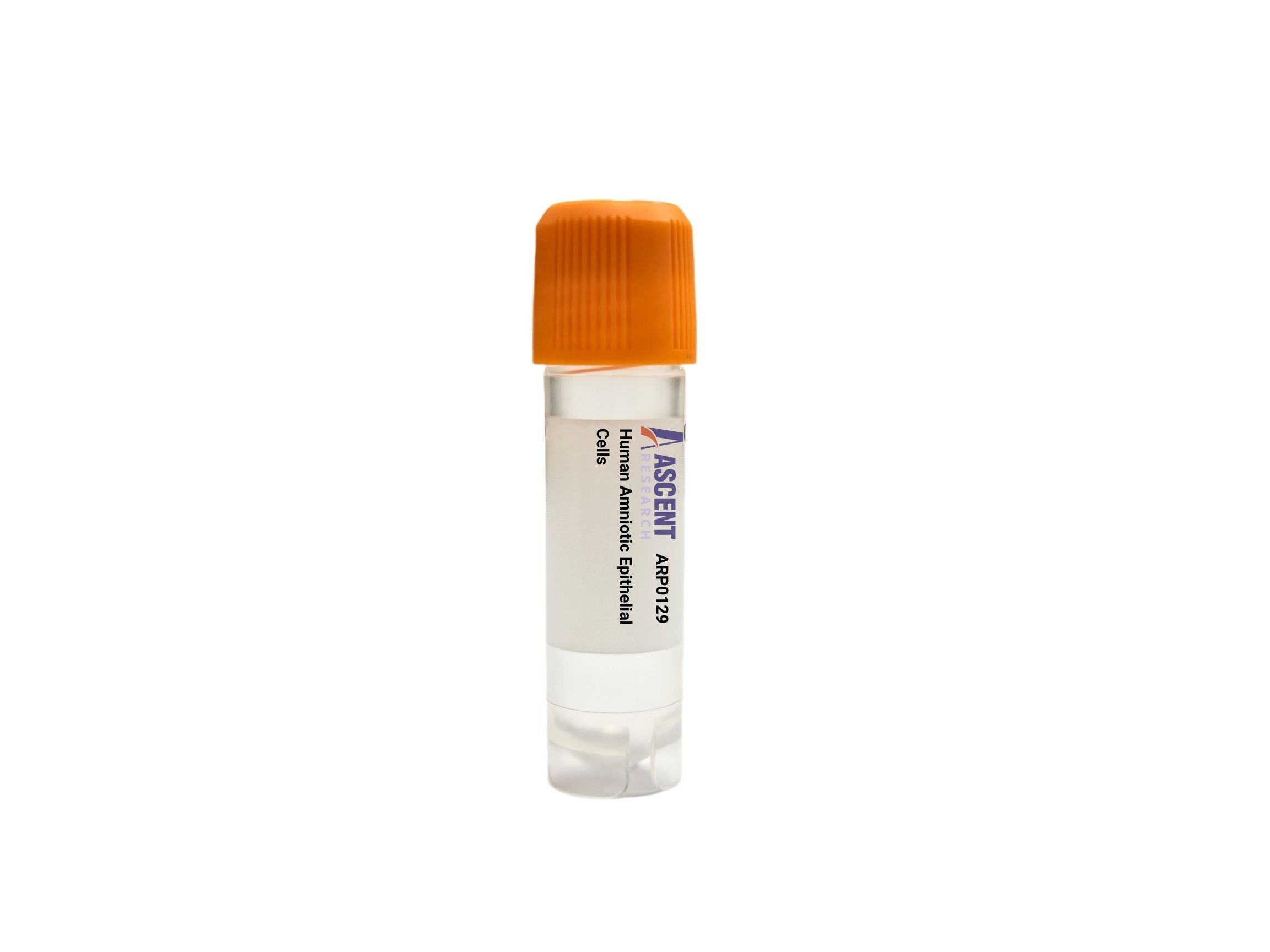
Primary Cells
Homo sapiens (Human)
Embryo (amnion)
Research on the Human Amniotic Epithelial Cells is essential to the study of lysosomal diseases, neonatal hypoxic-ischemic encephalopathy, lung/brain developmental disorders, autoimmune conditions (e.g., multiple sclerosis), corneal injuries, and intrauterine adhesions owing to their pluripotent differentiation potential and anti-inflammatory effects. The amnion is a thin, transparent membrane that covers and protects the developing embryo/fetus during pregnancy. It is the innermost fetal membrane and is composed of a single layer of tightly connected epithelial cells. Unlike tissues that integrate into the embryo, the amnion forms an external sac that does not penetrate the embryonic body. This membrane plays multiple vital roles in fetal development by providing nutrients, facilitating gas exchange, removing metabolic waste, and offering immune protection to the growing baby. The Human Amniotic Epithelial Cells are to be used with Human Amniotic Epithelial Cell Medium (Cat. No. ACM0129). This product is intended for laboratory in vitro use only. It is not intended for diagnostic, therapeutic, or clinical applications.
 LAMA4 Knockout A549 Polyclonal Cells
Cat. No. ARG10814
ATG4A Knockout Raji Polyclonal Cells
Cat. No. ARG21300
BIN1 Knockout HEK293T Polyclonal Cells
Cat. No. ARG25838
HNRNPUL2 Knockout HAP1 Polyclonal Cells
Cat. No. ARG37090
MITD1 Knockout MES-OV Polyclonal Cells
Cat. No. ARG6139
OTULIN Knockout HEK293T Polyclonal Cells
Cat. No. ARG3879
LAMA4 Knockout A549 Polyclonal Cells
Cat. No. ARG10814
ATG4A Knockout Raji Polyclonal Cells
Cat. No. ARG21300
BIN1 Knockout HEK293T Polyclonal Cells
Cat. No. ARG25838
HNRNPUL2 Knockout HAP1 Polyclonal Cells
Cat. No. ARG37090
MITD1 Knockout MES-OV Polyclonal Cells
Cat. No. ARG6139
OTULIN Knockout HEK293T Polyclonal Cells
Cat. No. ARG3879
Complete description is available upon request.