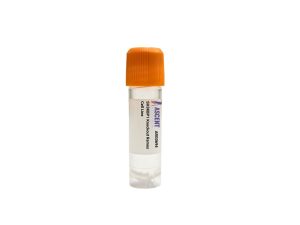
In Stock Cell Lines
Homo sapiens (Human)
Uterus (cervix)
Adherent
The KIAA0930 Knockout Hela Cell Line offers a CRISPR/Cas9-edited knockout model in the Hela cervical adenocarcinoma epithelial background. KIAA0930 is implicated in promoting proliferation, migration, and invasion through PI3K/AKT/mTOR signaling, with downstream effects on Cyclin D1 and EMT markers such as N-cadherin. This loss-of-function cell line enables investigation of oncogenic mechanisms and signaling dependencies, supporting applications in drug target validation, EMT research, and tumorigenesis studies using assays like Western blotting, transwell invasion, and xenograft models.
 NADK2 Knockout A2780 Polyclonal Cells
Cat. No. ARG18766
MLKL Knockout HT29 Polyclonal Cells
Cat. No. ARG14116
MAVS Knockout jurkat Polyclonal Cells
Cat. No. ARG13674
PARP3 Knockout HEK293 Polyclonal Cells
Cat. No. ARG12775
ARFGAP2 Knockout huh-7 Polyclonal Cells
Cat. No. ARG27952
EEF2K Knockout HEK293T Polyclonal Cells
Cat. No. ARG40584
NADK2 Knockout A2780 Polyclonal Cells
Cat. No. ARG18766
MLKL Knockout HT29 Polyclonal Cells
Cat. No. ARG14116
MAVS Knockout jurkat Polyclonal Cells
Cat. No. ARG13674
PARP3 Knockout HEK293 Polyclonal Cells
Cat. No. ARG12775
ARFGAP2 Knockout huh-7 Polyclonal Cells
Cat. No. ARG27952
EEF2K Knockout HEK293T Polyclonal Cells
Cat. No. ARG40584
The KIAA0930 Knockout Hela Cell Line is a CRISPR/Cas9-edited knockout cell line engineered for targeted disruption of the KIAA0930 gene in Homo sapiens Hela cells. This product provides a stable loss-of-function model in an adherent epithelial host with the knockout introduced by CRISPR/Cas9-mediated gene disruption. The cell line is supplied as a ready-to-use culture, enabling direct integration into functional studies of oncogenic signaling without the need for transient gene silencing, and is suitable for investigating KIAA0930-dependent processes in a malignancy-relevant background.
Hela cells are derived from a human cervical adenocarcinoma and maintain HPV18-positive status, representing a widely employed epithelial cell model in cancer research. Their robust growth characteristics and well-characterized proteome make them particularly suited for studying proliferation, migration, and invasion mechanisms. The epithelial origin of this host cell line provides a physiologically relevant context for dissecting KIAA0930 function, as the gene has been implicated in multiple epithelial malignancies including cervical and breast cancers. Additionally, Hela cells are routinely used for protein expression and signaling pathway analysis, offering a versatile platform for downstream assays.
KIAA0930 functions as a positive regulator of cell proliferation, migration, and invasion, likely through enhancement of the PI3K/AKT/mTOR signaling axis. Mechanistically, the protein is thought to operate downstream of growth factor receptors such as EGFR, leading to activation of AKT and mTOR, which in turn drive cell cycle progression via Cyclin D1 upregulation. Concurrently, KIAA0930 promotes epithelial-mesenchymal transition (EMT), as evidenced by increased expression of mesenchymal markers including N-cadherin and Vimentin. This dual effect on proliferation and motility supports an oncogenic role for KIAA0930, positioning it as a potential node in signaling networks that coordinate tumor growth and metastasis.
Disruption of KIAA0930 in the Hela background provides a direct approach to evaluate its contribution to oncogenic signaling in an epithelial carcinoma model. Researchers can assess how loss of KIAA0930 alters AKT phosphorylation, mTOR activity, and EMT marker profiles, thereby clarifying the gene’s role in maintaining transformed phenotypes. This model is particularly valuable for comparing signaling dependencies between wild-type and knockout counterparts, enabling dissection of KIAA0930-specific effects on cell cycle regulation and invasive capacity within a well-defined genetic context.
This knockout cell line supports a broad range of applications in cancer biology and drug discovery. Typical experimental workflows include Western blotting to quantify phospho-AKT and EMT protein levels, colony formation assays to measure clonogenic survival, transwell migration and invasion assays to assess motility, CCK-8 viability assays for proliferation, and flow cytometric cell cycle analysis. Additionally, the line can be employed in xenograft tumor models to evaluate in vivo tumorigenesis. For further information about validation and culture conditions, please contact Ascent Research.