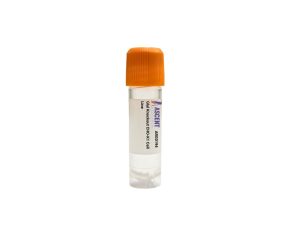
In Stock Cell Lines
Homo sapiens (Human)
Large intestine (colon)
Adherent
This CRISPR/Cas9-edited LIG1 Knockout HCT 116 Cell Line disrupts DNA ligase I in human colorectal carcinoma cells. LIG1 is critical for DNA replication and repair, interacting with PCNA, replication factor C, PARP1, and XRCC1. The HCT 116 host line carries an MLH1 mutation, causing mismatch repair deficiency and microsatellite instability. Knockout of LIG1 results in unjoined DNA fragments, genomic instability, and hypersensitivity to DNA-damaging agents. This model supports research into DNA repair, cancer biology, and synthetic lethality, using assays such as ???H2AX immunofluorescence, comet assays, and clonogenic survival.
 MBD1 Knockout SK-HEP-1 Polyclonal Cells
Cat. No. ARG15631
HAGH Knockout HGC-27 Polyclonal Cells
Cat. No. ARG29898
GSKIP Knockout Hela Polyclonal Cells
Cat. No. ARG37159
CD52 Knockout HAP1 Polyclonal Cells
Cat. No. ARG43641
EFNA5 Knockout NCI-H1975 Polyclonal Cells
Cat. No. ARG40683
MBD1 Knockout SK-HEP-1 Polyclonal Cells
Cat. No. ARG15631
HAGH Knockout HGC-27 Polyclonal Cells
Cat. No. ARG29898
GSKIP Knockout Hela Polyclonal Cells
Cat. No. ARG37159
CD52 Knockout HAP1 Polyclonal Cells
Cat. No. ARG43641
EFNA5 Knockout NCI-H1975 Polyclonal Cells
Cat. No. ARG40683
 SNU-761 Luciferase Stable Cell Line
Cat. No. ARG0765
SNU-761 Luciferase Stable Cell Line
Cat. No. ARG0765
The LIG1 Knockout HCT 116 Cell Line is a CRISPR/Cas9-edited knockout cell line designed to disrupt the human LIG1 gene in the HCT 116 colorectal carcinoma background. This model provides a defined loss-of-function system for studying DNA ligase I (LIG1) function in DNA replication and repair within an epithelial tumor cell context.
HCT 116 is a widely used human colorectal carcinoma line with microsatellite instability resulting from a homozygous MLH1 mutation, leading to defective mismatch repair and an elevated mutation rate. Its epithelial origin and genetic profile make it a standard model for colorectal cancer research and a sensitized background for exploring genome stability mechanisms.
LIG1 encodes the principal DNA ligase that seals nicks during lagging-strand synthesis and participates in base excision repair, nucleotide excision repair, mismatch repair, and recombination repair. LIG1 is recruited to DNA termini via interaction with proliferating cell nuclear antigen (PCNA), itself loaded by replication factor C, and forms complexes with DNA polymerase delta, PARP1, and XRCC1. Transcription of LIG1 is driven by E2F transcription factors, aligning expression with cell cycle progression. Disruption of LIG1 causes accumulation of unjoined Okazaki fragments and single-strand breaks, which can convert to DNA double-strand breaks, triggering genomic instability and checkpoint activation, and rendering cells hypersensitive to DNA-damaging agents such as alkylating drugs and topoisomerase inhibitors.
In the HCT 116 background, the combination of MMR deficiency and LIG1 loss amplifies replication stress and DNA repair deficiency, creating a powerful platform for synthetic lethality screens and drug sensitivity assays. This model allows dissection of how E2F-regulated LIG1 contributes to colorectal cancer cell survival and reveals dependencies that may be therapeutically exploited in tumors with compromised DNA damage responses.
Typical applications include confirming LIG1 depletion via Western blot or RT-qPCR, measuring DNA damage by alkaline comet assay and ???H2AX immunofluorescence, assessing cell cycle perturbations by flow cytometry, and evaluating clonogenic survival after treatment with DNA-damaging agents such as cisplatin, temozolomide, or PARP inhibitors. Synthetic lethality screens pairing LIG1 loss with inhibitors of ATR, CHK1, or other repair enzymes can identify novel vulnerabilities. For further information, please contact Ascent Research.