Genome-edited Cells
Liver
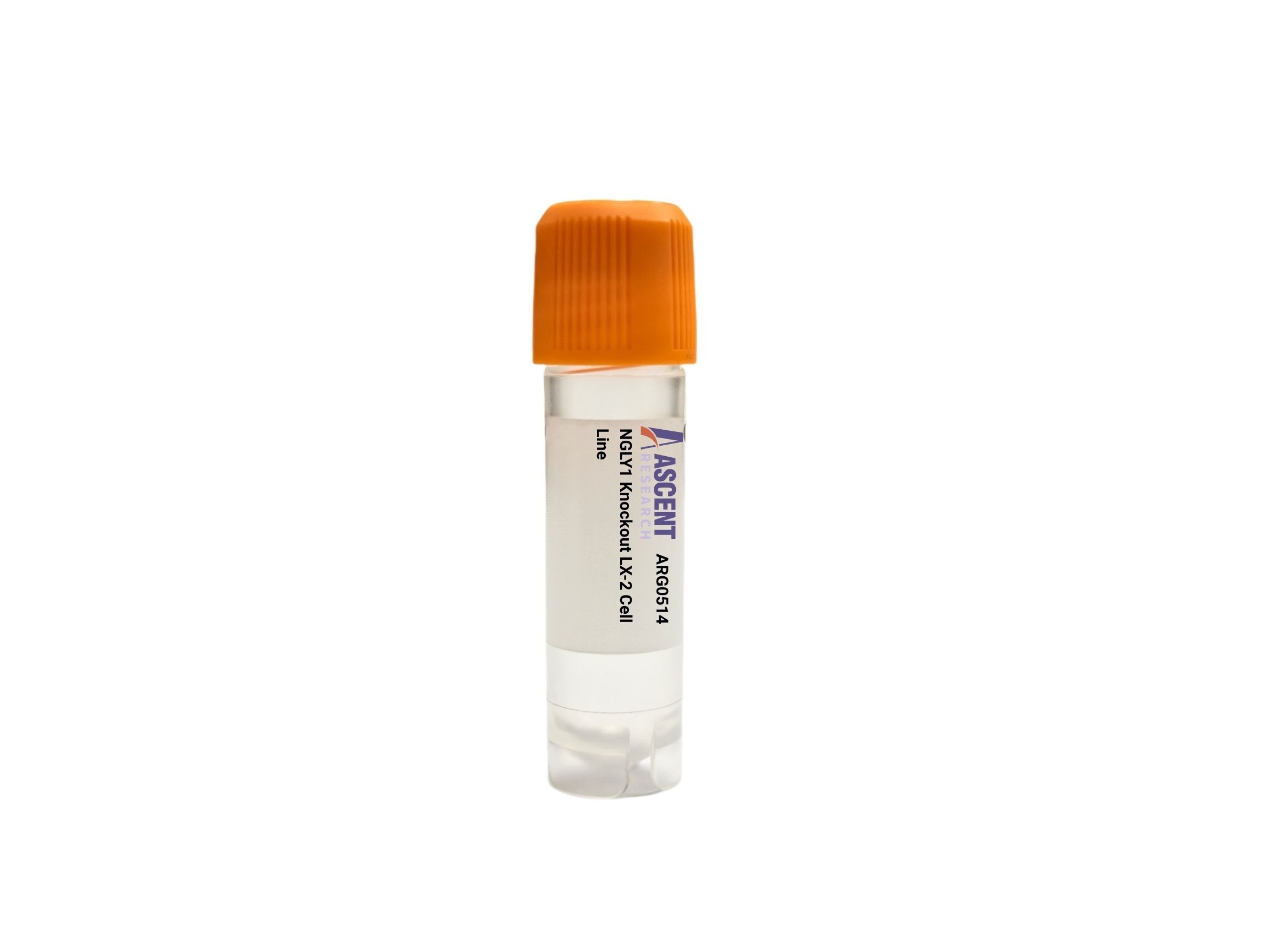
The NGLY1 Knockout LX-2 Cell Line is a CRISPR/Cas9-edited human hepatic stellate cell line with targeted disruption of NGLY1, a cytoplasmic peptide:N-glycanase essential for ER-associated degradation (ERAD). Derived from myofibroblastic LX-2 cells, it provides a physiologically relevant model for studying protein quality control in liver fibrosis. NGLY1 interacts with p97/VCP and Hrd1 to deglycosylate misfolded proteins and activates NRF1 to regulate proteasome expression. This knockout supports ERAD and fibrosis research, NGLY1 deficiency disease modeling, and proteostasis-targeted drug screening.
 MUC5B Knockout HT29 Polyclonal Cells
Cat. No. ARG14662
FOXC1 Knockout jurkat Polyclonal Cells
Cat. No. ARG13765
ACOT2 Knockout AGS Polyclonal Cells
Cat. No. ARG26439
C12orf10 Knockout KYSE30 Polyclonal Cells
Cat. No. ARG36292
CASS4 Knockout HAP1 Polyclonal Cells
Cat. No. ARG42562
EDEM3 Knockout A2780 Polyclonal Cells
Cat. No. ARG40461
MUC5B Knockout HT29 Polyclonal Cells
Cat. No. ARG14662
FOXC1 Knockout jurkat Polyclonal Cells
Cat. No. ARG13765
ACOT2 Knockout AGS Polyclonal Cells
Cat. No. ARG26439
C12orf10 Knockout KYSE30 Polyclonal Cells
Cat. No. ARG36292
CASS4 Knockout HAP1 Polyclonal Cells
Cat. No. ARG42562
EDEM3 Knockout A2780 Polyclonal Cells
Cat. No. ARG40461
The NGLY1 Knockout LX-2 Cell Line is a CRISPR/Cas9-edited knockout cell line derived from the human hepatic stellate cell line LX-2, with targeted disruption of the NGLY1 gene. This stable loss-of-function model enables rigorous investigation of NGLY1’s role in cytoplasmic deglycosylation and ER-associated degradation (ERAD), providing a clean experimental background for protein quality control studies.
LX-2 is an immortalized human hepatic stellate cell line with an activated myofibroblast phenotype, characterized by expression of ??-smooth muscle actin and secretion of extracellular matrix components such as collagen type I. As a key model for liver fibrosis research, LX-2 cells recapitulate the fibrogenic transdifferentiation of quiescent stellate cells into proliferative myofibroblasts, making them highly relevant for studying hepatic fibrogenesis and associated cellular stress responses.
NGLY1 encodes a cytoplasmic peptide:N-glycanase that removes N-linked glycans from misfolded glycoproteins retrotranslocated from the endoplasmic reticulum (ER) to the cytosol, a critical step preceding ubiquitination and proteasomal degradation. It directly interacts with the p97/VCP complex and associated factors including Hrd1, SEL1L, and Derlin, which form the retrotranslocation machinery. Key ERAD substrates include TCR??, CD3??, and MHC I heavy chain. NGLY1 also facilitates proteolytic activation of the transcription factor NRF1/NFE2L1, linking ERAD to transcriptional regulation of proteasome subunit genes. The enzyme is induced by ER stress via the unfolded protein response sensors ATF6, IRE1, and PERK, integrating NGLY1 into feedback loops that maintain proteostasis.
In hepatic stellate cells, the high demand for extracellular matrix protein production imposes significant ER stress, making efficient ERAD essential for maintaining cellular homeostasis. Disruption of NGLY1 impairs clearance of misfolded proteins, which can trigger chronic unfolded protein response activation and alter fibrotic signaling pathways. This model therefore enables dissection of how proteostatic failure contributes to myofibroblast activation and liver fibrosis pathology, and provides a platform for modeling the hepatic aspects of NGLY1 deficiency, a congenital disorder of deglycosylation associated with liver dysfunction.
Widely applicable research assays include Western blotting for ERAD substrates (e.g., TCR??) and ER stress markers (BiP, CHOP), RT-qPCR, immunofluorescence, ubiquitination assays, and proteasome activity measurements. Fibrosis-related readouts such as ??-SMA and collagen expression can be assessed by immunocytochemistry or immunoblotting, complemented by functional assays like cell migration and invasion. This knockout cell line supports mechanistic studies of protein quality control in liver fibrosis, disease modeling for NGLY1 deficiency, and drug screening targeting proteostasis pathways. For further information, contact Ascent Research.