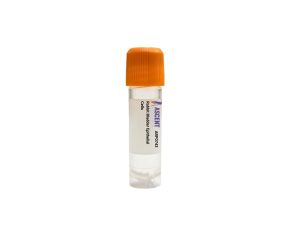
In Stock Cell Lines
Homo sapiens (Human)
Bone (bone marrow)
Adherent and suspension
The PIGG Knockout SH-SY5Y Cell Line is a CRISPR/Cas9-edited human neuroblastoma cell line engineered to disrupt ethanolamine phosphate transferase PIGG, a key enzyme in glycosylphosphatidylinositol (GPI) anchor biosynthesis. This model enables investigation of late-stage GPI maturation and its consequences for membrane protein anchoring. In the SH-SY5Y neuroblastoma background, PIGG deficiency impairs surface presentation of GPI-anchored proteins such as CD59 and NCAM, thereby affecting neuronal adhesion and differentiation pathways. Applications include GPIBD11 disease modeling, GPI anchor restoration screening, and functional studies of GPI-dependent signaling.
 CACHD1 Knockout HAP1 Polyclonal Cells
Cat. No. ARG37066
CASP2 Knockout MES-OV Polyclonal Cells
Cat. No. ARG24436
CACHD1 Knockout HAP1 Polyclonal Cells
Cat. No. ARG37066
CASP2 Knockout MES-OV Polyclonal Cells
Cat. No. ARG24436
 MBTPS1 Knockout HaCat Cell Line
Cat. No. ARG43960
CD2 Knockout Hela Polyclonal Cells
Cat. No. ARG43413
CAPN9 Knockout HAP1 Polyclonal Cells
Cat. No. ARG42227
LCOR Knockout AGS Polyclonal Cells
Cat. No. ARG2158
MBTPS1 Knockout HaCat Cell Line
Cat. No. ARG43960
CD2 Knockout Hela Polyclonal Cells
Cat. No. ARG43413
CAPN9 Knockout HAP1 Polyclonal Cells
Cat. No. ARG42227
LCOR Knockout AGS Polyclonal Cells
Cat. No. ARG2158
The PIGG Knockout SH-SY5Y Cell Line is a CRISPR/Cas9-edited human neuroblastoma cell line with targeted disruption of the PIGG gene, which encodes an ethanolamine phosphate transferase critical for glycosylphosphatidylinositol (GPI) anchor biosynthesis. This stable genetic model facilitates the study of GPI anchor maturation defects and their downstream effects on membrane protein anchoring, serving as a versatile tool for researchers exploring GPI biology in a neural crest-derived tumor context.
The parental SH-SY5Y line is a subclone of SK-N-SH, originally derived from a bone marrow metastasis of a 4-year-old female neuroblastoma patient. This adrenergic cell line is widely employed as a neuronal differentiation model following induction with retinoic acid or other neurotrophic factors. Endogenous expression of GPI-anchored proteins such as neural cell adhesion molecule (NCAM) and glypicans renders SH-SY5Y cells particularly well-suited for examining how PIGG disruption impacts neuronal adhesion, differentiation, and signaling processes.
PIGG functions as an ethanolamine phosphate transferase that adds a second EtNP moiety to the third mannose of nascent GPI anchors in the endoplasmic reticulum, a late-stage modification critical for anchor stability and efficient protein attachment. It operates within a multimeric enzyme complex including PIGF, PIGO, and other GPI biosynthetic factors (e.g., PIGA, PIGK, PIGS, GPAA1). Loss of PIGG impairs the maturation of GPI-anchored proteins such as CD59, prion protein, glypicans, and adenosine deaminase 2, thereby disrupting NCAM-mediated signaling and Wnt pathway modulation via GPI-anchored co-receptors.
In the SH-SY5Y neuroblastoma context, PIGG ablation is expected to compromise neuronal adhesion mechanisms, retinoic acid-induced differentiation, and GPI-AP-dependent signaling networks. This knockout cell line therefore provides a physiologically relevant model for glycosylphosphatidylinositol biosynthesis defect 11 (GPIBD11), which is associated with intellectual disability and seizures. The neural crest origin of SH-SY5Y cells offers a pertinent platform for dissecting neurodevelopmental pathology linked to GPI anchor deficiencies and for evaluating potential therapeutic interventions.
Key applications include mechanistic dissection of GPI biosynthesis, high-content screening for compounds that restore GPI anchor surface expression, and functional rescue experiments with wild-type PIGG. Researchers can validate PIGG disruption via western blotting, quantify surface GPI-AP levels by flow cytometry using CD59 antibodies, visualize GPI-AP localization by immunofluorescence, assess pathway transcription with RT-qPCR, and track anchor synthesis through metabolic labeling. This cell line is an essential resource for advancing GPI-related disease research. For further information, please contact Ascent Research.