Genome-edited Cells
Skin
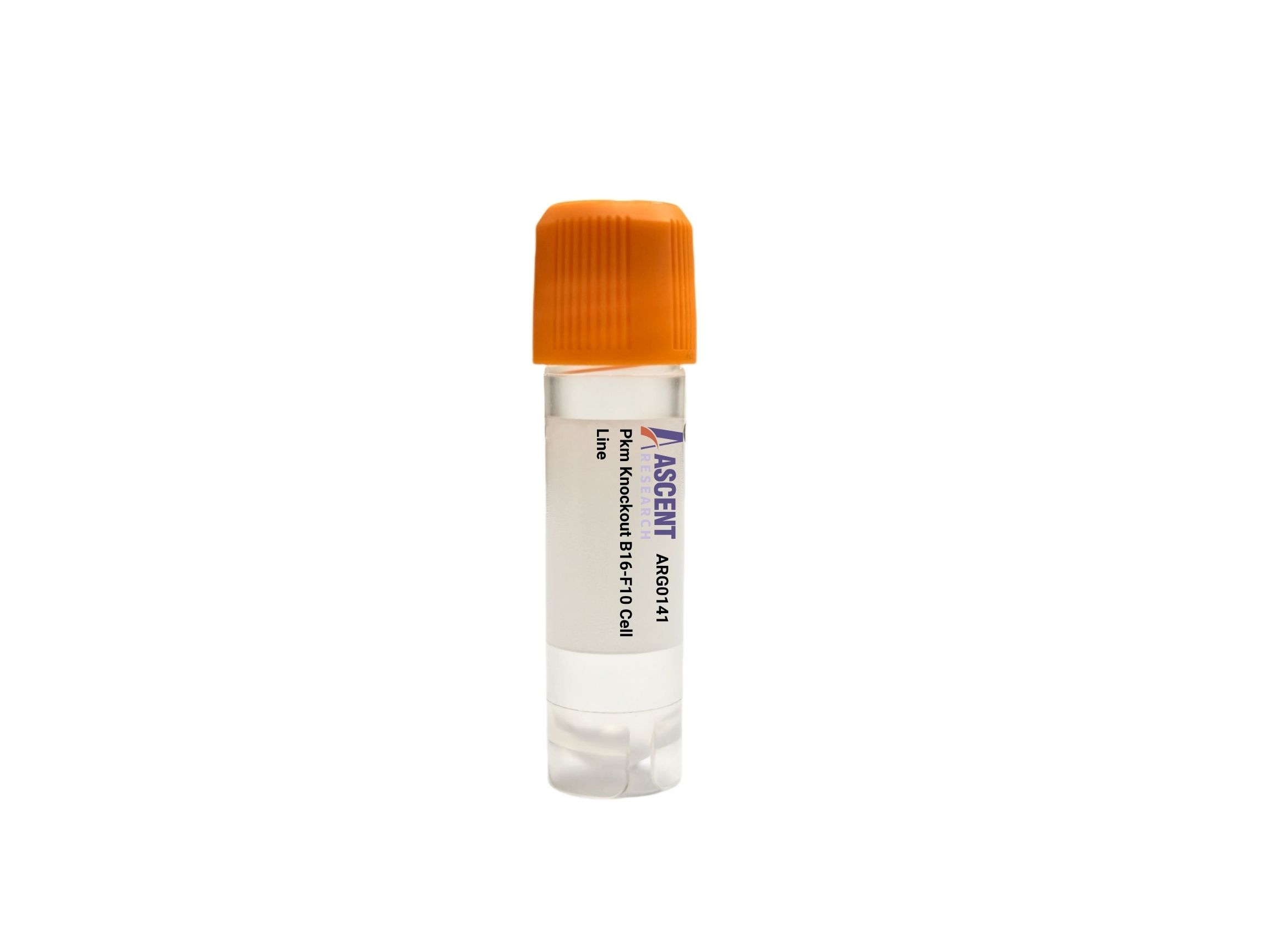
Pkm Knockout B16-F10 is a CRISPR/Cas9-edited mouse melanoma cell line with disruption of the Pkm gene in the aggressive, metastatic B16-F10 background. PKM, including PKM2, catalyzes phosphoenolpyruvate-to-pyruvate conversion with ATP generation and functions within glycolysis, pyruvate metabolism, HIF-1 signaling, and MYC/mTOR-linked metabolic reprogramming. In melanoma cells, PKM activity is connected to factors such as HIF1A, LDHA, SLC2A1, and PDK1, influencing glycolytic flux, lactate secretion, redox balance, proliferation, and hypoxic survival. This model supports tumor metabolism studies, hypoxia-response analysis, metabolomics, extracellular flux assays, proliferation assays, and metabolic drug sensitivity testing.
 PARP14 Knockout HT29 Polyclonal Cells
Cat. No. ARG14046
FITM2 Knockout jurkat Polyclonal Cells
Cat. No. ARG12847
MC5R Knockout SKOV3 Polyclonal Cells
Cat. No. ARG12336
OBI1 Knockout Hela Polyclonal Cells
Cat. No. ARG8270
BDH2 Knockout MES-OV Polyclonal Cells
Cat. No. ARG24331
AACS Knockout HEK293T Polyclonal Cells
Cat. No. ARG25539
PARP14 Knockout HT29 Polyclonal Cells
Cat. No. ARG14046
FITM2 Knockout jurkat Polyclonal Cells
Cat. No. ARG12847
MC5R Knockout SKOV3 Polyclonal Cells
Cat. No. ARG12336
OBI1 Knockout Hela Polyclonal Cells
Cat. No. ARG8270
BDH2 Knockout MES-OV Polyclonal Cells
Cat. No. ARG24331
AACS Knockout HEK293T Polyclonal Cells
Cat. No. ARG25539
The Pkm Knockout B16-F10 Cell Line is a CRISPR/Cas9-engineered mouse melanoma model in which the Pkm gene has been disrupted to eliminate functional pyruvate kinase muscle isoform expression. This gene-edited line is generated in the B16-F10 background, providing a stable in vitro system for interrogating the consequences of PKM loss in a highly glycolytic, tumor-derived melanocytic context. The model is designed for studies requiring defined perturbation of glycolytic control, metabolic stress adaptation, and proliferation-associated bioenergetics in melanoma cells.
B16-F10 is a murine melanoma subline derived from C57BL/6 mouse melanoma and is extensively used as an aggressive, highly metastatic syngeneic melanoma model. As a tumor-derived melanocytic cell line, it is broadly applied to investigate melanoma growth, migration, invasion, and metastatic colonization, as well as metabolic programs that support tumor progression. Its robust use in solid tumor research makes it a relevant host background for examining how metabolic enzymes influence malignant phenotypes, particularly under conditions of rapid proliferation, nutrient limitation, and hypoxia-associated stress.
PKM encodes pyruvate kinase muscle isoforms, including PKM2, which catalyzes conversion of phosphoenolpyruvate and ADP to pyruvate with ATP generation at the terminal step of glycolysis. In proliferating tumor cells, PKM functions within a broader metabolic regulatory network controlled by HIF1A, MYC, mTORC1, AMPK, EGFR-MAPK signaling, PI3K-AKT signaling, growth factor stimulation, hypoxia, and nutrient availability. PKM acts functionally downstream of core glycolytic components including HK2, GPI1, PFKP, ALDOA, GAPDH, and ENO1, and interfaces with pyruvate fate determinants such as LDHA, PDHA1, and PDK1. PKM2 oligomerization and allosteric regulation by fructose-1,6-bisphosphate influence glycolytic flux, pyruvate production, lactate secretion, ATP generation, cellular redox balance, and anabolic biosynthesis. These relationships are directly relevant to aerobic glycolysis, tricarboxylic acid cycle coupling, HIF-1 signaling, mTOR signaling, AMPK-mediated energy stress responses, and MYC-driven metabolic reprogramming in melanoma.
Disruption of Pkm in B16-F10 provides a mechanistically informative system for examining how loss of a rate-limiting glycolytic enzyme alters melanoma cell metabolism and associated phenotypes. In this host background, PKM deficiency can be used to study dependence on glycolytic ATP production, adaptation to hypoxia, coupling between glycolysis and pyruvate metabolism, and the contribution of metabolic state to proliferation, survival, migration, and metastasis-related behavior. The model is also useful for evaluating compensatory transcriptional or metabolic changes involving SLC2A1, LDHA, PDK1, HIF1A, MYC, MTOR, and PRKAA1-centered pathways.
This knockout cell line is suitable for western blotting, RT-qPCR, and RNA-seq analysis of metabolic gene-expression programs; targeted metabolomics to quantify pyruvate- and lactate-associated changes; glucose uptake, lactate production, extracellular flux, and ATP quantification assays to define glycolytic dependency and energetic stress; and cell proliferation, colony formation, apoptosis, flow cytometry, and drug sensitivity studies to link metabolic perturbation with tumor cell fitness. In addition, migration and invasion assays can be used to investigate whether altered glycolytic flux influences metastatic phenotypes, while synthetic lethal screening can identify vulnerabilities that emerge when PKM-dependent metabolism is impaired. Researchers may contact Ascent Research for additional technical information, product details, or related gene-edited cell models.