Genome-edited Cells
Large intestine (colon)
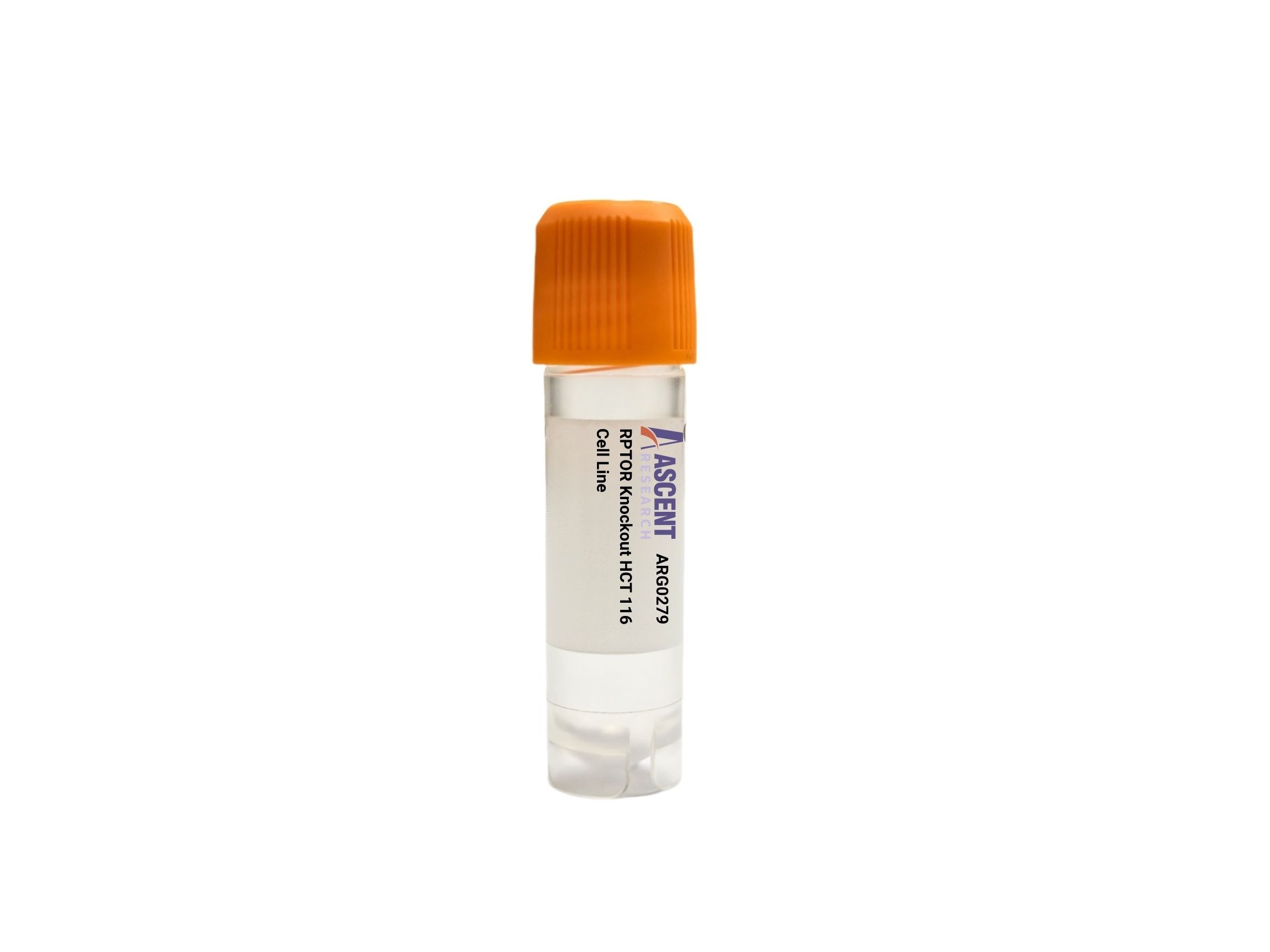
The RPTOR Knockout HCT 116 Cell Line is a CRISPR/Cas9-edited human colorectal carcinoma cell line with targeted disruption of the RPTOR gene. Derived from the HCT 116 adenocarcinoma model, it features mutations in KRAS, PIK3CA, and CTNNB1, and microsatellite instability. RPTOR encodes an essential scaffold subunit of mTORC1 that integrates nutrient and growth factor signals to regulate protein synthesis and autophagy. This knockout line enables investigation of mTORC1 signaling, including phosphorylation of S6K1 and 4E-BP1, and is ideal for colorectal cancer research and mTOR inhibitor screening.
 CELF1 Knockout K562 Polyclonal Cells
Cat. No. ARG19349
NANS Knockout HT29 Polyclonal Cells
Cat. No. ARG14892
ADNP2 Knockout NCI-H1299 Polyclonal Cells
Cat. No. ARG30246
ANP32A Knockout AGS Polyclonal Cells
Cat. No. ARG26571
CELF1 Knockout K562 Polyclonal Cells
Cat. No. ARG19349
NANS Knockout HT29 Polyclonal Cells
Cat. No. ARG14892
ADNP2 Knockout NCI-H1299 Polyclonal Cells
Cat. No. ARG30246
ANP32A Knockout AGS Polyclonal Cells
Cat. No. ARG26571
 PD-L1 Overexpression B16-F10 Stable Cell Line
Cat. No. ARG0146
PD-L1 Overexpression B16-F10 Stable Cell Line
Cat. No. ARG0146
 DTNBP1 Knockout BxPC-3 Cell Line
Cat. No. ARG0173
DTNBP1 Knockout BxPC-3 Cell Line
Cat. No. ARG0173
The RPTOR Knockout HCT 116 Cell Line is a CRISPR/Cas9-edited human cell line engineered to disrupt the RPTOR gene, which encodes the regulatory-associated protein of mTOR (RPTOR). This knockout model offers a permanent loss-of-function of RPTOR, enabling precise interrogation of mTORC1-dependent signaling. The cell line is derived from the HCT 116 colorectal carcinoma line and provides a defined genetic background for studying mTORC1 biology.
The HCT 116 cell line is a widely used epithelial cell model derived from a human colorectal adenocarcinoma. It harbors characteristic mutations in KRAS (G13D), PIK3CA, and CTNNB1, along with microsatellite instability and deficient DNA mismatch repair due to MLH1 loss. These genetic alterations drive constitutive activation of the PI3K-Akt and Wnt pathways, making HCT 116 an ideal host for investigating mTORC1 crosstalk in colorectal cancer.
RPTOR functions as an essential scaffold protein within the mTORC1 complex, linking the mTOR kinase to its substrates and upstream regulators. Under nutrient- and growth factor-replete conditions, RPTOR facilitates mTORC1 activation downstream of insulin/IGF1 receptors, PI3K, and Akt, while also integrating signals from amino acids via Rag GTPases and from cellular energy status through AMPK. The mTORC1 complex, which also includes mTOR, mLST8, PRAS40, and DEPTOR, phosphorylates key effectors such as S6K1 and 4E-BP1 to promote protein synthesis and cell growth. Furthermore, mTORC1 directly phosphorylates ULK1 to suppress autophagy, and regulates TFEB to control lysosomal biogenesis. RPTOR is thus central to the balance between anabolic processes and catabolic pathways.
In the context of HCT 116 cells, knockout of RPTOR disrupts mTORC1 assembly and signaling, leading to impaired phosphorylation of downstream targets and reduced cell proliferation. Given the background of KRAS and PI3KCA mutations that hyperactivate upstream pathways, RPTOR loss provides a tool to dissect mTORC1-specific contributions to colorectal adenocarcinoma phenotypes. This model is particularly valuable for studying the mTOR-autophagy nexus and evaluating mTOR-targeted therapeutic strategies.
This knockout cell line is suited for a broad range of experimental applications, including dissection of mTORC1 signaling in cancer, autophagy regulation, and metabolic reprogramming. It can be employed in drug screening assays for mTOR inhibitors, as well as in mechanistic studies of nutrient and growth factor sensing. Researchers can validate RPTOR disruption via RT-qPCR and assess functional outcomes using Western blotting for phosphorylated S6K1 (Thr389) and 4E-BP1 (Thr37/46). Additional assays include cell proliferation (MTT, BrdU), autophagy flux measurement via LC3 lipidation, and cell cycle analysis by flow cytometry, with nutrient deprivation conditions providing further mechanistic insight. For further inquiries, contact Ascent Research.