Genome-edited Cells
Blood (peripheral blood)
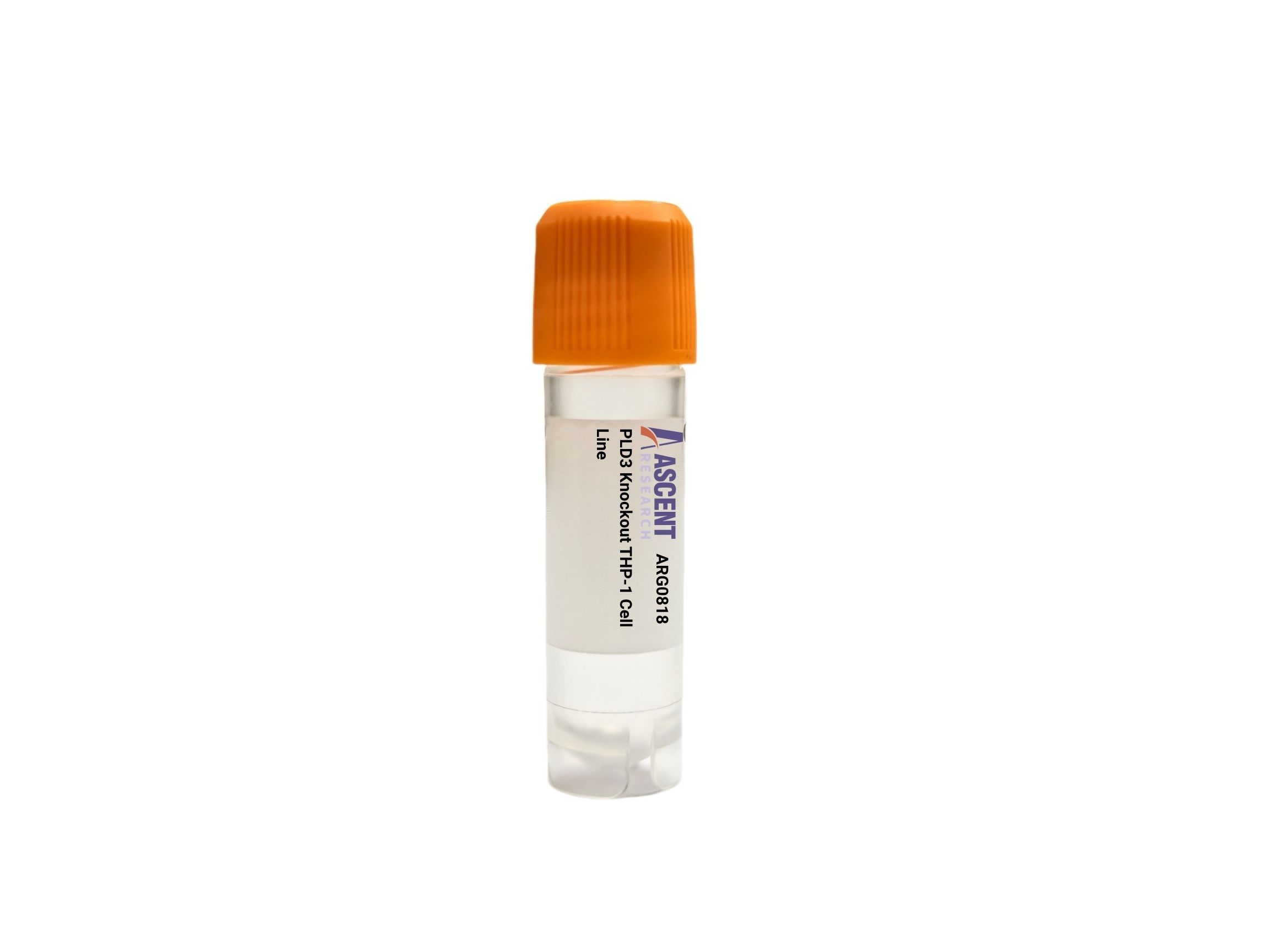
The PLD3 Knockout THP-1 Cell Line is a CRISPR/Cas9-edited knockout line derived from the human acute monocytic leukemia THP-1 cell line, featuring targeted disruption of the PLD3 gene. PLD3 encodes a lysosomal phospholipase involved in phospholipid metabolism and amyloid-beta processing, and this model serves as a loss-of-function tool in a monocyte/macrophage background. PLD3 regulates downstream targets such as phosphatidic acid and mTORC1, influencing autophagy and lysosomal acidification. Applications include Alzheimer??s disease research, autophagy studies, and monocyte/macrophage differentiation, with assays like Western blotting for LC3 and p62, and ELISA for A??42. This cell line is a valuable resource for studying lysosomal dysfunction and neurodegenerative disease mechanisms.
 GCH1 Knockout Lovo Polyclonal Cells
Cat. No. ARG11723
LSM14B Knockout Hela Polyclonal Cells
Cat. No. ARG8296
DGKE Knockout Hela Polyclonal Cells
Cat. No. ARG8240
ABCC4 Knockout NCI-H1299 Polyclonal Cells
Cat. No. ARG30159
GRHPR Knockout A549 Polyclonal Cells
Cat. No. ARG33599
GCH1 Knockout Lovo Polyclonal Cells
Cat. No. ARG11723
LSM14B Knockout Hela Polyclonal Cells
Cat. No. ARG8296
DGKE Knockout Hela Polyclonal Cells
Cat. No. ARG8240
ABCC4 Knockout NCI-H1299 Polyclonal Cells
Cat. No. ARG30159
GRHPR Knockout A549 Polyclonal Cells
Cat. No. ARG33599
 NPHP1 Knockout MDCK Cell Line
Cat. No. ARG0568
NPHP1 Knockout MDCK Cell Line
Cat. No. ARG0568
The PLD3 Knockout THP-1 Cell Line is a CRISPR/Cas9-edited knockout cell line derived from the human acute monocytic leukemia THP-1 cell line. This product provides targeted disruption of the PLD3 gene, encoding lysosomal/endosomal phospholipase D3, through CRISPR/Cas9-mediated gene editing. The resulting loss-of-function model is a vital tool for investigating PLD3-dependent pathways in a monocytic background. This cell line serves as a reliable model for studying phospholipid metabolism, autophagy, and amyloid-beta processing in the context of monocyte/macrophage biology.
The host THP-1 cell line, originally derived from the peripheral blood of a one-year-old male with acute monocytic leukemia, displays characteristic monocytic properties and can be differentiated into macrophage-like cells upon treatment with phorbol 12-myristate 13-acetate (PMA). This widely used model recapitulates key aspects of monocyte-to-macrophage differentiation, inflammatory responses, and tumor-associated macrophage functions, providing a robust platform for studying innate immune cell biology. Additionally, THP-1 cells are easily transfectable and amenable to genetic manipulation, making them an ideal host for CRISPR/Cas9 editing.
PLD3 encodes a lysosomal/endosomal phospholipase that hydrolyzes phosphatidylcholine to choline and the lipid second messenger phosphatidic acid. PLD3 activity is regulated by transcription factor EB (TFEB) and inflammatory stimuli such as LPS and TNF-??. Downstream, phosphatidic acid modulates mTORC1 signaling, autophagic flux, and lysosomal acidification. PLD3 interacts with amyloid precursor protein (APP), vacuolar protein sorting-associated protein 35 (VPS35), and lysosomal-associated membrane protein 1 (LAMP1), and it participates in amyloid-beta 42 (A??42) processing. In this knockout line, disruption of PLD3 impairs lysosomal phospholipid hydrolysis, reducing phosphatidic acid production. This attenuation may compromise mTORC1 activation and autophagy, evidenced by altered LC3 and p62 levels, and disrupt A??42 clearance, modeling key aspects of lysosomal dysfunction.
Within the THP-1 monocytic environment, PLD3 knockout enables dissection of the interplay between lysosomal lipid metabolism, autophagy, and immune cell function. Monocyte/macrophage differentiation, phagocytosis, and inflammatory cytokine production critically depend on the endosomal-lysosomal pathway. PLD3 loss likely alters lysosomal acidification and autophagic flux, impacting THP-1 cell differentiation and macrophage polarization. This model thus offers insights into how phospholipase D3 dysfunction contributes to neurodegenerative pathology and lysosomal storage defects in a monocytic lineage. Furthermore, the THP-1 background provides an opportunity to study PLD3 in the context of acute monocytic leukemia, as the parental cell line retains oncogenic properties. Comparing knockout and wild-type cells under various stimuli elucidates the crosstalk between lipid signaling and immune responses.
The PLD3 Knockout THP-1 Cell Line supports diverse applications, including Alzheimer??s disease research focusing on amyloid-beta metabolism, autophagy and lysosomal biology, and monocyte/macrophage functional studies. Representative assays include Western blotting for PLD3, APP, LC3, and p62; RT-qPCR for inflammatory cytokines; immunofluorescence staining of LAMP1 and LC3 puncta; flow cytometric analysis of CD11b and CD14; ELISA for A??42; lipidomics profiling; phagocytosis assays; and PMA-induced differentiation. This knockout cell line is also suited for drug screening targeting lysosomal dysfunction and inflammation. For additional technical information, please contact Ascent Research. It provides a valuable resource for translational studies aimed at understanding the molecular underpinnings of neurodegeneration and immune dysfunction.