Genome-edited Cells
Large intestine (colon)
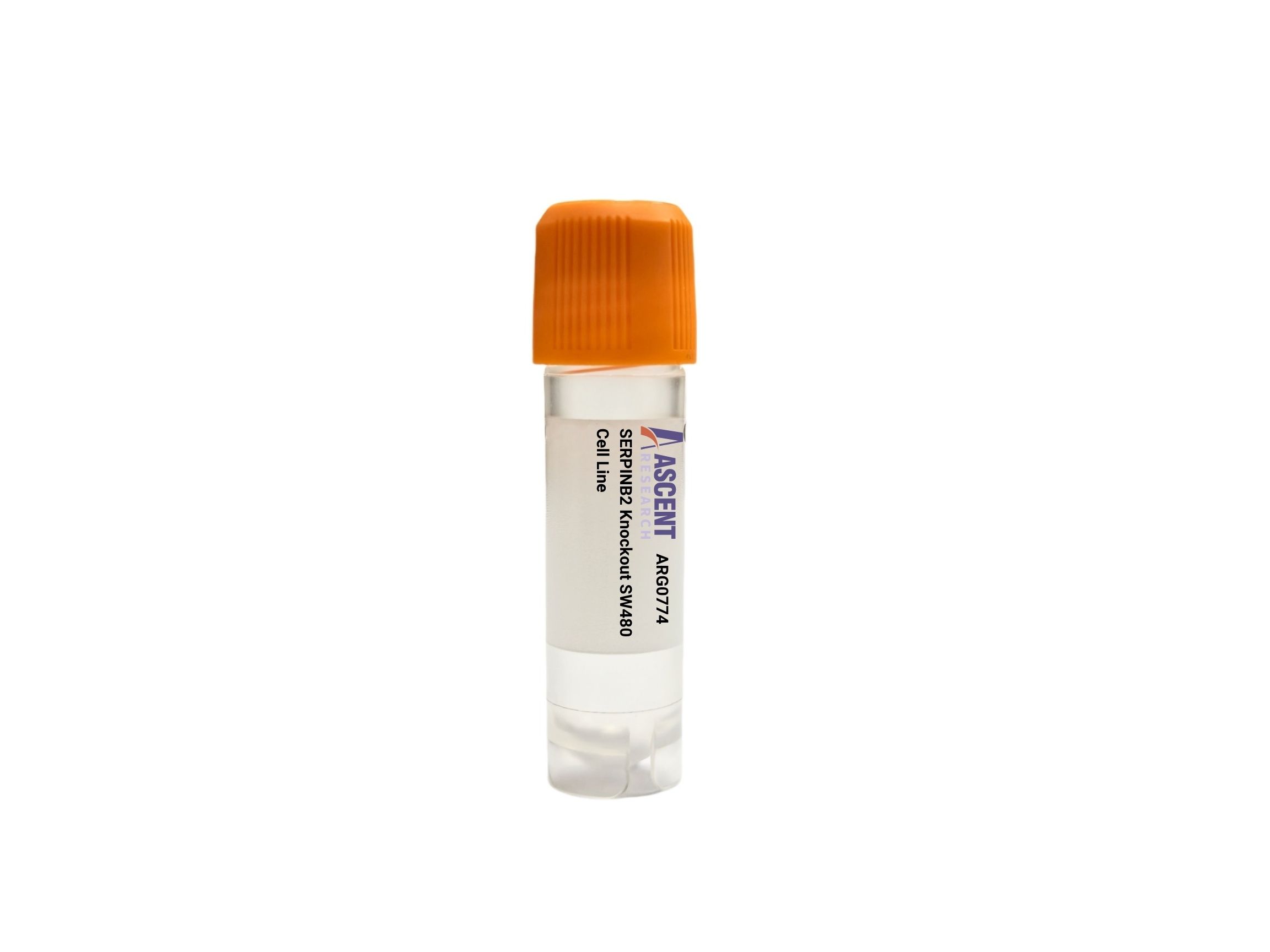
The SERPINB2 Knockout SW480 Cell Line is a CRISPR/Cas9-edited knockout cell line derived from SW480 colorectal adenocarcinoma epithelial cells, with disrupted SERPINB2 expression to eliminate plasminogen activator inhibitor-2 (PAI-2). This loss-of-function model enhances urokinase plasminogen activator (uPA) and tissue plasminogen activator (tPA) activity, promoting pericellular proteolysis and enabling studies of fibrinolysis, extracellular matrix remodeling, and tumor cell behavior. Ideal applications include colorectal cancer invasion assays, drug screening, and signaling analysis using uPA activity assays, gelatin zymography, and Western blotting. The line aids investigation of SERPINB2 regulation by TNF-??, NF-??B, and TGF-??, and its downstream impact on plasmin generation and cell migration.
 ETV6 Knockout SK-HEP-1 Polyclonal Cells
Cat. No. ARG15670
KITLG Knockout Raji Polyclonal Cells
Cat. No. ARG23920
BLOC1S4 Knockout A2780 Polyclonal Cells
Cat. No. ARG28904
ATXN1L Knockout HGC-27 Polyclonal Cells
Cat. No. ARG29676
ETV6 Knockout SK-HEP-1 Polyclonal Cells
Cat. No. ARG15670
KITLG Knockout Raji Polyclonal Cells
Cat. No. ARG23920
BLOC1S4 Knockout A2780 Polyclonal Cells
Cat. No. ARG28904
ATXN1L Knockout HGC-27 Polyclonal Cells
Cat. No. ARG29676
 Mouse Thyroid Fibroblast Medium
Cat. No. ARM0516
Mouse Thyroid Fibroblast Medium
Cat. No. ARM0516
 LUM Knockout JEG-3 Cell Line
Cat. No. ARG0473
LUM Knockout JEG-3 Cell Line
Cat. No. ARG0473
The SERPINB2 Knockout SW480 Cell Line is a CRISPR/Cas9-mediated knockout cell line produced from the human SW480 colorectal adenocarcinoma epithelial cell line, featuring targeted disruption of the SERPINB2 gene to abolish expression of plasminogen activator inhibitor-2 (PAI-2). This engineered model provides a defined loss-of-function system for investigating the roles of SERPINB2 in colorectal cancer biology, fibrinolysis regulation, and associated signaling networks.
The SW480 parental cell line was derived from a primary colorectal adenocarcinoma classified as Dukes’ type B and is widely used as an in vitro model for colon cancer studies. These cells harbor mutations in key genes such as APC, KRAS, and TP53, and display an epithelial phenotype with a moderate invasive capacity. Their well-characterized growth characteristics and responsiveness to biological stimuli make them particularly suitable for examining tumor progression, migration, and invasion under controlled experimental conditions.
SERPINB2 encodes the serine protease inhibitor PAI-2, which functions primarily as an inhibitor of urokinase plasminogen activator (uPA/PLAU) and, to a lesser extent, tissue plasminogen activator (tPA/PLAT). By binding to and inactivating uPA, PAI-2 blocks the conversion of plasminogen to plasmin, thereby dampening pericellular proteolysis, extracellular matrix (ECM) degradation, and downstream promigratory signals. SERPINB2 expression is transcriptionally regulated by multiple inflammatory and growth factors, including TNF-??, IL-1, TGF-??, and is mediated through transcription factors such as NF-??B, AP-1, STAT3, and p53. In addition to its protease inhibitory function, PAI-2 interacts with caspase-1 and annexin A2, implicating it in apoptosis modulation and immune regulation. Accordingly, knockout of SERPINB2 in SW480 cells is expected to elevate uPA activity, enhance plasmin generation, and promote the activation of matrix metalloproteinases (MMPs), thereby facilitating ECM remodeling and potentially increasing cellular invasive behavior.
Within the SW480 colorectal adenocarcinoma background, loss of SERPINB2 provides a powerful tool for dissecting the tumor-intrinsic contributions of PAI-2 to colon cancer pathophysiology. Given that SERPINB2 levels are frequently altered in colorectal tumors and can exhibit both tumor-suppressive and tumor-promoting functions depending on the microenvironment, this knockout cell line enables unambiguous assessment of its role in anoikis resistance, epithelial-mesenchymal transition, and cell-matrix interactions. By removing endogenous PAI-2, researchers can clarify how uPAR-mediated signaling, plasmin-driven ECM remodeling, and crosstalk with integrins and growth factor receptors modulate SW480 cell migration and invasion.
Experimental applications encompass uPA activity assays, gelatin zymography for plasminogen activation, wound healing, and Transwell invasion assays to assess migration and invasion. RT-qPCR and Western blotting verify knockout efficiency and signaling alterations, while immunofluorescence visualizes uPA/uPAR distribution. This model supports drug screening for serpin-related therapies and co-culture studies of tumor-stroma interactions. For further details, contact Ascent Research.