Genome-edited Cells
Lung
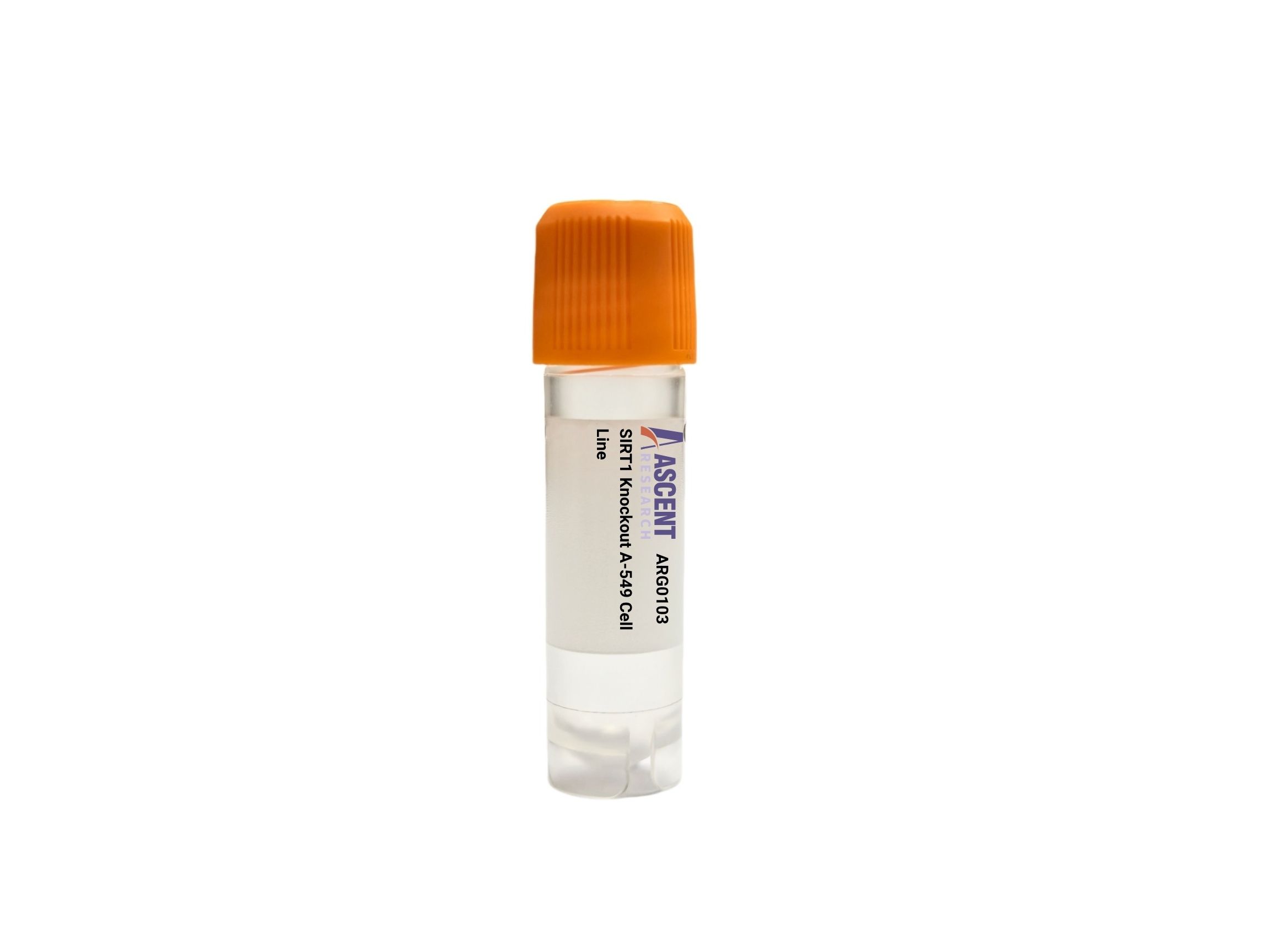
SIRT1 Knockout A-549 Cell Line is a human CRISPR/Cas9-edited alveolar epithelial adenocarcinoma model with disruption of the NAD+-dependent deacetylase SIRT1. In A-549 cells, SIRT1 is a key regulator of acetylation-dependent signaling linking NAD+ metabolism and AMPK-associated stress responses to TP53, FOXO3, RELA/p65, PPARGC1A, autophagy, apoptosis, oxidative stress, and mitochondrial function. This model is useful for lung cancer and pulmonary epithelial research, including DNA damage response, hypoxia, inflammatory signaling, metabolic reprogramming, and drug sensitivity studies using western blotting, RT-qPCR, RNA-seq, acetylation assays, ROS analysis, and functional phenotyping.
 GCH1 Knockout SK-Hep-1 Polyclonal Cells
Cat. No. ARG15766
DHRS7 Knockout jurkat Polyclonal Cells
Cat. No. ARG13631
ACP1 Knockout AGS Polyclonal Cells
Cat. No. ARG26444
GOLGA4 Knockout HGC-27 Polyclonal Cells
Cat. No. ARG29830
MYL3 Knockout AGS Polyclonal Cells
Cat. No. ARG2430
GCH1 Knockout SK-Hep-1 Polyclonal Cells
Cat. No. ARG15766
DHRS7 Knockout jurkat Polyclonal Cells
Cat. No. ARG13631
ACP1 Knockout AGS Polyclonal Cells
Cat. No. ARG26444
GOLGA4 Knockout HGC-27 Polyclonal Cells
Cat. No. ARG29830
MYL3 Knockout AGS Polyclonal Cells
Cat. No. ARG2430
 Mouse Scleral Epithelial Cell Medium
Cat. No. ARM0642
Mouse Scleral Epithelial Cell Medium
Cat. No. ARM0642
The SIRT1 Knockout A-549 Cell Line is a human CRISPR/Cas9-engineered cell model in which the SIRT1 gene has been disrupted to eliminate functional SIRT1 expression. This stable in vitro knockout model is generated in the A-549 background, a human alveolar epithelial adenocarcinoma cell line, and is intended for mechanistic studies of NAD+-dependent deacetylation, stress-response signaling, metabolic regulation, and epithelial disease biology. By removing a central NAD+-responsive deacetylase, this model enables direct investigation of acetylation-dependent signaling programs in a lung epithelial cancer context.
A-549 cells are widely used as a pulmonary epithelial model because they retain key features relevant to alveolar epithelial biology, including epithelial barrier-associated properties, secretory activity, and xenobiotic-response functions. As a human lung adenocarcinoma-derived line, A-549 is broadly applied in studies of non-small cell lung cancer, oxidative stress, drug response, cancer cell metabolism, and inflammatory signaling. The line also provides a useful system for examining epithelial adaptation to hypoxia, DNA-damaging stimuli, metabolic stress, and therapeutic agents relevant to lung disease and oncology.
SIRT1 encodes an NAD+-dependent protein deacetylase that links nutrient and redox state to transcriptional control by deacetylating histone and non-histone substrates. Its activity is regulated by NAD+ availability and NAMPT, and it is further modulated by AMPK, energy stress, oxidative stress, hypoxia, miR-34a, HIC1, and E2F1. SIRT1 interacts with DBC1/CCAR2, AROS/RPS19BP1, HDAC1, EP300, SUV39H1, TP53, FOXO1, FOXO3, RELA, PPARGC1A, and LKB1/STK11. Through these interactions, SIRT1 acts upstream of major pathways including p53 signaling, FOXO signaling, NF-kB signaling, AMPK-mTOR signaling, autophagy, mitochondrial biogenesis, and hypoxia response. Representative downstream targets and pathway components influenced by SIRT1-dependent deacetylation include TP53, FOXO3, RELA/p65, PPARGC1A, KU70/XRCC6, CDKN1A/p21, BAX, SOD2, catalase, HIF1A, ULK1, ATG5, ATG7, and MAP1LC3B/LC3.
In the A-549 host background, SIRT1 loss provides a relevant model for examining how epithelial tumor cells integrate metabolic state with survival, inflammatory output, autophagic flux, and DNA damage responses. Because A-549 cells are commonly used to study lung cancer signaling and epithelial stress adaptation, disruption of SIRT1 can help define pathway dependencies relevant to apoptosis regulation, oxidative injury, mitochondrial function, hypoxic adaptation, and therapy resistance in pulmonary epithelial malignancy and related lung disease settings.
This knockout cell line is suitable for pathway-focused studies using western blotting, RT-qPCR, RNA-seq, and reporter assays to profile transcriptional and signaling changes downstream of SIRT1 loss. It is also applicable to acetylation analysis of TP53 or RELA, ChIP-qPCR for chromatin-associated effects, co-immunoprecipitation to examine interactions with DBC1 or PPARGC1A, and phospho-signaling analysis of AMPK-mTOR pathway components. Functional applications include apoptosis assays, proliferation and colony formation assays, ROS measurements, mitochondrial function assays, metabolic assays, immunofluorescence-based autophagy studies involving LC3, and drug sensitivity or combination therapy studies in lung cancer and epithelial stress-response paradigms. Researchers may contact Ascent Research for additional technical information, product details, or related gene-edited cell models.