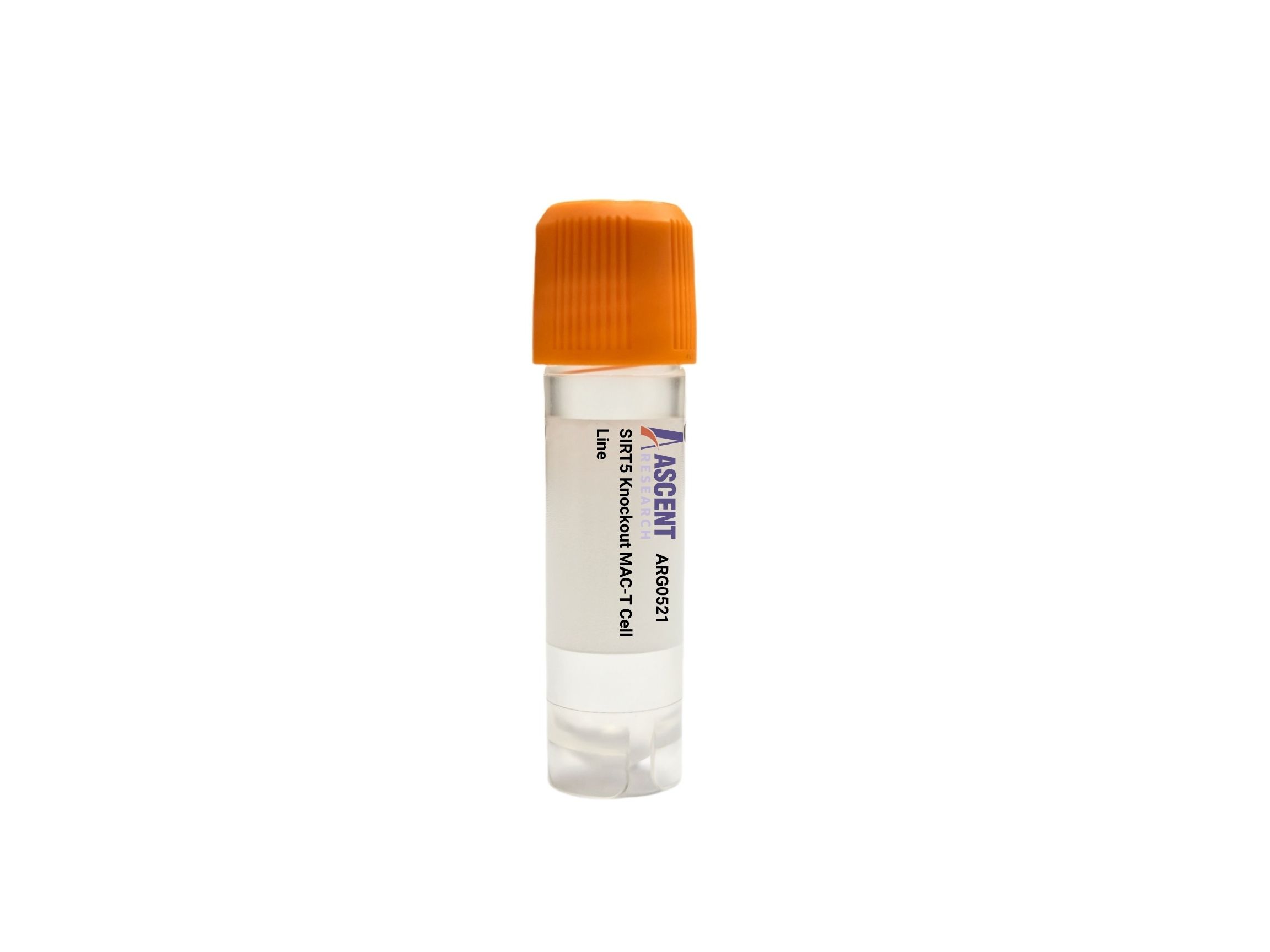
Genome-edited Cells
Breast (mammary gland)
This SIRT5 Knockout MAC-T Cell Line is a CRISPR/Cas9-edited knockout cell line derived from bovine mammary alveolar epithelial cells (MAC-T). SIRT5, a mitochondrial NAD+-dependent deacylase, regulates metabolism through lysine demalonylation, desuccinylation, and deglutarylation of targets such as CPS1 and ECHA, thereby influencing fatty acid oxidation and ammonia detoxification. The knockout model enables dissection of SIRT5 function in mitochondrial metabolism, post-translational modifications, and metabolic disease. It is suitable for studies in lactation biology, cancer metabolism, and oxidative stress, using assays such as metabolic flux analysis and oxygen consumption rate measurement.
 CAND1 Knockout A549 Polyclonal Cells
Cat. No. ARG38613
LYN Knockout SK-HEP-1 Polyclonal Cells
Cat. No. ARG15100
ALAD Knockout NCI-H1975 Polyclonal Cells
Cat. No. ARG31088
AMFR Knockout jurkat Polyclonal Cells
Cat. No. ARG33813
CCDC167 Knockout A2780 Polyclonal Cells
Cat. No. ARG42969
MTMR1 Knockout HEK293T Polyclonal Cells
Cat. No. ARG4550
CAND1 Knockout A549 Polyclonal Cells
Cat. No. ARG38613
LYN Knockout SK-HEP-1 Polyclonal Cells
Cat. No. ARG15100
ALAD Knockout NCI-H1975 Polyclonal Cells
Cat. No. ARG31088
AMFR Knockout jurkat Polyclonal Cells
Cat. No. ARG33813
CCDC167 Knockout A2780 Polyclonal Cells
Cat. No. ARG42969
MTMR1 Knockout HEK293T Polyclonal Cells
Cat. No. ARG4550
The SIRT5 Knockout MAC-T Cell Line is a CRISPR/Cas9-edited knockout cell line derived from MAC-T cells, in which the SIRT5 gene has been disrupted to create a stable loss-of-function model. This product provides researchers with a defined and renewable cell resource for investigating SIRT5-dependent mitochondrial deacylase activity and its role in cellular metabolism. The engineered disruption abrogates SIRT5 expression, enabling studies on the consequences of impaired lysine demalonylation, desuccinylation, and deglutarylation on metabolic enzyme function.
The MAC-T cell line is an immortalized bovine mammary alveolar epithelial cell line, widely employed as an in vitro model for studying mammary gland biology, milk synthesis, and lactation. Originating from Bos taurus, these cells retain key features of differentiated mammary epithelium and are suited for investigations into the metabolic demands of milk production. Their capacity to secrete milk components and respond to lactogenic hormones makes them a valuable host for exploring the intersection of mitochondrial function and mammary epithelial cell physiology.
SIRT5 encodes a mitochondrial NAD+-dependent deacylase that primarily catalyzes the removal of malonyl, succinyl, and glutaryl modifications from lysine residues on target proteins. This activity is critically regulated by the NAD+/NADH ratio and influenced by upstream regulators such as AMPK, PGC-1??, caloric restriction, and oxidative stress. SIRT5 directly modulates key metabolic enzymes including CPS1 (via desuccinylation), ECHA, IDH2, PDHA1, and SOD1, impacting pathways such as the urea cycle, fatty acid oxidation, glycolysis/gluconeogenesis, and the oxidative stress response. Disruption of SIRT5 therefore impairs mitochondrial protein acylation control, leading to reduced enzymatic activities of CPS1 and ECHA, diminished fatty acid oxidation, and compromised ammonia detoxification.
In the context of MAC-T mammary epithelial cells, SIRT5 knockout is particularly relevant due to the high metabolic flux associated with milk synthesis and secretion. Mammary epithelial cells rely heavily on mitochondrial fatty acid oxidation and amino acid metabolism to support lactation. Loss of SIRT5 function is expected to compromise these processes, potentially affecting cellular energy homeostasis, redox balance, and the ability to cope with the oxidative stress inherent to high metabolic output. This model thus provides a tool to dissect the role of mitochondrial sirtuin-dependent deacylation in mammary epithelial cell function and lactation biology.
This SIRT5 knockout cell line is suited for a range of experimental applications in mitochondrial metabolism, post-translational modification research, and metabolic disease modeling. Representative assays include Western blot analysis of global lysine succinylation levels, measurement of CPS1 enzymatic activity, metabolic flux analysis using labeled substrates, oxygen consumption rate (OCR) determination via Seahorse analysis, RT-qPCR profiling of metabolic gene expression, and immunofluorescence staining for mitochondrial markers such as TOM20. The model further enables investigation of SIRT5 in the context of cancer metabolism, neurodegenerative and cardiovascular diseases, and the response to caloric restriction. For additional technical details and ordering information, please contact Ascent Research.