In Stock Cell Lines
Homo sapiens (Human)
Kidney
Adherent
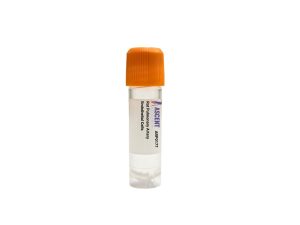
The TMEM63A Knockout HEK293T Cell Line is a CRISPR/Cas9-edited loss-of-function model in HEK293T cells. TMEM63A is a mechanosensitive cation channel that mediates Ca2+ and Na+ influx upon membrane stretch, essential for osmosensation and volume regulation. Knockout eliminates stretch-activated currents and impairs downstream signaling via CAMKII, calcineurin/NFAT, and ERK1/2. This model is ideal for electrophysiology, Ca2+ imaging, and osmotic stress studies, supporting research into leukodystrophy, neuropathy, and drug screening. It enables dissection of TMEM63A interactions with TMEM63B and the actin-spectrin cytoskeleton.
 HSDL2 Knockout K562 Polyclonal Cells
Cat. No. ARG20602
BICC1 Knockout A2780 Polyclonal Cells
Cat. No. ARG28894
ITSN1 Knockout jurkat Polyclonal Cells
Cat. No. ARG34375
ABI1 Knockout HEK293T Polyclonal Cells
Cat. No. ARG37924
NDST1 Knockout MES-OV Polyclonal Cells
Cat. No. ARG6812
HSDL2 Knockout K562 Polyclonal Cells
Cat. No. ARG20602
BICC1 Knockout A2780 Polyclonal Cells
Cat. No. ARG28894
ITSN1 Knockout jurkat Polyclonal Cells
Cat. No. ARG34375
ABI1 Knockout HEK293T Polyclonal Cells
Cat. No. ARG37924
NDST1 Knockout MES-OV Polyclonal Cells
Cat. No. ARG6812
 C666-1
Cat. No. ARC0093
C666-1
Cat. No. ARC0093
The TMEM63A Knockout HEK293T Cell Line is a CRISPR/Cas9-edited knockout cell line in which the human TMEM63A gene has been disrupted to create a loss-of-function model for studying mechanosensitive ion channel biology. Derived from HEK293T embryonic kidney epithelial cells, this product provides a stable and genetically tractable platform to investigate TMEM63A-mediated signaling pathways. The knockout eliminates functional TMEM63A protein expression, enabling researchers to dissect mechanotransduction, osmosensation, and calcium-dependent regulatory networks without endogenous channel interference. This cell line is suitable for a wide range of experimental approaches, from biophysical characterization to disease-relevant phenotypic assays.
The HEK293T host cell line is a widely utilized human embryonic kidney epithelial line transformed with the SV40 large T antigen, which enhances plasmid replication and protein expression. Its robust growth characteristics, high transfection efficiency, and extensive use in cell biology and protein production make it an ideal background for knockout studies. The HEK293T context supports rigorous functional interrogation of ion channels, as the cells natively express many signaling components and can be easily manipulated with exogenous constructs, allowing for both loss-of-function and gain-of-function experiments.
TMEM63A encodes a mechanosensitive cation channel that opens in response to membrane stretch and osmotic pressure, mediating Ca2+ and Na+ influx. Channel activity is regulated by upstream modulators such as phosphatidylinositol 4,5-bisphosphate (PIP2) and the actin-spectrin cytoskeleton, and it interacts with the paralogous channel TMEM63B as well as with ankyrin. Upon activation, TMEM63A triggers downstream effectors including calmodulin-dependent protein kinase II (CAMKII), calcineurin, NFAT, and ERK1/2, ultimately governing transcription of volume regulatory genes. Loss of TMEM63A abolishes stretch-activated currents and disrupts calcium signaling cascades, providing a clear phenotype for pathway analysis.
In the HEK293T background, this knockout cell line offers a clean genetic system to examine TMEM63A??s role in mechanotransduction and osmoregulation. The absence of endogenous TMEM63A allows precise assessment of TMEM63B function and channel interaction dynamics. Researchers can employ patch-clamp electrophysiology to directly measure stretch-activated currents, or fluorescent Ca2+ indicators to monitor real-time calcium responses. The line also serves as a host for reconstitution experiments with mutant or tagged TMEM63A variants, facilitating structure-function studies and investigation of disease-linked mutations.
This knockout model supports broad research applications, including investigations into mechanosensation, cell volume regulation, osmotic stress signaling, and ion channel biophysics. It is particularly valuable for modeling hypomyelinating leukodystrophy, peripheral neuropathy, and other neurodegenerative disorders associated with TMEM63A dysfunction. The cell line enables drug screening efforts to identify channel modulators and functional validation using assays such as western blotting, RT-qPCR, co-immunoprecipitation, and immunofluorescence. For detailed technical inquiries or order information, please contact Ascent Research.