Genome-edited Cells
Lung
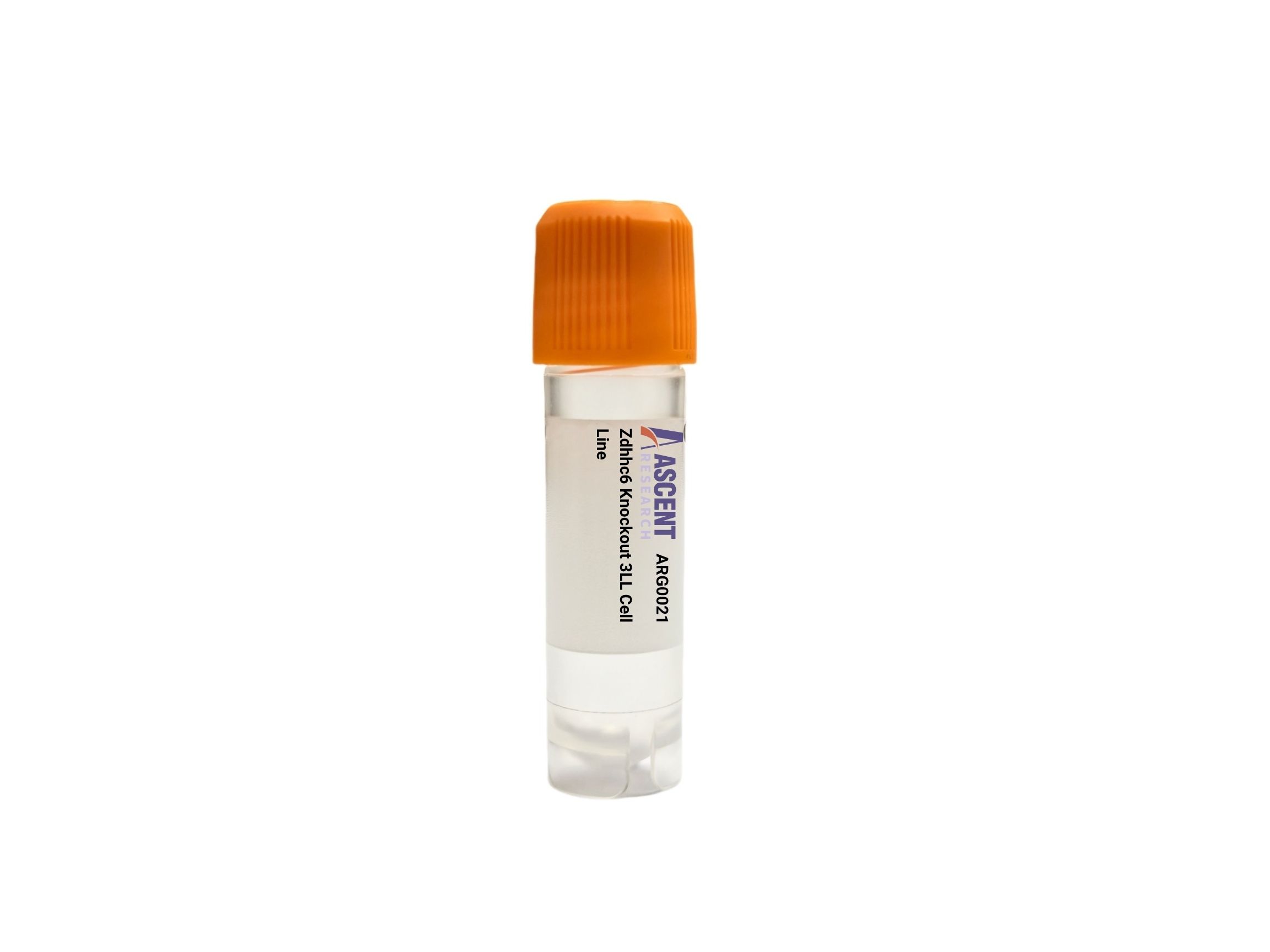
Zdhhc6 Knockout 3LL is a CRISPR/Cas9-engineered mouse Lewis lung carcinoma cell line with disruption of the ER-resident palmitoyltransferase Zdhhc6. In 3LL tumor epithelial-like cells, loss of ZDHHC6 supports investigation of S-palmitoylation-dependent regulation of substrates such as ITPR1 and calnexin, with relevance to ER calcium homeostasis, protein quality control, redox balance, and stress-response signaling. This syngeneic C57BL/6-compatible lung cancer model is useful for studies of tumor growth and metastasis, ER stress mechanisms, membrane protein regulation, and functional assays including acyl-biotin exchange, calcium flux analysis, RNA-seq, migration/invasion testing, and drug sensitivity profiling.
 CADM1 Knockout A2780 Polyclonal Cells
Cat. No. ARG28979
APOE Knockout A2780 Polyclonal Cells
Cat. No. ARG28744
ASAH1 Knockout NCI-H1975 Polyclonal Cells
Cat. No. ARG31254
GNG12 Knockout HT29 Polyclonal Cells
Cat. No. ARG33242
COMMD2 Knockout 786-O Polyclonal Cells
Cat. No. ARG5420
CADM1 Knockout A2780 Polyclonal Cells
Cat. No. ARG28979
APOE Knockout A2780 Polyclonal Cells
Cat. No. ARG28744
ASAH1 Knockout NCI-H1975 Polyclonal Cells
Cat. No. ARG31254
GNG12 Knockout HT29 Polyclonal Cells
Cat. No. ARG33242
COMMD2 Knockout 786-O Polyclonal Cells
Cat. No. ARG5420
 Human Hair Inner Root Sheath Cell Medium
Cat. No. ARM0061
Human Hair Inner Root Sheath Cell Medium
Cat. No. ARM0061
The Zdhhc6 Knockout 3LL Cell Line is a CRISPR/Cas9-engineered mouse Lewis lung carcinoma model in which the Zdhhc6 gene has been disrupted to eliminate functional gene expression. This stable in vitro knockout system enables direct investigation of ZDHHC6-dependent biology in a tumor epithelial-like background. As ZDHHC6 is an endoplasmic reticulum-resident DHHC palmitoyl acyltransferase, this model is particularly suited for studies examining how loss of ER-localized S-palmitoylation capacity influences membrane protein regulation, stress adaptation, and malignant cell phenotypes.
3LL (Lewis lung carcinoma) is a murine lung carcinoma cell line syngeneic to C57BL/6 mice and is widely used in transplantation, tumor growth, and metastasis studies. The line is a well-established experimental model for lung cancer progression and tumor?Chost interactions, providing a relevant setting for analysis of cellular fitness, motility, invasion, and responses to microenvironmental stress. Because 3LL cells are frequently used to study metastatic dissemination and treatment response, genetic perturbation in this background offers a practical framework for connecting molecular mechanisms to cancer-associated phenotypes.
ZDHHC6 functions within the protein S-palmitoylation cycle by catalyzing transfer of palmitate from palmitoyl-CoA to selected substrate proteins at the ER. Its activity is regulated by ER homeostasis status, substrate abundance, acyl-protein thioesterases, and unfolded protein response stimuli. ZDHHC6 interacts with factors including SELK, calnexin (CANX), ITPR1, and ER membrane protein quality-control components, and acts upstream of substrate palmitoylation states that influence protein stability, localization, and signaling output. Through effects on ITPR1 and calnexin, ZDHHC6 is linked to ER calcium signaling, protein folding control, redox homeostasis, and stress-response gene expression. Dynamic reversal of palmitoylation by APT1 and APT2 further places ZDHHC6 within a regulated acylation/deacylation network relevant to ER stress-associated disorders, oxidative stress biology, immune dysregulation, and cancer progression.
In the 3LL context, Zdhhc6 loss provides a mechanistically relevant model for determining how altered ER palmitoylation affects lung tumor cell behavior. Disruption of this enzyme is expected to perturb ER homeostasis and adaptive stress pathways, thereby informing studies of metastatic progression, survival under proteotoxic or oxidative challenge, and pathway dependencies associated with membrane trafficking and calcium handling. This model may also support analysis of genotype-dependent variation in proliferation, apoptosis, migration, and invasion phenotypes.
Researchers can apply this knockout line to quantify changes in palmitoylated substrates using acyl-biotin exchange, acyl-RAC, or metabolic labeling approaches; assess altered expression programs by RT-qPCR or RNA-seq; and examine downstream protein abundance or signaling by western blotting and co-immunoprecipitation. Immunofluorescence can be used to monitor subcellular localization of ER-associated factors, while calcium flux assays and ER stress marker analysis enable evaluation of ITPR1-linked signaling and unfolded protein response engagement. The model is also suitable for proliferation, apoptosis, migration/invasion, and drug sensitivity studies designed to test how Zdhhc6 disruption modifies tumor cell fitness and stress tolerance in a murine lung carcinoma setting. Researchers may contact Ascent Research for additional technical information, product details, or related gene-edited cell models.