Genome-edited Cells
Blood (peripheral blood)
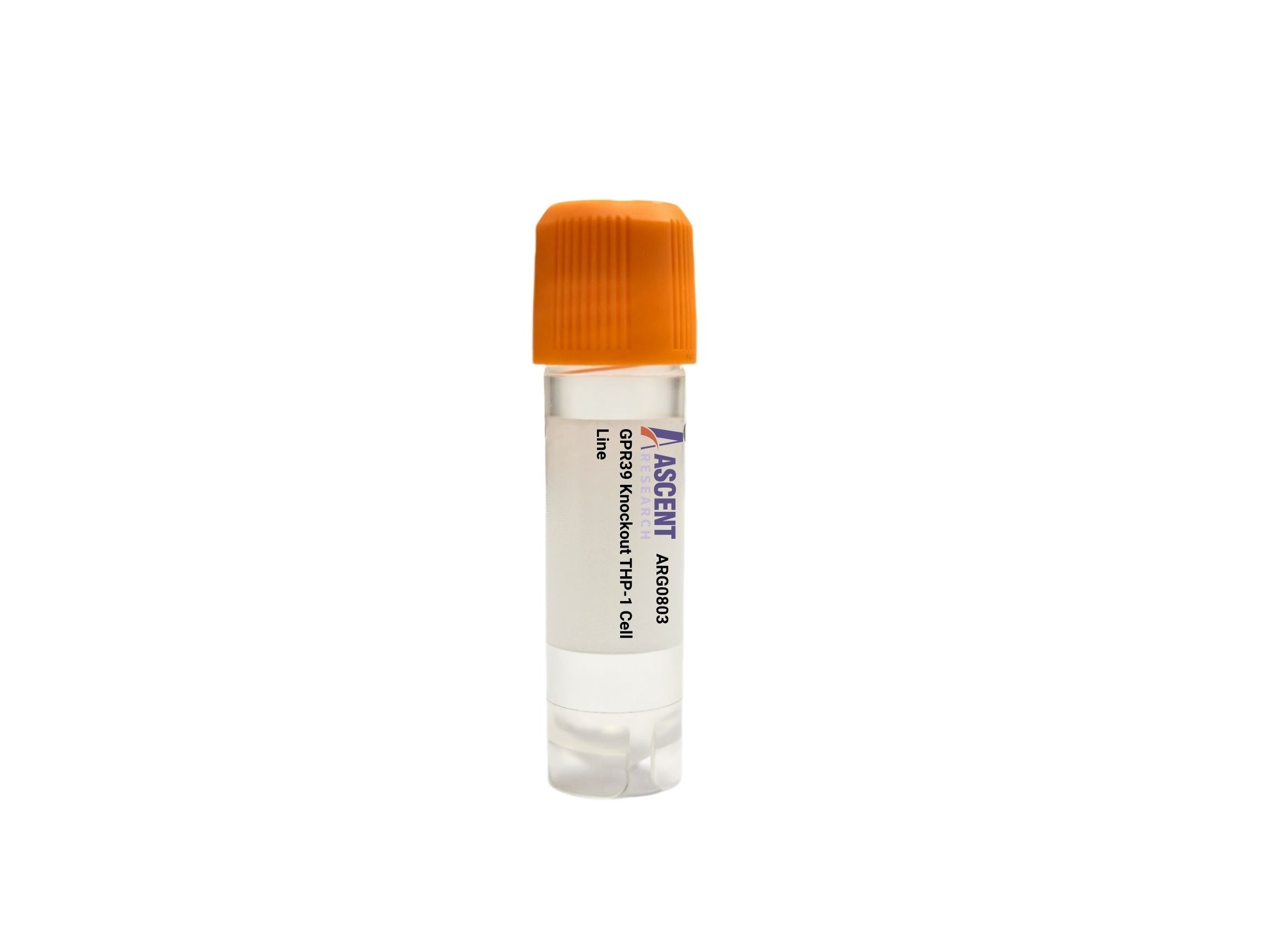
The GPR39 Knockout THP-1 Cell Line provides a genetically defined model with CRISPR/Cas9-mediated disruption of the GPR39 zinc-sensing receptor in the human THP-1 monocytic leukemia cell line. This suspension cell model enables studies of G protein-coupled receptor signaling through G??q/11?CPLC?CCa2+ and downstream kinases including ERK1/2 and Akt, and their regulation of transcription factors such as CREB and NF-??B. Applications include investigating the role of GPR39 in monocyte/macrophage differentiation, inflammatory responses, zinc homeostasis, and cancer biology. The line is suitable for calcium flux, proliferation, phagocytosis, cytokine profiling, and gene expression assays, offering a versatile tool for drug target validation and immune signaling research.
 Immortalized Human Conjunctival Epithelial Cell
Cat. No. ARI0296
Immortalized Human Conjunctival Epithelial Cell
Cat. No. ARI0296
 HPCAL1 Knockout NCI-H1975 Polyclonal Cells
Cat. No. ARG31661
IDH3G Knockout SK-HEP-1 Polyclonal Cells
Cat. No. ARG32634
BOLA2 Knockout Hela Polyclonal Cells
Cat. No. ARG37683
CAPN13 Knockout HAP1 Polyclonal Cells
Cat. No. ARG42170
CRABP2 Knockout HCT116 Polyclonal Cells
Cat. No. ARG7077
HPCAL1 Knockout NCI-H1975 Polyclonal Cells
Cat. No. ARG31661
IDH3G Knockout SK-HEP-1 Polyclonal Cells
Cat. No. ARG32634
BOLA2 Knockout Hela Polyclonal Cells
Cat. No. ARG37683
CAPN13 Knockout HAP1 Polyclonal Cells
Cat. No. ARG42170
CRABP2 Knockout HCT116 Polyclonal Cells
Cat. No. ARG7077
The GPR39 Knockout THP-1 Cell Line is a CRISPR/Cas9-mediated knockout cell line in which the GPR39 gene has been disrupted to abrogate receptor expression. This model provides a defined genetic background for studying GPR39-dependent signaling in human monocytic cells, eliminating endogenous receptor activity without introducing exogenous sequences. It is suitable for functional assays requiring stable, long-term loss of GPR39.
THP-1 is a human acute monocytic leukemia cell line derived from a 1-year-old male; it grows in suspension and serves as a widely used model for monocyte-to-macrophage differentiation, immune response, and inflammation. Upon stimulation, THP-1 cells can differentiate into macrophage-like cells capable of phagocytosis, cytokine release, and adhesion, making them a versatile platform for innate immunity studies.
GPR39 encodes a zinc-sensing G protein-coupled receptor activated by Zn2+, acidity, IL-1??, and EGF. It couples to G??q/11, G??s, and G??12/13. Activation leads to PLC??-mediated IP3 and DAG generation, Ca2+ mobilization, and PKC activation. Downstream, it stimulates MAPK/ERK and PI3K-Akt pathways, phosphorylating ERK1/2 and Akt, and modulates cAMP-PKA signaling. Transcription factors CREB, NF-??B, and AP-1 drive expression of c-fos, cyclin D1, and Bcl-2. The receptor interacts with ??-arrestin-1/2 and RAMPs.
In THP-1 monocytes, GPR39 influences proliferation, survival, and differentiation. By coupling zinc sensing to ERK and Akt, it governs cytokine production and inflammatory gene expression. This knockout line allows dissection of GPR39??s role in macrophage polarization, zinc homeostasis, and immune cell responses, providing insights into inflammation-associated diseases and cancer. It facilitates investigation of zinc-dependent signaling perturbations in pathologies ranging from inflammatory disorders to hematological malignancies.
Researchers can use this cell line to validate GPR39 as a drug target, examine zinc-dependent signaling, and profile gene expression changes. Representative assays include western blotting for phospho-ERK and phospho-Akt, RT-qPCR for target genes, calcium flux assays, proliferation and viability assessments, migration and phagocytosis assays, and ELISA-based cytokine profiling. Flow cytometry permits analysis of surface markers. For more information, contact Ascent Research.