Genome-edited Cells
Liver
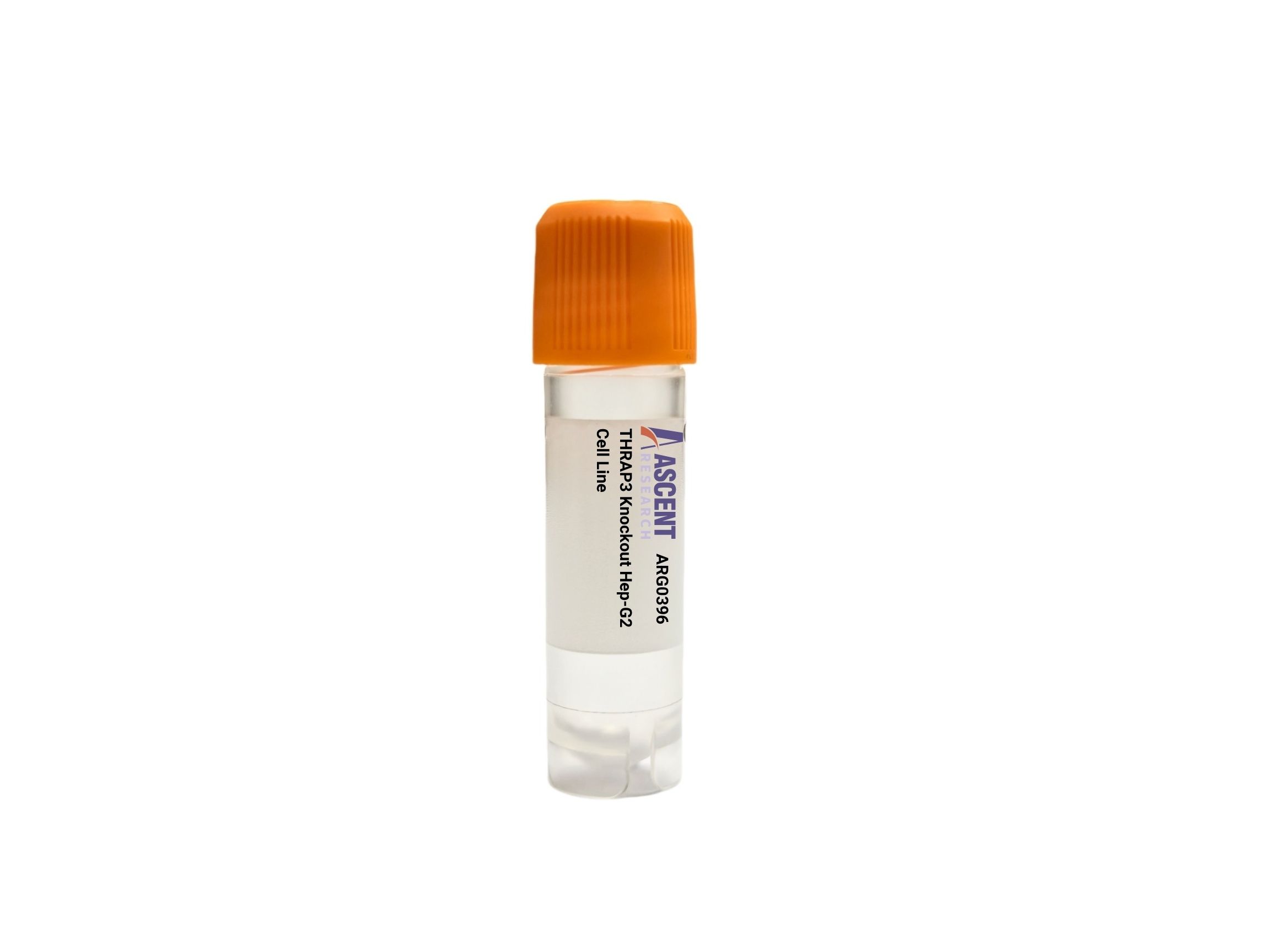
The THRAP3 Knockout Hep-G2 Cell Line is a CRISPR/Cas9-edited human hepatocellular carcinoma cell model with targeted disruption of the THRAP3 gene. THRAP3 encodes a transcriptional coactivator and RNA splicing factor that bridges nuclear receptors to the Mediator complex, linking thyroid hormone signaling to gene expression and mRNA processing. This knockout line serves as a critical tool for thyroid hormone signaling research, liver cancer biology, and splicing mechanism studies. Key applications include investigating THRAP3 interactions with mediators MED1 and MED24, and assessing downstream effects on hormone-responsive genes via assays such as luciferase reporters, RNA-seq, and co-immunoprecipitation.
 LUZP1 Knockout Hela Polyclonal Cells
Cat. No. ARG7939
IGF2 Knockout CAL27 Polyclonal Cells
Cat. No. ARG35872
HRH1 Knockout A2780 Polyclonal Cells
Cat. No. ARG35770
GPRIN3 Knockout HEK293T Polyclonal Cells
Cat. No. ARG38060
EIF2D Knockout NCI-H1975 Polyclonal Cells
Cat. No. ARG41002
LARP4B Knockout AGS Polyclonal Cells
Cat. No. ARG2950
LUZP1 Knockout Hela Polyclonal Cells
Cat. No. ARG7939
IGF2 Knockout CAL27 Polyclonal Cells
Cat. No. ARG35872
HRH1 Knockout A2780 Polyclonal Cells
Cat. No. ARG35770
GPRIN3 Knockout HEK293T Polyclonal Cells
Cat. No. ARG38060
EIF2D Knockout NCI-H1975 Polyclonal Cells
Cat. No. ARG41002
LARP4B Knockout AGS Polyclonal Cells
Cat. No. ARG2950
The THRAP3 Knockout Hep-G2 Cell Line is a CRISPR/Cas9-edited human knockout cell line derived from the Hep-G2 hepatocellular carcinoma background. This model features a targeted disruption of the THRAP3 gene, which encodes a transcriptional coactivator and RNA splicing factor. By eliminating THRAP3 expression, the cell line establishes a loss-of-function system to dissect the molecular mechanisms governing hormone-responsive transcription and post-transcriptional processing. This product is presented as a ready-to-use knockout cell line, enabling reproducible investigations without the need for additional gene editing.
The Hep-G2 host cell line originates from a hepatocellular carcinoma of a 15-year-old male patient. Widely employed as a hepatocyte model, Hep-G2 cells retain key liver-specific functions, including expression of metabolic enzymes and responsiveness to hormonal stimuli. Their epithelial morphology and tumorigenic properties make them particularly suitable for cancer research. This genetic background provides a physiologically relevant context for studying THRAP3??s role within liver-derived cells and their associated signaling networks.
THRAP3 functions as a critical adaptor linking nuclear receptors, such as the thyroid hormone receptor (TR), to the Mediator complex and RNA polymerase II. Mediated by Mediator subunits including MED1 and MED24, THRAP3 facilitates the assembly of active transcription complexes at thyroid hormone-responsive promoters. In parallel, through interactions with spliceosomal components like SF3B1 and the U2 snRNP, THRAP3 participates in pre-mRNA splicing. It is activated by thyroid hormone (T3) and transduces signals that affect downstream expression of hormone-responsive genes and the generation of mature spliced mRNAs. This dual functionality places THRAP3 at the nexus of transcriptional activation and RNA processing.
Disrupting THRAP3 in Hep-G2 cells enables researchers to dissect its contributions to thyroid hormone signaling and splicing regulation specifically in a hepatocellular carcinoma environment. Such knockout models can reveal altered transcriptional outputs, splice variant shifts, and disrupted Mediator complex dynamics that may contribute to cancer cell proliferation and survival. The availability of this loss-of-function tool in a liver context is invaluable for exploring the interplay between hormone signaling and oncogenic processes, offering potential insights into therapeutic vulnerabilities in liver cancer.
This cell line is ideally suited for diverse research applications, including thyroid hormone signaling, transcriptional regulation, and cancer biology. Typical assays include luciferase reporter assays to quantify hormone-dependent transcription, RNA-seq to profile splicing changes, and co-immunoprecipitation to map protein interactions with Mediator and spliceosomal factors. RT-qPCR and western blotting validate target gene expression, while cell proliferation and apoptosis assays assess functional outcomes. Together, these approaches enable comprehensive functional genomics and drug discovery studies. For further details, please contact Ascent Research.